![MaritimeJournal[Seawork]](https://www.maritimejournal.com/wp-content/uploads/2026/09/MaritimeJournalSeawork.svg)


Tsavliris reports multiple projects
Greek emergency responder Tsavliris Salvage has taken part in two incidents providing professional intervention that avoided making headlines as environmental disasters.
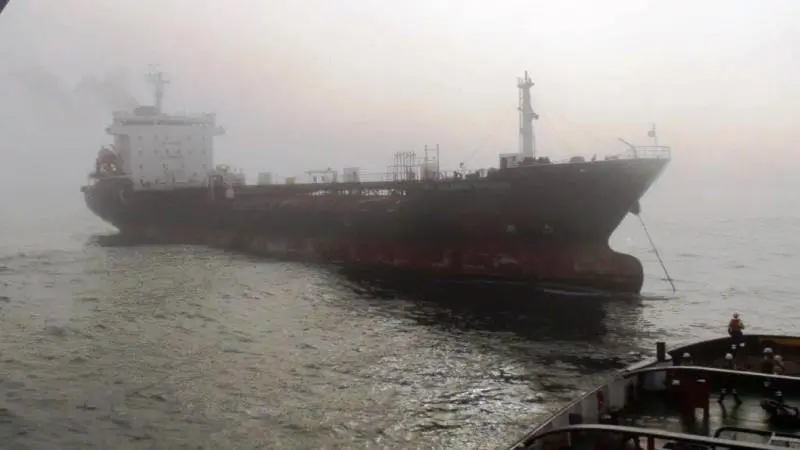
Marine casualties often only attract the mainstream media’s attention when accompanied by images and footage of the incident. It is worthwhile therefore drawing attention to successful operations that avert disaster but without accompanying negative images and Tsavliris has reported two such stories.
The first call for professional salvage assistance came when the Maltese-flagged, Turkish-owned Suezmax tanker Atina experienced main engine problems while underway between Kos and Astypalaia Islands in the Aegean Sea.
The vessel was loaded with 135,500 tonnes of crude oil and with the potential become a threat to the environment should the situation not be managed correctly the now well-established procedure of offloading the vessel’s cargo was chosen. Tsavliris Salvage was engaged to provide assistance and on the same day the 53tbp tug Pantokrator and 51tbp Platytera were mobilised from Piraeus.
They arrived the following day and provided escort services for the vessel to OPL Limnos Island for a planned ship-to-ship (STS) cargo transfer. A third tug joined the operation a few days later with the 43tbp Hermes deployed from Patras port to load various STS equipment at Piraeus before sailing to the casualty’s position.
A Tsavliris salvage team including riggers timed their arrival at Limnos Island to meet the convoy of Atina and accompanying tug escorts and after dropping anchor south of Limnos the tanker was declared ready in all respects for the STS operation. Two days later the operation to transfer cargo from Atina to another tanker, the Donat, moored alongside began and despite adverse weather conditions with occasional interruptions the transfer was successfully completed just four days later.
The following day, and escorted by the tugs Platytera and Pantokrator the Atina commenced its voyage to Elefsis Shipyards which was arrived at safely two days later and eighteen days after the initial request for assistance. Tsavliris’ services were thereafter terminated, an operation that had the potential to make global headline news but thanks to the professionalism of all involved passed largely unnoticed other than in the specialist industry media.
Some 13,000km to the south meanwhile, the crew of the salvage tug SA Amandla found themselves spending their New Year’s eve attending another tanker with machinery problems. The call for assistance came on 30 December when the 12,807dwt chemical tanker Atlantic Voyager reported that it was immobilised with machinery problems around 85 miles west of Lambert’s Bay, South Africa around 250km north of Cape Town. The vessel was in ballast condition at the time and was drifting towards the open sea due to the prevailing current.
Tsavliris Salvage was engaged to provide assistance and the following day the 185tbp salvage tug SA Amandla was mobilised from Durban to assist. In the SA Amandla the crew of Atlantic Voyager had a high-quality not to mention famous tug heading for their assistance. The 1976-built salvage tug carries out the role of ETV protecting the South African coastline and has featured in many notable rescues and conventional commercial tows in its long career.
On the first day of the New Year the direction of the current changed, the disabled tanker drifting towards the nearby coastline and to avoid grounding and with the permission of SAMSA via Cape Town Radio Atlantic Voyager’s anchor was dropped just 11.7 miles from Kleinsee (west coast of the Northern Cape province).
During the period at anchor significant dragging was experienced so it was with some relief that four days after setting out from Durban the SA Amandla arrived at the casualty’s position, whereby a towing connection between the tug and disabled vessel was quickly established and course was set for Durban.
Eight days later the convoy arrived safely at Durban and with the assistance of a pilot and port tugs (arranged by the salvors) the vessel was berthed at Dormac Marine and Engineering for repairs and on the same day the salvage operation and Tsavliris’ services were terminated. While in ballast and of a lower risk to the environment compared with the Atina incident mentioned above the ship would have been carrying its own fuel bunkers with the potential to cause pollution if the story had ended differently.
By Peter Barker

Related Articles
 SPECIAL REPORTS
 TUGS & SALVAGE
 EQUIPMENT