![MaritimeJournal[Seawork]](https://www.maritimejournal.com/wp-content/uploads/2026/09/MaritimeJournalSeawork.svg)


The industry’s view of tug technology
Key players from the world of towing have attended ‘Tugnology ‘19’ the biennial technical conference discussing developments within the industry.
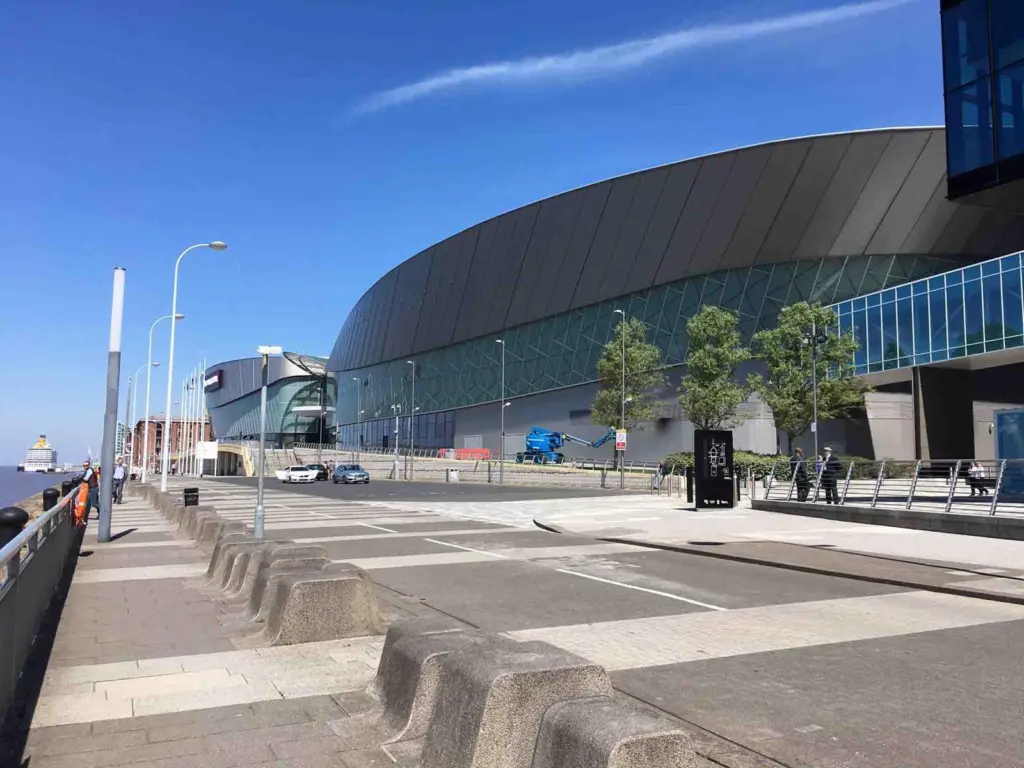
Liverpool was the venue for the two-day technically-based conference organised by The ABR Company Limited and covering design, construction, operation and economics of tugs so with around 400 delegates from as far away as Australia and Chile attending, Peter Barker went along for MJ to hear of the latest industry developments.
Chairman of the UK Maritime Pilots’ Association John Pearn who is also a Liverpool pilot started proceedings describing life at the other end of the towline. Admitting to not being a tug expert he acknowledged the value of pilots attending events such as Tugnology and likewise tug masters attending similar pilots’ conferences.
He spoke of times past when pilots and tug crews lived and socialised in the same communities allowing the fostering of personal relationships and a sharing of each other’s work and concerns, nowadays however tug crews and pilots may not be based in the same area as each other. The message was clear, a close understanding between the two professions was important for achieving a safe outcome to the task in hand.
High on the list of subjects debated at such conferences are the digital transformation of the industry and the wide choice owners have selecting the type of tug and machinery arrangements. Papers on these two areas made up the bulk of the conference with a well-spread examination of the subjects presented.
With a modern ship generating over 20GB of data daily, tugs are becoming sophisticated sensor hubs monitoring numerous parameters with modern connectivity allowing complex real-time analysis shoreside of the vessel’s efficiency.
Digital applications are often ‘built-in’ with newbuilding tugs and Eva Peño from BV examined the subject of cyber security while Florus Wiming from Onboard described its Big Data platform on tugs of Kotug Seabulk Maritime and Multraship including AI solutions to optimise operations and tug design. Damen meanwhile described the monitoring installation in its RSD Tug 2513.
Speaking to MJ, Jens Bay, senior project manager at Force Technology probably summed up the thoughts of many in his belief in the importance of attracting more young people into this area of the industry.
Five papers explored the conundrum of extracting maximum efficiency from tugs that typically spend less than 5% of their operating life at maximum power.
Caterpillar and Sanmar described their work with the former’s Advanced Variable Drive described as “proven technology for a hybrid age”. Based on a hydraulic ‘hybrid’ system it utilises planetary gears, typically involving a three-engine arrangement. The system couples Caterpillar’s engines with its new MTA 03 thruster the speaker stating “Simplicity is the ultimate sophistication”.
Bucking the trend for minimal prime-movers Kongsberg Maritime and Jensen Naval Architects provided a convincing case for its mechanical-electric hybrid tug Delta Theresa due for imminent completion and operation in San Francisco Bay.
Schottel’s answer to the efficiency conundrum is its elegantly simple solution of a Cardan shaft incorporating a slipping clutch between the two thrusters allowing both to be driven by one engine during light loads. Kawasaki Heavy Industries meanwhile described its concept of an Optimal Eco Tug Fleet involving a combination of LNG and energy storage system-powered vessels.
Kotug, Rotortug and Tugpins described their modular caliper winch concept (along with a working example) providing render/recovery abilities using advanced drives and brake control systems. Multiple high-torque servo-motors and caliper brakes are used instead of asynchronous motors and disk brakes, the modular design providing upgrades via additional motors and/or brakes.
The prevention of fouling in internal cooling systems and external surfaces was a subject addressed by Dominic Findlow from NRG Marine UK who eloquently explained its ultrasound antifouling system. Transducers with a range of around 5m are simply bonded to the dry side of the water chest, the elimination of expensive sacrificial anodes another benefit.
Lankhorst Ropes described the “vital connection” of various towing line elements and methods of connection. Extensive testing accompanied its developments, specifically with its own soft shackle connector (see MJ March 2018), a simple connecting arrangement which has been designed to exhibit strength, reliability, ease of handling, safety and cost efficiency.
MJ will be looking closer at some of the papers presented at Tugnology ’19 in future editions.
By Peter Barker

Related Articles
 SPECIAL REPORTS
 TUGS & SALVAGE
 EQUIPMENT