


ABB Azipod propulsion aids North Pole mission
A vessel powered by ABB Azipod propulsion has reached the North Pole for the first time in history.
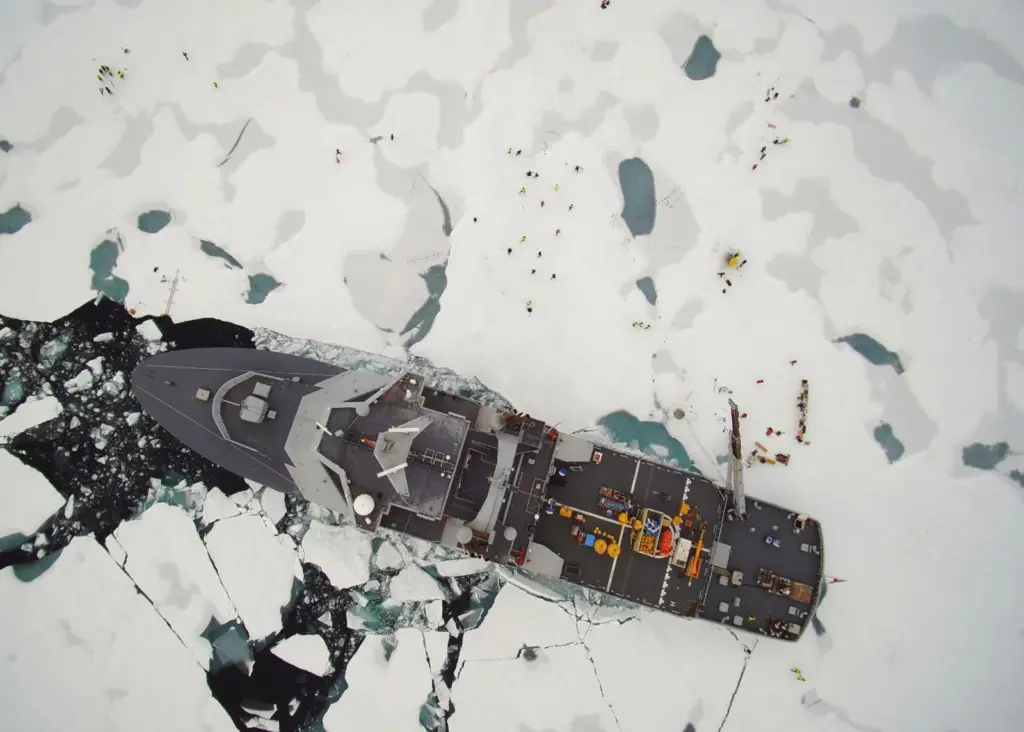
The Norwegian Coast Guard’s KV Svalbard was on an international environmental research expedition when it became the first ever Azipod-powered ship to reach the North Pole.
“We were able to navigate through the Arctic waters and reach the North Pole faster than we thought possible,” said Ottar Haugen, commander of the Norwegian Coast Guard. “This is a significant milestone for us and a proof that we have a vessel in our fleet equipped with a robust propulsion system that enables operations in the harshest ice conditions – all the way to the North Pole.”
Azipod icebreaking units
KV Svalbard, which was also the first Norwegian vessel to sail to the ‘top of the world’, is equipped with twin 5MW Azipod icebreaking units. The Azipod propulsion system, where the electric drive motor is in a submerged pod outside the ship hull, can rotate 360 degrees to increase maneuverability, which is particularly crucial for vessels operating in ice.
Azipod icebreaking propulsion can break up to 2.1m thick Arctic ice and has a proven ability to cut fuel consumption by up to 20% compared to traditional shaftline propulsion systems.
KV Svalbard was sailing in the Arctic waters as part of the international scientific expedition, Coordinated Arctic Acoustic Thermometry Experiment (CAATEX).
The aim of the expedition was to place seabed sensors that would allow the scientists to monitor water temperatures in the Arctic waters.
By Rebecca Jeffrey
Related Articles
 POWER & PROPULSION
 VESSELS
 POWER & PROPULSION