![MaritimeJournal[Seawork]](https://www.maritimejournal.com/wp-content/uploads/2026/09/MaritimeJournalSeawork.svg)


Tug crews living with Covid-19
With a global operation Kotug had to adapt to Covid-19, including the very human side of how seafarers were affected by disrupted crew changes.
Take Patrick van der Klooster, after a skiing holiday he joined RT Magic in Mozambique. After two weeks he realised it would be a long tour stating at the time: ‘At first it’s a matter of adjusting your mindset. We knew it was going to be a long stay, so we set our minds to two months, maximum three … we’re starting to long for home it’s at the front of our minds, we take it with us to sleep and it’s right there when we wake up.’
Unable to leave the tug there was a ship next to them with three crew making a community of six. Mostly they keep themselves to themselves, the occasional barbeque breaking the monotony but when not on duty they usually watched movies in their own cabins, Patrick commenting: ‘… that’s fine but it does add to the loneliness I guess.’
Weekends were hardest: ‘Life has pretty much picked up at home, and on Saturdays and Sundays my friends and family go out and about to enjoy themselves. I am happy for them, but it makes me realise even more that we are stuck here.’
Kotug organised charter flights for crew changes, Patrick commenting: ‘I can’t wait to drive my car. I bought a new car before I came to Mozambique and haven’t been able to drive it yet. When I come home that is the first thing I am going to do, after hugging my girlfriend of course. Then I am going to enjoy my brand-new kitchen, I haven’t seen that yet either.’
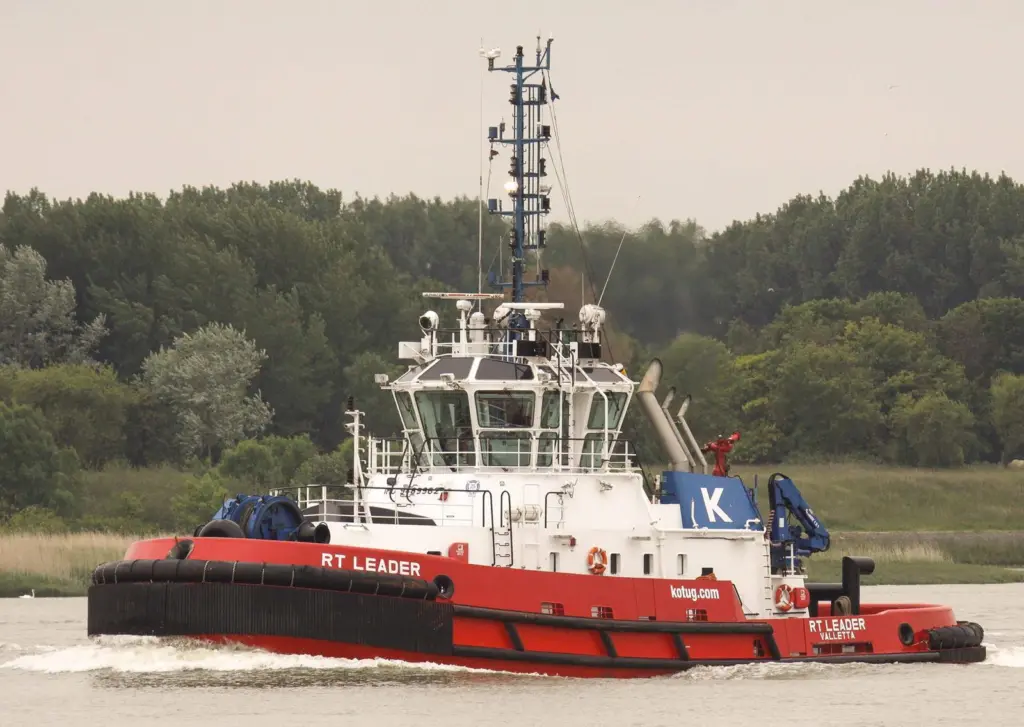
Agus Supriyanto’s tour is usually two or three months and at the time wrote of his experiences on board RT Leader in Brunei a tug with six crew, half national and half international, the latter unable to return home: ‘We are a team, not just during but also after work. We eat together, exercise together, watch movies together. We try to keep things light in this period with the pandemic, so we joke a lot, sometimes we even sing together. We have a karaoke set on board, my favourite song is The Wind of Change by the Scorpions.’
RT Leader’s monthly berthing was stopped and while he missed going ashore for shopping, Agus’s thoughts were with home: ‘Sometimes it does get tough though, I have three children of eight, five and three years old. I am grateful that communications are good, and we can call each other on WhatsApp every day, but it’s hard to hear when there are even the smallest problems at home. At such times I really want to be there and help them, from such a distance there is only so much I can do.’
Tomasz Blaszczyk was en-route to join RT Raven in Darwin when he learned of Covid-19 stating there was some anxiety from those on board afraid of the new crew joining. The news meant stress and anxiety for his crew, Tomasz stating: ‘They were worried about their families, perhaps not their children or wives but their parents and grandparents, the people that were at risk.’
As master, he ensured only reliable news was passed to the crew and organised meetings asking for suggestions saying: ‘Please tell me what you need to keep you in good spirit so we can withstand this period.’ Keeping busy but avoiding fatigue was important: ‘Even if it would take a few months more, we should still remember that we are seafarers, this is what we do, we keep the vessels running.’
He was eventually relieved: ‘After five months you really want to get home. You want to see your kids, your family, the trees, the grass, the flowers, you really miss that at sea. You start missing things that are obvious in daily life like seeing other people, or seeing something green, or brown. Or to see something that is not water.’
Final words are with Tomasz: ‘I am worried about people, and there are thousands of them who now spend more than 12 or 15 months on board and are still stranded. We were lucky, we spend nearly five months on board, there are a lot of people that are in much worse condition than we were, even without the pandemic.’
By Peter Barker

Related Articles
 SPECIAL REPORTS
 TUGS & SALVAGE
 EQUIPMENT