![MaritimeJournal[Seawork]](https://www.maritimejournal.com/wp-content/uploads/2026/09/MaritimeJournalSeawork.svg)


Autonomous tug sailing a step closer
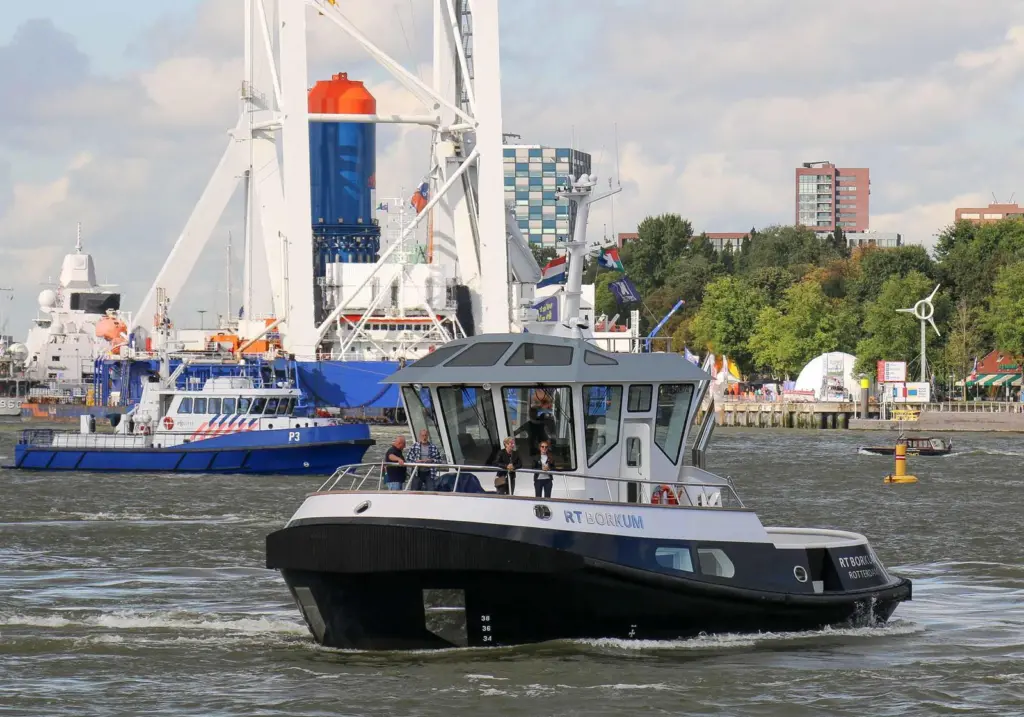
Kotug International, Rotortug and tech start-up Captain AI have demonstrated the first autonomous optimal route sailing using the training Rotortug ‘RT Borkum’.
While autonomous ships may seem a long way off for the shipping world in general with only the brave exploring the concept practically, it is the tug industry that has actual projects underway, this development being just the latest step along the road.
The demonstration was part of Smart Shipping event of the Netherlands Forum for Smart Shipping involving RT Borkum sailing autonomously (with a crew on board) from Boompjes by Rotterdam’s Erasmus Bridge along the Nieuwe Maas to the Uniport complex at Waalhaven.
In 2018 Kotug and Rotortug demonstrated operating RT Borkum in Rotterdam from Marseilles remotely and this next stage involved a similar operation using the Captain AI route planner and autopilot which Vincent Wegener of Captain AI describes as: ‘… the Google Maps for waterways [where] it calculates the route, which the boat then autonomously sails, using our autopilot software.’
The route is defined as efficiently as possible by connecting Captain AI’s software to Kotug’s Optiport dispatch planning software enabling optimised route planning in real-time, based on AIS data and Artificial Intelligence. Linking the two is explained by Patrick Everts of Kotug: ‘The digital captain has to know what the vessel’s destination is and how to get there in the most efficient way … not only making the skipper’s life easier because the vessels can autonomously navigate the optimal route, but also saving on fuel and CO2 emissions.’
Following earlier successful operational trials in Rotterdam the next step is to develop the partnership further to develop and commercialise the software including exploring matters including safety and legislation.
At recent towage industry conferences there has understandably been something of a gap between those promoting remote control and fully-autonomous technologies and end users who, while open to making economies, will be familiar with traditional ways of working that have served them well often stretching back many generations. Perhaps a halfway house of manned tugs operating autonomously for much of their operation will be an acceptable step forward allowing the gaining of experience, advances in technology and acceptance by the end users who are ultimately responsible for the safe outcome of the operation while maximising any commercial efficiencies in the offing.
Related Articles
 SPECIAL REPORTS
 TUGS & SALVAGE
 EQUIPMENT