
Biomethanol propulsion for a shallow draft fast ferry
A Dutch naval architecture company has been evaluating the potential of biomethanol as fuel for a carbon-neutral ferry.
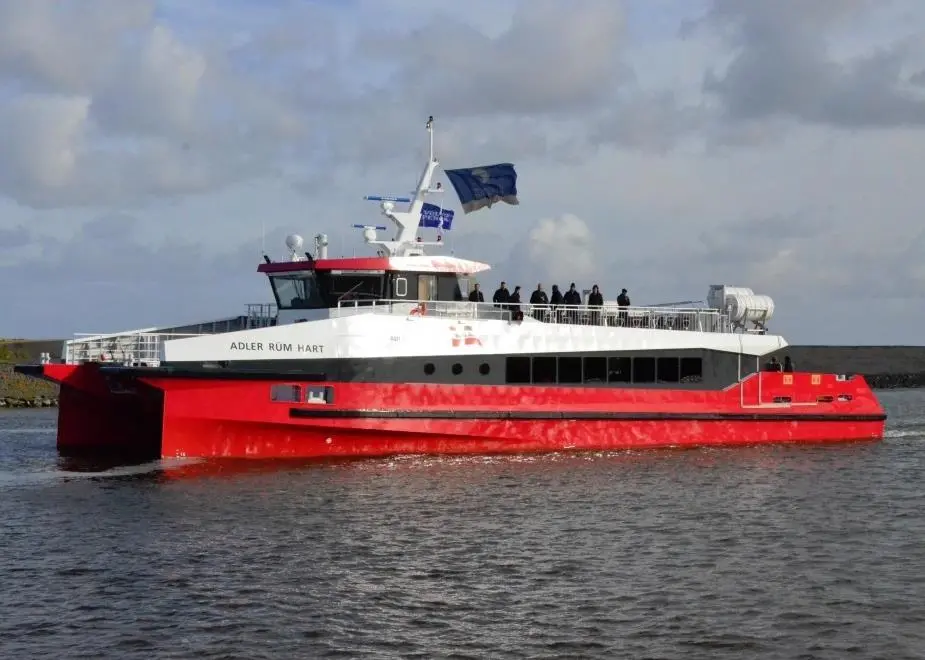
Conoship International, which has a long track record with ferries, especially for the Dutch and German Wadden Sea, has run this case study for a 250 passenger ferry. The conclusion they have reached, is that it poses many challenges, not least the classification process, but it is now possible.
A ferry poses many challenges in regards to passenger safety regulations. Zero-emission, or carbon-neutral, also poses several challenges regarding safety. The study is therefore based on an existing, and thus technically feasible vessel: the Adler Rüm Hart ferry.
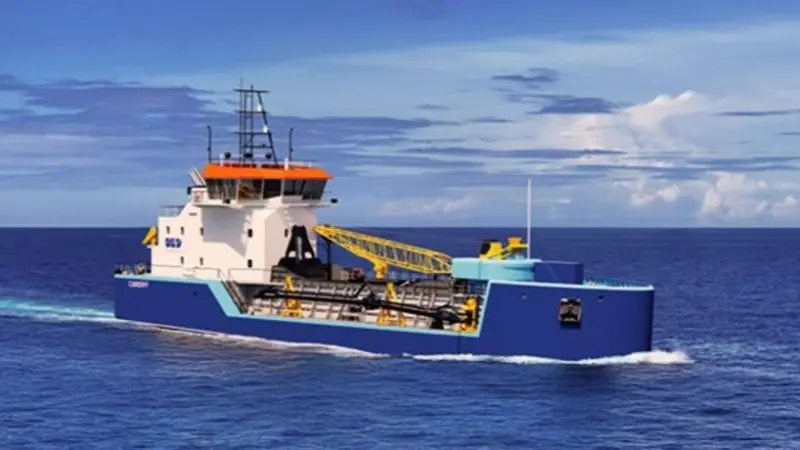
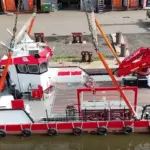
Adler Rüm Hart is a lightweight aluminium and very compact catamaran passenger ferry sailing up to 18 knots at 750kW. The vessel is designed according to the strictest environmental standards, minimizing ecological impact. For example, non-biocide coating is applied and the design complies to Blauer Engel ‘Umweltfreundliches Schiffsdesign’ and ‘Umweltschonender Schiffsbetrieb’. The innovative hull of the catamaran was designed and optimized to reduce ship resistance, keeping fuel consumption to a minimum.
Conoship International’s view is that the most suitable and future-proof fuel currently available is bio-methanol. Its properties make it suitable for a ferry with a fixed route (bunkering) and, compared to Hydrogen, it is readily available and usable. With bio-methanol, emissions are largely reduced and, unlike LNG, it can reach CO2 neutrality when it’s from a biomass source or synthetically produced with renewable energy.
The overall conclusion of the case study is that it could be possible to sail on bio-methanol, since it will not have a significant effect on the general design of a ship. However, some systems need to be changed to achieve the functional requirements of the rules. The keyword being ventilation.
A significant part of the case study involved risk assessment of the hazardous zones on open deck with bio-methanol as a fuel. Conoship put together a useful diagram with the flammable hazards expressed as spheres. The inner spheres indicate a considerable chance that a flammable substance is ever present. The outer sphere indicates very exceptional chance. The aft mast is the outlet of the tanks and the foremast contains the inlets of them. The sphere on the foredeck is the bunkering station.
From a classification point of view, the development of a ferry on bio-methanol is new, and so is the regulatory process. In this case, Lloyds Register is working with Conoship towards a Class assessment for the design of this methanol powered ferry.
By Jake Frith