



Decarbonisation and diversity dominate SMM
The commercial marine industry is taking decarbonisation extremely seriously, with barely a booth at the exhibition not mentioning clean goals in one way or another.
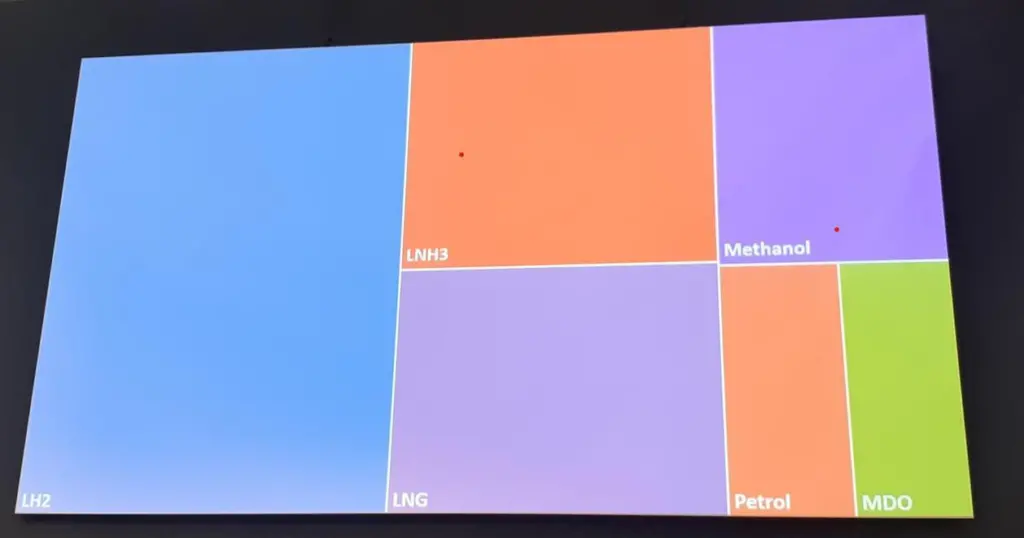
Under the same umbrella is diversity – of fuels, that is, with the only clear agreement being that there will have to be a whole range of options for the sector. Gone are the days when it was diesel for all.
Opening the conference on September 5, MAN Energy Solutions CEO Uwe Lauber added that in the current drive for sustainability, more focus needed to be paid on converting existing vessels to new alternative propulsion systems and fuels rather than simply replacing old vessels with new.
One of the new features of this year’s SMM was three ‘transition stages’ (Green, Digital and Cruise & Ferry), which each had10-minute speaker slots on the stages at the conference as well as networking opportunities.
Speaking at the Green Transition Stage on Wednesday, Rasmus Stute, DNV’s vice-president, area manager, appealed to the shipping industry to do its bit to help keep the global climate to a minimum increase of 1.5oC by 2050 in accordance with the Paris Agreement.
“We need to accelerate technology development, and significant effort needs to be made on the policy side,” he said.
No ‘one size fits all’

Stute said there had to be a shift to low-carbon fuels by at least 75% – currently, 78.9% of orders for new vessels were for vessels that will run on diesel, he said.
For smaller vessels, he said methanol was on the verge of becoming available, with rules and regulations in place.
“The new thing on the block is ammonia, which we are discussing quite a lot because it’s a relatively easy molecule, it’s easy to build, with relatively less energy compared to methanol, but it has a big disadvantage, and that’s its toxicity,” he said, which was why rule making was much more difficult than for methanol, which is already ready for application.
It was a similar story with hydrogen, he said, which would not be ready before 2028, fuel cells not before 2025, regulations not until at least 2030.
“The last important thing for the decarbonisation journey is carbon capture and storage, especially onboard technology, like washing CO2 out of the exhaust stream. We do not expect large-scale application until 2030.”
“To reach the 1.5 degree target, the regions and sectors need to move much faster, much stronger” he said. “The fuel mix will get more diverse and fuel readiness and fuel flexibility is the key to reach this. Be ready for the fact that ships will change over the lifetime of the ship with the type of fuel that they are consuming.”
Related Articles
 INDUSTRY NEWS
 INDUSTRY NEWS
 INDUSTRY NEWS