


Tight squeeze in the Scheur calls for more tugs
Port of Rotterdam Authority (PRA) implemented restrictions including requirements for an extra tug on the Scheur between Maasluis and Rozenburg.
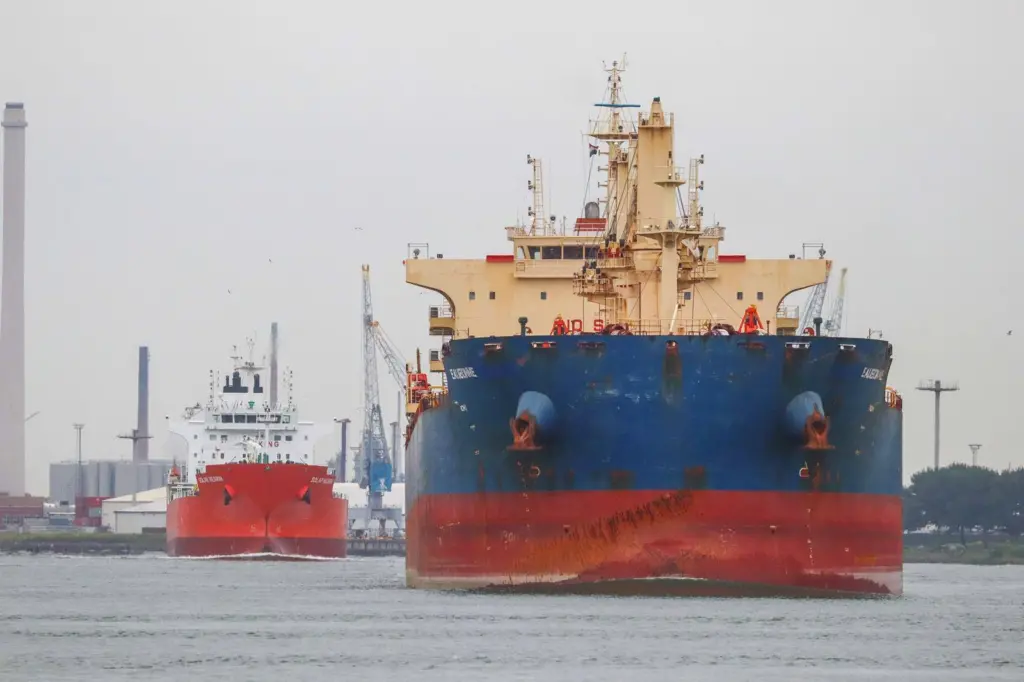
The temporary navigation rules, which lasted around a month, were put in place to ensure safe passage for around three hours a day during periods of strong tides while the jack-up crane vessel Neptune was in the Scheur, at times in the middle of the channel carrying out seabed operations associated with construction of the new Maasdelta Tunnel.
The tunnel, under the Scheur and expected to open in 2024, will ease traffic congestion including in the nearby Benelux Tunnel for traffic heading to and from the Maasvlakte container terminals.
As part of the work, DEME’s Neptune was employed to lay tiles on the seabed, each weighing 100 tonnes, as temporary foundations for the tunnel sections that will be later towed to the site and sunk into position. Once the tiles were positioned, a diver conducted an inspection during periods lasting between 15 and 20 minutes, when RPA closed the Scheur fully for shipping.
Excavation of the tunnel trench created what RPA called a ‘nuisance’ transverse current and the contractor had an escort vessel on standby to warn shipping along with a tug in case any assistance was required.
The requirement for seagoing vessels over 140m in length to use a tug concerned passage between kilometre posts 1015 and 1018, where the passageway was narrower because of Neptune, which included being fixed to the seabed in the middle of the Scheur.
The section concerned is a particularly busy part of the route into the Rotterdam port estate, including Botlek, Eemhaven, Schiedam area and Wallhaven up to Rotterdam Cruise Terminal in the heart of the city. Several dozen seagoing vessels and a few hundred inland vessels pass the area daily.
Shipping was asked to take extra care, moderate speed and follow the instructions of RPA’s traffic controllers.
“We are now entering the most exciting phase of the construction of the Maasdelta,” said Pieter Nordbeck from PRA. “All shipping must be regulated to allow safe and smooth passage of the Neptune, which has been firmly fixed to the riverbed by means of legs.”
Traffic was regulated from the Rotterdam Traffic Centre Botlek around 4km upriver. Here, controllers maintained consultation with Neptune’s master, traffic controllers and those on board.
Nordbeck said the jack-up had four different centre positions, which created a short passing route and a long passing route with inland vessels still able to pass along the short route.
This was not possible for seagoing vessels, however, so when Neptune was positioned in the south of the middle, shipping was only allowed to pass to the north. During that time it was one-way traffic only with overtaking prohibited for all shipping.
Tricky but critical engineering
A critical part of the Maasdelta Tunnel will be when the two tunnel sections are immersed. Earlier in 2022, MJ reported on the float-out of the concrete 180m long, 8m high, 40m wide southern tunnel section from drydock at Damen Verolme Botlek. It was towed by two Boluda Towage tugs to the quay close to the dock, where the northern part of the tunnel, which had followed the same route the day before, was moored.
RPA says the Scheur will be fully closed for shipping when the two tunnel sections are towed the short distance from Damen Verolme to the tunnel site, where they will be immersed into the specially dredged trench in the seabed.
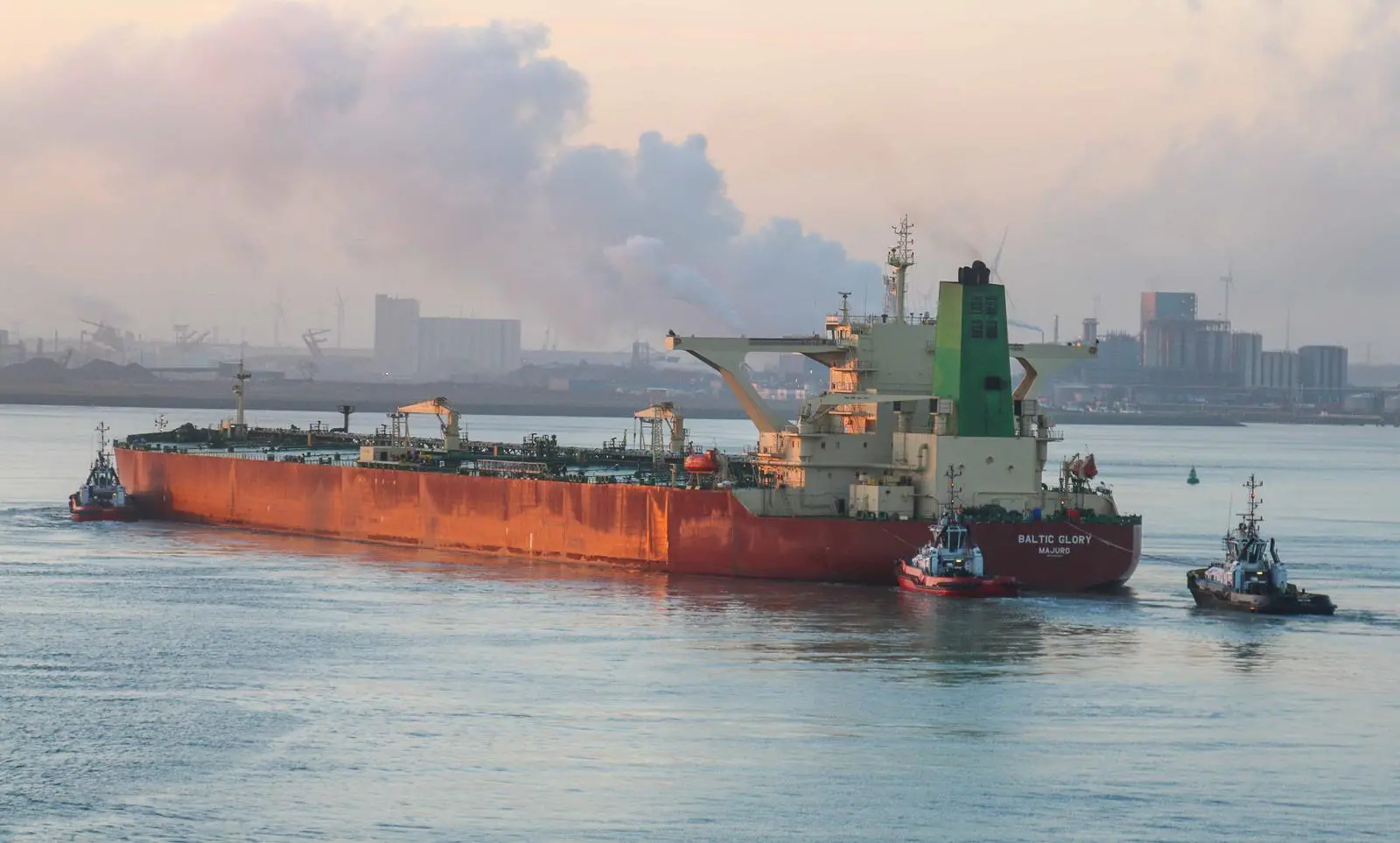
The operation is planned for two whole days, the first starting on Friday 31 March (2023) at 10am and lasting around 24 hours with the second taking place from 10am on Saturday 15 April, again for a period of 24 hours.
It is hoped MJ will be present to witness the operation and the Maasdelta Tunnel itself is due to be completed by 2024.
With around 30,000 seagoing vessels using Rotterdam annually, shiphandling towage services in the port are expected to be extensive.
While the Dutch dominate the river and inland towage scene, their activities in the larger shiphandling tug sector have waned over recent years with a notable presence now of tugs from companies including Spain’s Boluda Towage, Germany’s Fairplay Towage and the latest arrival, MedTug.
Related Articles
 INDUSTRY NEWS
 INDUSTRY NEWS
 INDUSTRY NEWS