






Longlife solution with new composite decking
There is something new afoot – or rather, underfoot. It comes in the shape of a composite timber decking product that, the manufacturer claims, is actually better than traditional wood.
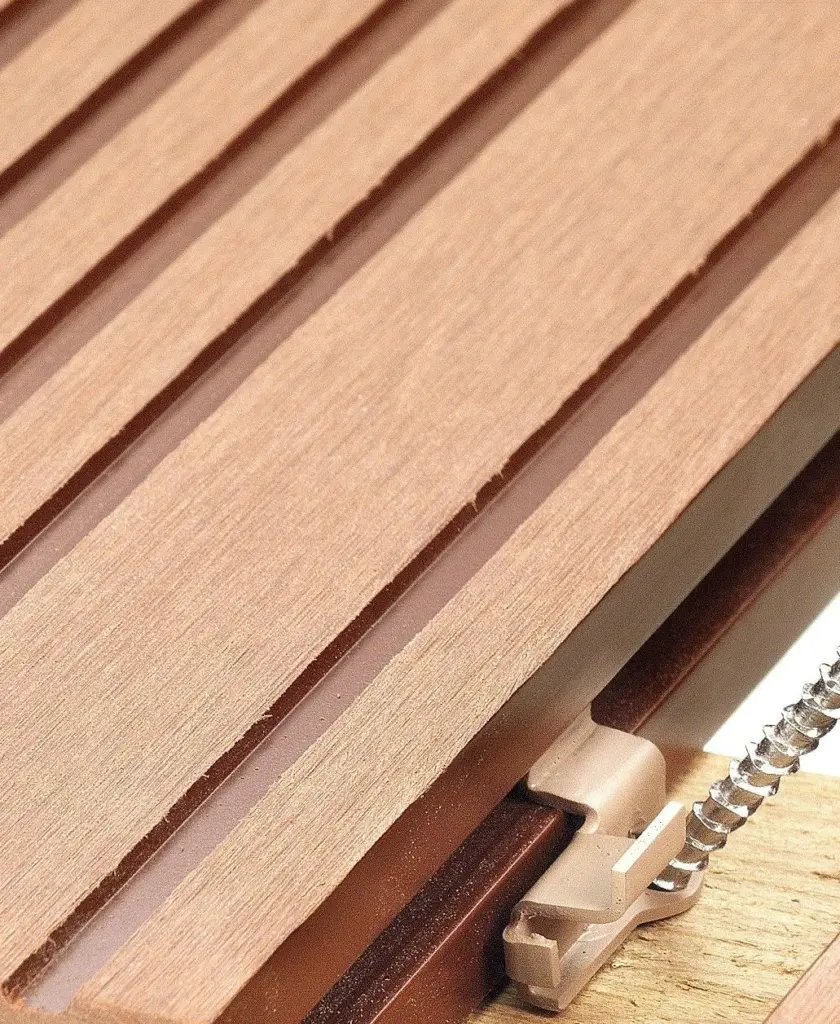
For a start, Ultradeck looks like a natural, good quality hardwood, complete with grain, and it can be both installed and worked in similar ways, being able to take sanding to remove stains or lightly jet washed when necessary.
However, it doesn’t need staining, oiling or painting and does not absorb moisture so it dries very quickly. Moreover, it also resists that old UV problem, doesn’t rot or splinter, (or go slimy with algae) and it requires very little in the way of maintenance, having an expected lifetime of over 50 years. It is also eco-friendly, as it is made from a high proportion of recycled material.
Better yet, it can be used as a quick replacement deck on old structures, as well as in new installations as the decking has been engineered to span up to 600mm, the standard joist span used by the majority of leading pontoon builders. Getting across this gap used to be a problem associated with earlier forms of composite surfacing. When, as has been tried, the boards were made thicker, the standard fixings wouldn’t hold them. So it was fine for newbuilds, not so good if you needed a replacement section.
To address this, the boards, manufactured from polyurethane based resins mixed with reclaimed hardwood, had a lot of development time. Two and a half years in fact. This has been spent getting both the construction and the mix right, Stuart Burns of Dura Composites told MJ. Part of the time was ‘tooling up’ to make boards that were double the width of standard boards (the usual 146mm simply comes from what you could originally get out of a tree).
But most importantly, the boards have a hollow core centre, creating a much lighter design which achieves ‘the perfect balance between strength, weight, endurance – and cost,’ according to Mr Burns.
Further, the new decking has anti-slip qualities greater than timber, offering a surface that meets the BS 4592-0 standard. Like the company’s other surfacing products, the board is also reversible, meaning that clients have a choice of two surface options, a wide groove pattern for maximum drainage or a narrow groove design on the other side.
The concealed fixing system results in decking without screw or nail heads working loose on the walking surface. And, if there is one detrimental thing that could be said about composites, the tendency to need a certain amount of expansion space in heat, these fixings keep a standard, healthy distance between each board.
Related Articles
 MARINE CONSTRUCTION
 EQUIPMENT
 MARINE CONSTRUCTION