


Tugowners turn to shore power to cut costs and emissions
Many tug companies around the world are turning to ‘ shore power’ to economise on fuel and cut exhaust emissions when their shiphandling tugs are not in use and/or standing by.
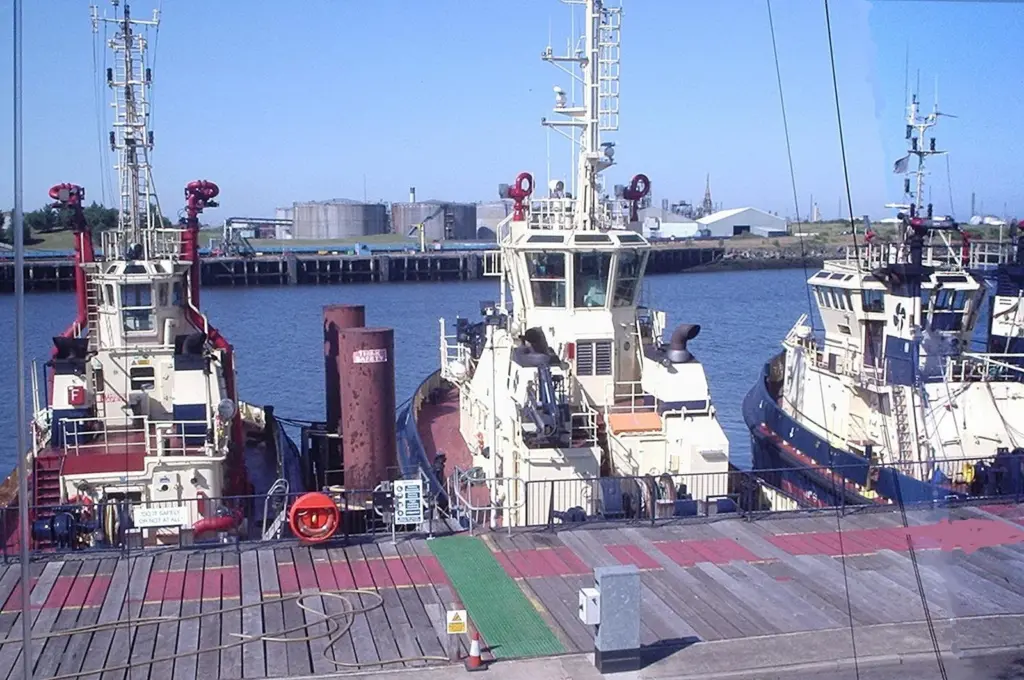
In the USA, tug operator Crowley and the Port of Los Angeles have collaborated to provide the necessary shore power facilities for the Crowley tugs used for ship assist and escort operations. The tug fleet is now using newly installed shoreside electrical power when not at work to cut fuel consumption and reduce carbon dioxide emissions.
Previously, the tugs tied up at the dock needed to run their generators to provide onboard electrical power. Crowley and the Port of Los Angeles completed this environmentally friendly initiative at Berth 86 in June. The port paid to run electrical power to the dock, and Crowley purchased and installed the electrical connections for the boats and transformers to take the voltage from 440 to 220 volts.
Overall, Crowley expects to conserve fuel used daily by the generators in its Los Angeles operations, and consequently reduce carbon dioxide emissions by more than 486,180 pounds in the first year. According to the U.S. Environmental Protection Agency, each gallon of diesel fuel produces approximately 22.2 pounds of carbon dioxide emissions. Crowley already has similar facilities in Seattle, Jacksonville, Pennsauken and Puerto Rico.
Frosty Leonard, Crowley manager of marine operations in California commented, ‘We are very pleased to be a part of this important green initiative with the Port of Los Angeles. Using shoreside power is not only the environmentally friendly thing to do, it’s just good business.’ As an added benefit, Leonard said shoreside power eliminates the constant noise from the engines that disrupts the crews’ rest periods and provides engineers a quieter engine room in which to work.
In Europe, the UK and elsewhere, operators are establishing ‘marina’ style moorings to simplify the provision of suitable electrical supplies and other facilities for their tug fleets. The saving can be quite considerable. The majority of shiphandling tugs, including many very modern vessels, have relatively large auxiliary generators designed to deal with the entire onboard electrical load. Very few are equipped with small harbour sets intended only for light domestic loads and battery charging. Significant savings can be made in fuel, engine life and maintenance. Tugs employed in the marine civil and dredging industries, that spend considerable periods on site, are commonly fitted with one relatively small auxiliary generator, frequently located in a sound proof housing or in a remote compartment, for use when the vessel is not underway.
A further benefit of a shore power supply comes with the ability to keep the main engines warm, by means of electric heaters in the cooling system, when not in use, particularly during the winter months.
Related Articles
 TUGS & SALVAGE
 EQUIPMENT
 MARINE CONSTRUCTION