


Peene deepening opens access for bigger ships
Local German authorities have completed the deepening of a 23.7km stretch of the northern Peene River to allow bigger ships to reach Wolgast.
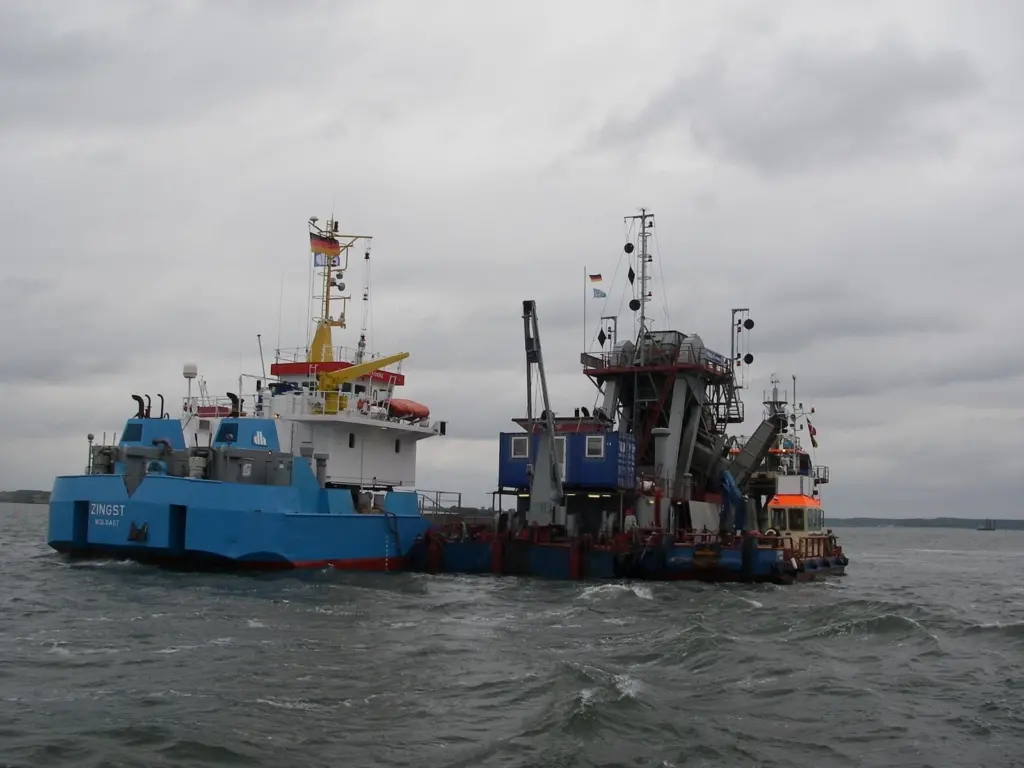
The dredging work, between the Ostief West and the Wolgast Suedhafen, began in July 2007 to deepen the channel from 6.5 to 7.5m. It was carried out in three phases and a total of nearly 1.4m cu/m of dredger material was removed.
The first phase, in 2007, covered the dredging of seven curves in the river. It cost €2.5m and 180,000 cu/m was removed. Some 430,000 cu/m was removed along a 7.4km stretch in the second €6m stage of the project in 2008. The largest quantity of sand, marl, mud and silt, 750,000 cu/m, was removed in 2009 in an operation costing €10m.
Officials, who praised local cooperation on the project, said the Peene deepening was needed because Wolgast was losing lucrative grain export business. Grain ships of around 5,000dwt, the most economic size for grain operations, have until now been too big to access port facilities.
The Peene dredging work alone cost a total of about €25m, of which some 65% was provided by the European Regional Development Fund (ERDF).
A consortium grouping Detlef Hegemann GmbH, the group which also operates the Peene Shipyard in Wolgast, Heinrich Hirdes GmbH, and Rhode Nielsen A/S, won and carried out the dredging work after tenders were invited by the Wasser und Schifffahrtsamt (WSA) in Stralsund.
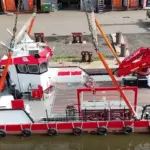
The Rhode Nielsen 45.6m bucket dredger Frigg R, the 65m Detlef Hegemann split hopper barge Zingst and the Hirdes backhoe dipper/grab dredger HH48 were used while WSA buoy layers Görmitz and Ranzow moved and relaid buoys.
Because of the deepening, an existing ship berth north of the Peene Bridge along with its seven mooring bollards had to be moved 30m east. That work was carried out in 2008 by Colcrete von Essen GmbH at a cost of €450,000.
By Tom Todd
Related Articles
 MARINE CONSTRUCTION
 EQUIPMENT
 MARINE CONSTRUCTION