




Automatic mooring system for Copenhagen Malmö – by David Foxwell
Following an order the company received last year to design and install two double-tier linkspans for Copenhagen Malmö Port, TTS Port Equipment AB has been given the go ahead to supply a semi-automatic mooring system for the port.
Installation of the linkspans will begin in late 2010 with the mooring system delivered at the same time.
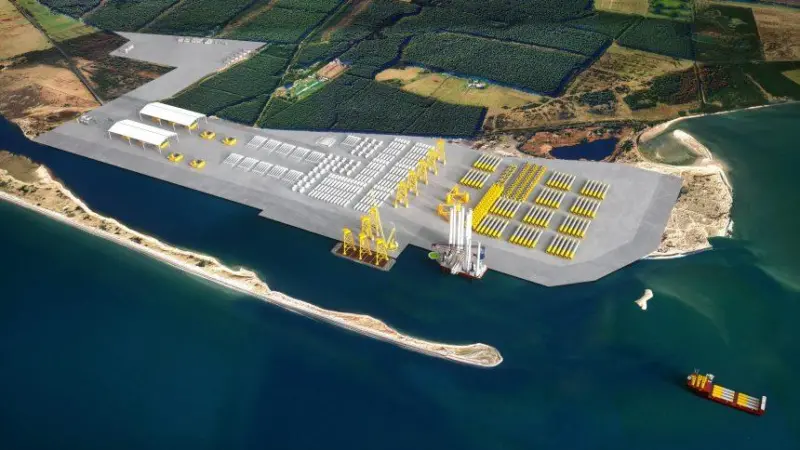
The port is currently undergoing large scale expansion with the building of new facilities coupled with a move further away from Malmö city centre. Swedish contractor Skanska is the turnkey contractor for the entire port project, which includes the construction of three new terminals, two of which will handle ferry cargo and containers. The third will be a combi-terminal for railway traffic.
The TTS ‘rope-type’ semi-automatic mooring system will be installed in the new port’s north harbour. The device will be designed to buffer the transverse forces from dedicated vessels, and each vessel will be fitted with a compatible bollard installed into the ship’s side. The system will consist of an auto-mooring rig, including a hydraulic cylinder and a hydraulic powerpack housed in a cabinet on the quay. Quayside personnel will operate the equipment by push buttons and by manually directing the self-tensioning rope around the vessel’s fitted bollard. Safety features will include an alarm system designed to alert personnel of significant changes in tension or of system failure.
The company has also recently announced that a semi-automatic mooring system it will design is on order to serve two vessels at the new dolphin berth at Gothenburg’s Majnabbe terminal. The system, which will facilitate mooring of 240m long vessels berthing the quay, will greatly simplify the mooring of Stena Britannica and Stena Hollandica.
The system at Gothenburg will comprise three units, each handling one mooring rod. Hydraulic cylinders will be connected to a sliding bollard in a steel structure on the quay while, onboard the vessels, three bollards will be recessed into the side of the vessels, each positioned at a transverse angle to the vessel to achieve the required mooring force. A spring mooring device designed to handle the forces with automatic release function will also be used during operation of the vessel in the berth. Operation will be effected by means of hydraulic cylinders controlled by personnel on the dolphin using a push button console.
Related Articles
 MARINE CONSTRUCTION
 EQUIPMENT
 MARINE CONSTRUCTION