


Bristol to develop deep sea terminal
Bristol port has been given the governmental green light for developing a deep sea container terminal (DSCT) at its Avonmouth Dock.
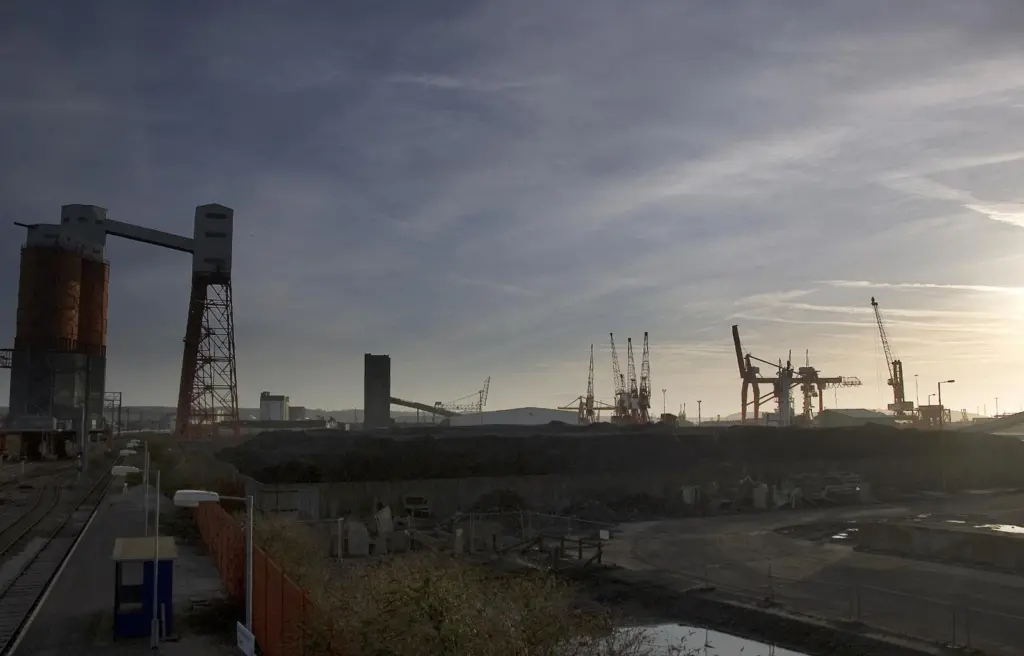
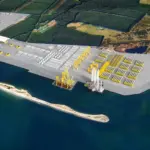
The proposed DSCT would accommodate the largest container vessels currently in operation with none of the delays due to tidal locks at Portbury and Avonmouth. It is designed to handle vessels of up to 14,000 teu and 16m draught, giving deep water berthing at all tides.
Further, the new development will give extensive container handling and storage space, and links to the port’s existing rail and road connections.
The terminal is to be located on a present brownfield site and reclaimed land of a former oil terminal and tanker jetty. Its capacity when fully operational will provide throughput of about 1.5 million teu per annum. This compares to forecast volumes for the UK of about 20 million teu by 2030.
The main construction requirements involve creating 1200m of operational quay wall (using either concrete caissons or a piled structure) providing berths for deep-sea and feeder container vessels. To accommodate the necessary 16m draught vessels at all states of the tide, the high Severn tidal range requires a quay wall 37m high.
Widening and deepening parts of the existing Severn Estuary deep water channel will provide an approach channel of 14m below CD (chart datum). Much of this channel is already at or near the necessary depth, and will require less than 1m of dredging.
Further, there will be a vessel turning area adjacent to the quay to a depth of 14m below CD and berthing pockets alongside the quay wall to a depth of 18m below CD.
A further 600m breakwater is planned which will reduce the effect of tidal currents on both the berths and the container vessel maneuvering area. This reduces the size of the turning area and thus the required volume of dredging during the construction and operational phases.
Reclamation will cover 55ha of inter-tidal and sub-tidal area to create the container handling and storage area along with the HGV holding and loading area. The other 30ha of the total site is brownfield land previously used as an oil terminal. The material recovered from capital dredging will be used in the reclamation works.
The rail terminal and road system will also be linked to the new handling and storage area, plus there will be further installations, covering container handling equipment, navigation aids and lighting, and provision of offices, workshops and warehouses.
Construction could start in 2010 bringing the terminal into operation in just three to four years.
The proposal has been subjected to detailed investigation in a series of Bristol Port Company studies of its economic need and benefits, environmental impacts and engineering requirements.
Related Articles
 MARINE CONSTRUCTION
 EQUIPMENT
 MARINE CONSTRUCTION