

New deepwater berth for Port of Montrose – by David Foxwell
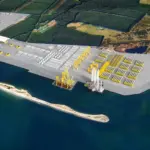
A new 220m deep water berth is to be built at the Port of Montrose in the UK in order to divert freight services from the areas roads.
The £8.2m berth, which will be constructed by Montrose Port Authority, is expected to enhance services between the north east of Scotland, England and mainland Europe, and cut out the need for the equivalent of more than one million lorry miles from roads in the region.
The Scottish government has allocated a £3.2m Freight Facilities Grant to the new project, and a range of local agricultural, commercial and oil related businesses have already signed up to use the new facility and transfer their freight from road to water. The Royal Bank of Scotland is also providing £5m to support to the project.
Montrose Port Authority is a Trust Port and, in 2003, a large section of quay on the south side collapsed into the river, reducing capacity and hampering further development. The authority is taking forward an £8.5m project to reconstruct the quay.
On a visit to Montrose Port, Transport Infrastructure and Climate Change Minister Stewart Stevenson said, ‘This significant investment will enable the Port Authority to upgrade the facility and allow local businesses to switch freight from road to water. In taking more than one million lorry miles off our roads every year, equivalent to almost 130 lorry journeys a week, this project will cut emissions and noise and boost local tourism by removing lorries from scenic routes.’
‘We are committed to getting more freight off Scotland’s roads and onto water and rail. Initiatives such as this can make an important contribution towards achieving our 2020 target to reduce emissions by 42% and I would encourage more Scottish businesses to think about their freight priorities and how these impact upon the environment. The freight industry can play its part by taking advantage of our grant schemes and moving more freight away from the roads. This project will generate more than £6.6m of environmental benefits over eight years.’
Related Articles
 MARINE CONSTRUCTION
 EQUIPMENT
 MARINE CONSTRUCTION