


SCR technology for Volvo Penta engines
Volvo Penta, together with specialist company STT Emtec, is introducing an effective solution to reduce NOx emissions from high speed marine diesel engines.
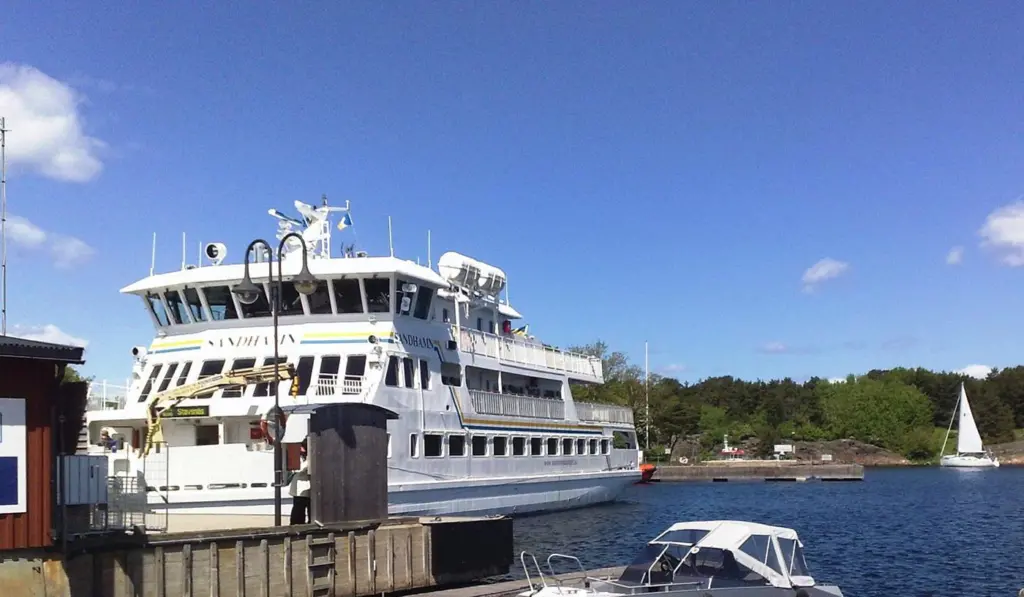
The system uses Selective Catalytic Reduction (SCR) technology and is intended for passenger ferries in city harbors and on river waterways, government vessels like pilot and patrol boats, workboats and harbor tugs and other applications where emission demands are stringent. Several ferries in the Baltic Sea have successfully used SCR technology for years.
The Volvo Penta STT Emtec SCR system comprises of a sophisticated control system, a urea tank, a urea pump with an injection module, and a catalyst. The system has been extensively tested in Sweden onboard the passenger ferry Sandhamn. This ferry operates in the Archipelago of Stockholm, one of Sweden’s most beautiful, but also most populated and sensitive coastal areas.
The marine SCR system can be fitted to all Volvo Penta marine diesels, and gives reductions of NOx emissions up to 90%. The Volvo Penta marine commercial engine range already meets EU inland waterways stage 3A, US EPA tier 2 and IMO tier 2, in force from Jan 2011. With the SCR system, NOx levels can be reduced down to 2 g/kWh. This is in line with the levels of IMO Tier 3, in force from January 2016.
SCR works by injecting urea into the hot exhaust stream where the urea decomposes to ammonia. The ammonia enters a catalyst where it reacts with nitrogen oxide (NOx) in the exhaust and reduces it to pure nitrogen. NOx emissions can be reduced by as much as 90%.
The launch of the marine SCR product is a direct result of STT Emtec’s knowledge of NOx reduction technologies in the automotive sector, which has been tailored to the specific needs of coastal workboats, ships and offshore vessels. Together with Volvo Penta, this SCR technology is now ready for marine high speed diesels that run on regular diesel fuel.
Related Articles
 POWER & PROPULSION
 VESSELS
 POWER & PROPULSION