![MaritimeJournal[Seawork]](https://www.maritimejournal.com/wp-content/uploads/2026/09/MaritimeJournalSeawork.svg)


Time is running out for the British ETVs
In spite of considerable opposition and lobbying, the British government shows no sign of changing its decision to scrap the four Emergency Towing Vessels (ETVs) stationed in strategic locations around the UK coastline.
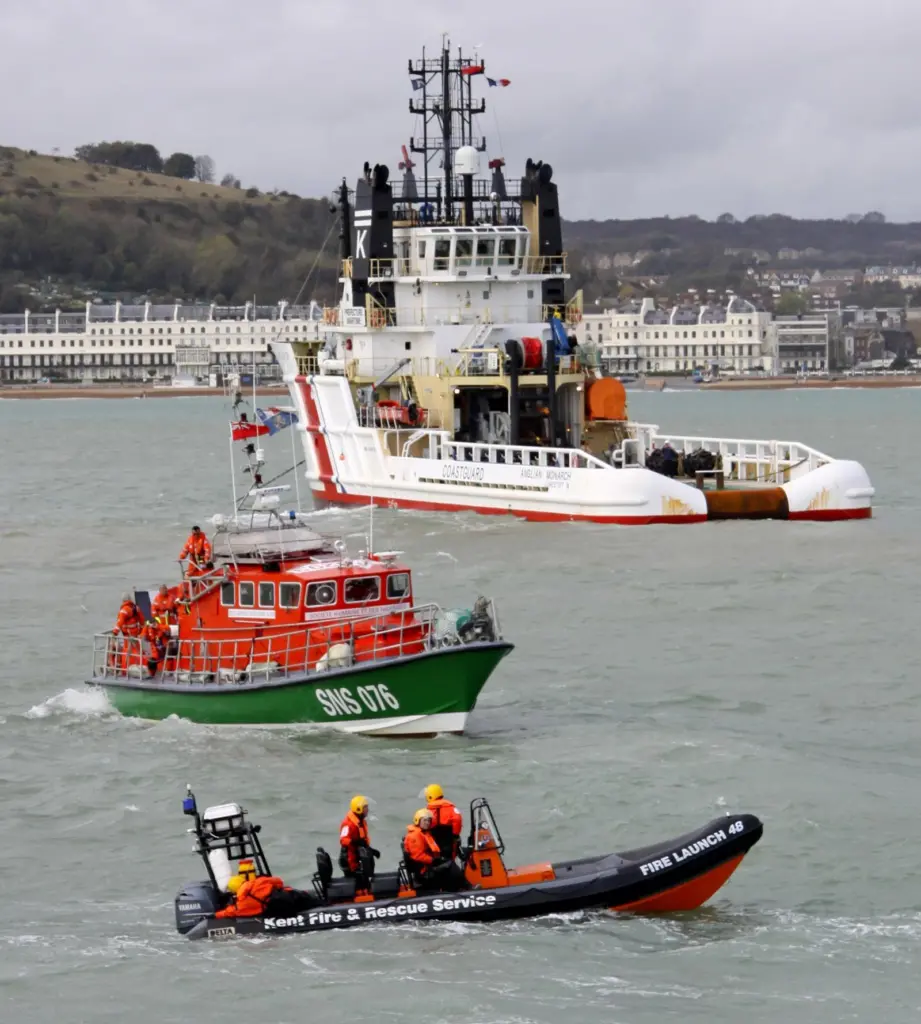
If the decision is not reversed, or an alternative sought, all four ETVs will be withdrawn at the end of September when the current contract with commercial operators J P Knight (Lowestoft) Ltd comes to an end.
The original announcement made in November 2010 by the Department for Transport stated that cancelling it would save £32.5m over the period of the comprehensive spending review. It said, “The Maritime & Coastguard Agency (MCA) will no longer provide ETVs at taxpayers’ expense from September 2011. Emergency towing vessels are mainly deployed when vessels breakdown. The government believes state provision of ETVs does not represent a correct use of taxpayers money and that ship salvage should be a commercial matter between a ship’s operator and the salvor. Removing ETVs will save £32.5m over the spending review period.”
Since that announcement was made there has been a barrage of disapproval from many areas within the shipping industry, local authorities, environmental groups and the public. A major area of concern has been the belief that the British Government has totally misunderstood the function and importance of the ETV service in protecting the coastal areas around Britain. It also appears that the government has totally dismissed the many years of work put into developing the use of ETVs which followed the recommendations made by Lord Donaldson in 1994 in his report Safer Ships, Cleaner Seas.
That report was issued following his enquiry into the Braer tanker disaster off the coast of Shetland in 1993. Not only did the UK government of the day accept all of the recommendations made in the report, other European nations have used, and continue to use the UK model, as guidance when developing their own ETV services.
Among the most vocal groups protesting at the dismantling of the ETV fleet has been the seafarers union Nautilus International. A spokesman Nautilus International said, “Nautilus finds this decision utterly incomprehensible and it is one that we will seek to oppose as strongly as we can. The ETVs were put in place for extremely good reasons, following reports into two terrible tanker disasters, and their success has proved to be a model for other countries. The number of recent incidents and near misses in the Channel alone serves to demonstrate the value of these vessels and it is clear that the government is taking a major gamble with the environment in removing the protection they provide.”
The local authorities in the Highlands and Islands of Scotland and other authorities around Britain are particularly concerned with the effect of another shipping disaster on their unique and environmentally sensitive coastlines. There is a growing consensus of opinion that believes, using the Governments own figures, the £8m for the operation of four ETVs is a small price to help guard against major pollution incidents that can cost many times that figure to clean up.
A further cause for concern has been the future of the Maritime Incident Response Group (MIRG) which is likely to suffer cuts under the cost-saving programme. The MIRG was formed in 2006 to provide a co-ordinated national network of highly trained personnel to respond to fires, risks of chemical pollution and other accidents at sea. Like the ETVs this the MIRG is part of a network of emergency services who train and exercise together to respond to major maritime emergencies.
The Parliamentary Transport Select Committee met on 26 April to hear oral submissions from ten interested parties comprising the major affected unions and associations, and from the Chamber of Shipping, British Tugowners Association, Svitzer and JP Knight Ltd. A mass of written submissions was also put before the committee from a diverse cross section of protesters.
Unless some alternative arrangements are put in place, which now seems unlikely, the four ETVs, Anglian Monarch, Anglian Princess, Anglian Earl, and Anglian Sovereign, will be withdrawn from their stations at Dover, Falmouth, the west coast of Scotland and Shetland on the last day of September. It is still unclear what will happen when the Anglian Monarch is removed from its role of protecting the Dover Strait. This ETV is operated and financed jointly by the UK Government and the French Prefecture Maritime. Unconfirmed reports indicate that an existing French ETV may be moved into to area from elsewhere.

Related Articles
 SPECIAL REPORTS
 TUGS & SALVAGE
 EQUIPMENT