


MPs reject plans for Coastguard’s future
The British Government should withdraw its controversial proposals to modernise the Coastguard Service, said Members of Parliament on the influential cross-party Transport Committee.
Serious concerns were raised that the safety of people at sea, on cliffs and beaches will be jeopardised if the proposals proceed in their current form. Ministers must issue revised proposals for further consultation.
Launching the report on the floor of the House of Commons last week, Transport Committee Chair, Louise Ellman said, “We accept there is a need for some modernisation, but the Government’s proposals for the future of the Coastguard Service are seriously flawed.
“We found little support for the current proposals and we have no confidence that, under these proposals, the Coastguard will in future be able to respond to emergencies at sea as well as they do now, let alone in a more effective way.
“A drastic reduction in the number of rescue coordination centres will result in a loss of local knowledge amongst coastguard officers who are responsible for taking calls from people and vessels in distress. The Committee is not convinced by the Government’s claim that technology can, at present, replace such local knowledge.
“Whilst there is a case for reducing the total number of rescue coordination centres, any future reorganisation of the Coastguard should be based on 24 hour centres, as they are now, and not on stations open only during daylight hours, as the Government proposes.”
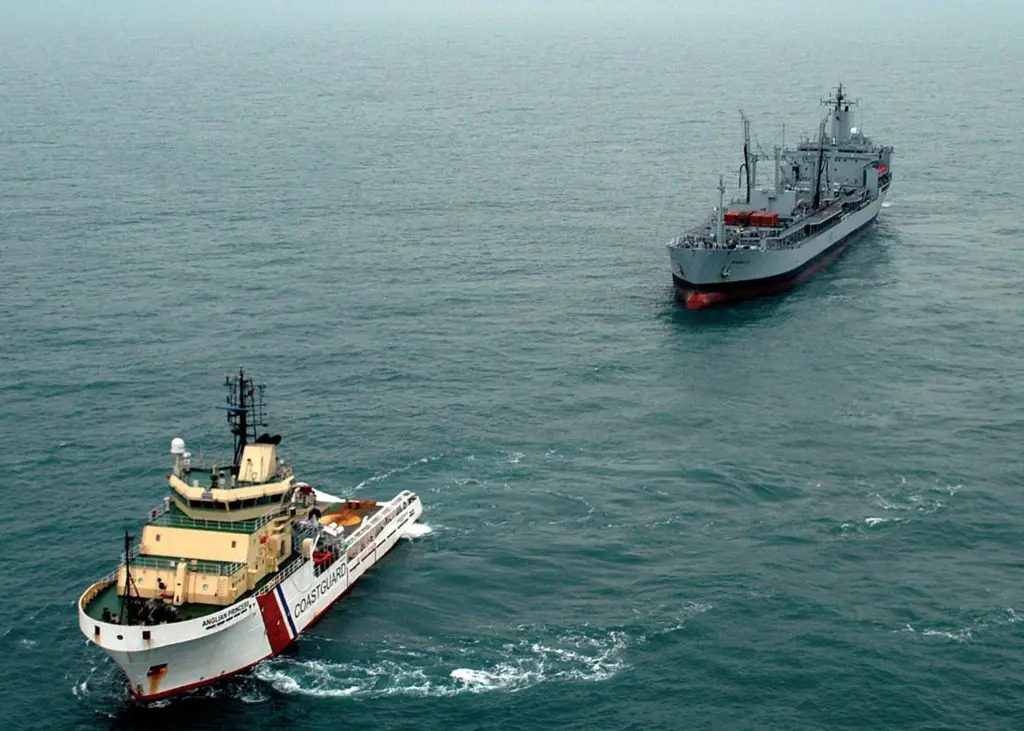
The Committee also strongly condemned the Government’s cost cutting decision to withdraw funding for the four Emergency Towing Vessels (ETVs) stationed around the UK that intercept disabled ships to prevent environmental pollution disasters.
“We found no evidence that a suitable commercial alternative for these tugs exists. The Government’s decision to withdraw funding for the ETVs is unwise and short sighted. Quite literally, it is inviting disaster,” added Louise Ellman.
The Transport Committee also criticised proposals to completely remove government funding for the Maritime Incident Response Group (MIRG), a national fire fighting at sea capability. Ministers should instead adopt a slimmed down MIRG which is more cost effective than the present arrangement.
Lastly, the committee recorded its disappointment that Mike Penning MP, Minister for Shipping, instructed regular coastguards not to give oral evidence to the Committee on the basis that they were junior civil servants. “The minister should have shown more faith in the professionalism of the coastguards and stuck by his original commitment to the House [of Commons] to let them give evidence to the Committee,” concluded Louise Ellman.
Related Articles
 EQUIPMENT
 MARINE CONSTRUCTION
 FEATURES & VIDEOS