

Rhine-Danube Canal heads for 20th anniversary
Germany’s historic Rhine-Main-Danube (RMD) Canal, which links two of Europe’s mightiest river complexes and two halves of the European continent, celebrates its 20th anniversary in September.
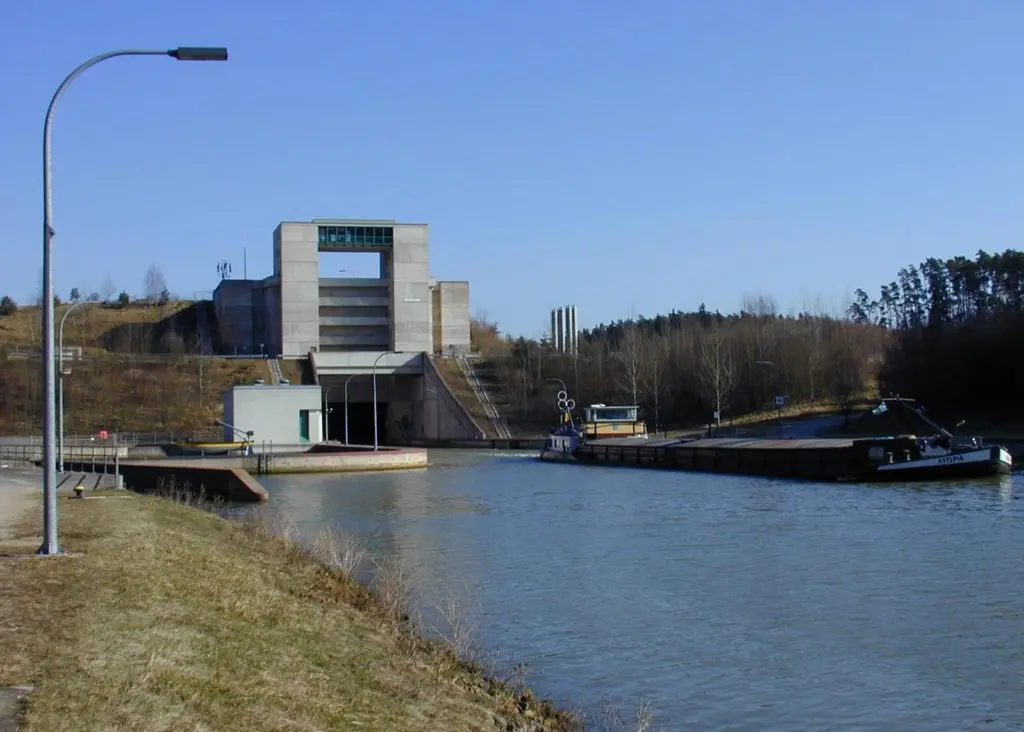
Nearly twice as long as the better known Kiel Canal linking the North Sea and the Baltic in northern Germany, the 171 km southern waterway runs from Bamberg on the Main, a Rhine tributary, via Nuerenberg to Kelheim on the Danube.
When it was opened on September 23rd 1992 it not only linked those rivers but physically cemented the unification of two halves of a formerly very divided continent. It also created a pan-European waterway 3,500 km long from the North Sea to the Black Sea, making central and Eastern Europe accessible for inland shipping from the west and vice versa.
Over the centuries people like Charlemagne, Napoleon and Goethe were among those intrigued by the possibility of joining the two river complexes, which rise close to each other near the Swiss-German border, but then head for seas at opposite ends of Europe.
The canal, which is 55m at its maximum width, took more than 30 years to build and cost some 4.5bn Deutschmarks. Along its length ships rise 242.9m through 16 of the world’s highest locks and over the Hipoltstein, 406m above sea level. The canal also boasts eight bridges and 75 kms of dams as well as five pumping plants.
When the RMD Canal was opened, hopes were high for its commercial success and the time was just right. Eastern barriers had just come down and new economies were seeking transport alternatives. The waterway carried some 5m tons in its first year and there were even a few euphoric predictions of 28m tons of cargo by 2010.
However two wars in the Balkans in the 1990s shattered those hopes and the second of those conflicts left the Danube blocked by bombed bridges in the former Yugoslavia, destroying plans for new cargo services. Officials admitted in 1998 that the early years had not brought the hoped for cargo volume but tipped it to increase.
In 2000 8.5m tons were recorded, but that has steadily declined to 7.6m in 2005 and to 5.1m tons last year as new east-west motorway and rail services soaked up much of the expected traffic. One example of that is container traffic, which totalled about 10,000 TEU in the year 2000 but had dwindled to just 462 TEU last year.
The RMD waterway has, however, proved an unexpected hit as a passenger/cruise ship tourist route. Volumes have risen steadily in recent years and increased by 22% last year, when 688 ships with nearly 110,000 passengers sailed through. The scenery and the novelty of the locks provide major attractions.
By Tom Todd
Related Articles
 MARINE CONSTRUCTION
 EQUIPMENT
 MARINE CONSTRUCTION