


First Voith Linear Jet will power WFSV
The new vessel propulsion system, Voith Linear Jet (VLJ), is literally taking shape at the Dutch foundry, Drunen, which has cast the rotor of the first VLJ.
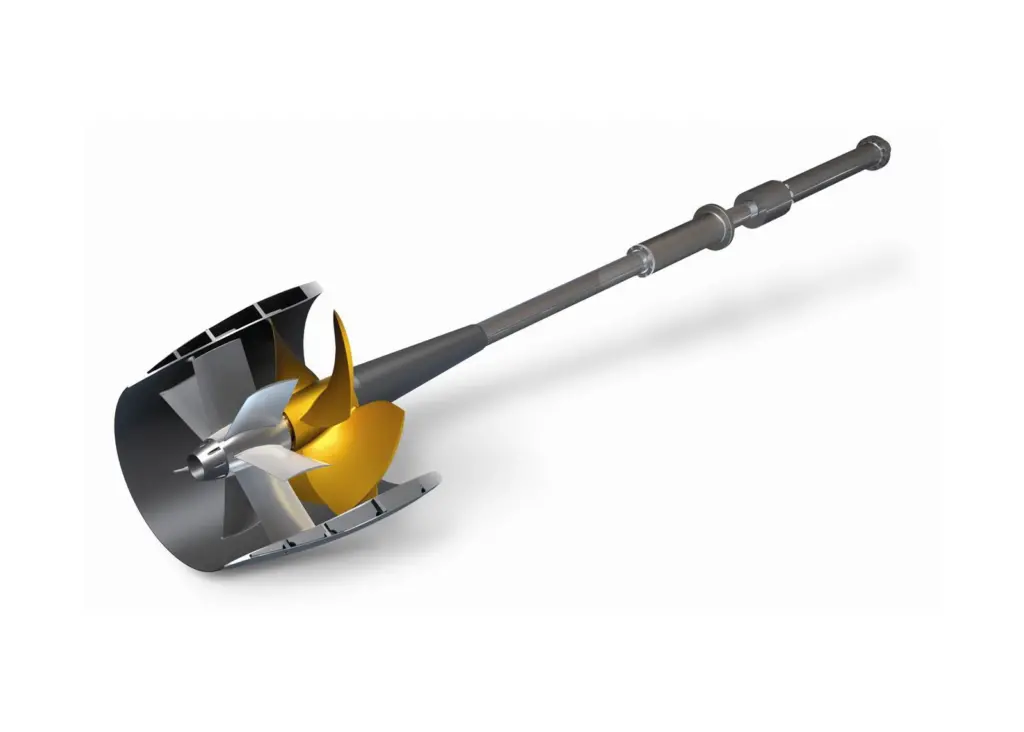
Two of these propulsion systems will be used in a newly designed vessel supplying offshore wind farms with staff and equipment, even at high seas.
Turbine Transfer Ltd is expanding its fleet of more than 20 fast catamarans with a new BMT Nigel Gee designed wind farm support vessel. The Wales based company transports staff and equipment between the shore and offshore wind turbines. Even in high seas, safe transfer from the vessel to the turbine must be ensured, a task for which the new Voith Linear Jet is well suited. It provides the fast catamaran with a substantially higher bollard pull without requiring a more powerful engine.
This new Voith propulsion system will be utilized for the first time by Turbine Transfers. Following completion of the rotor by Drunen, the next step will be completion of the nozzle. Delivery of the first VLJs is scheduled for the end of this year.
The new Voith Linear Jet gives naval architects new ways to optimize their vessel designs while still delivering top speeds of 40 knots. The key difference to conventional propellers is the VLJ’s much smoother and quieter operation, even at high speeds. Not only is the propulsion system useful for high speeds, but it is also ideally suited to low speed cruising.
The Voith Linear Jet combines the advantages of waterjets (at high speeds) with those of conventional propellers (at low speeds) in one propulsion system. The high degree of efficiency achieved in both circumstances promises a solution not only for fast catamarans but also for yachts, coast guard vessels and ferries.
Related Articles
 POWER & PROPULSION
 VESSELS
 POWER & PROPULSION