

Cautious approach to future systems choice
Alluring though they may be in their promise of significant economic gains through reduced running costs, while conferring regulatory and societal benefits in terms of optimised energy consumption and lessened environmental impact, innovative new solutions in marine power and propulsion technology do not come cheap.
The price premium entailed in opting for the exception to the rule is well in excess of that attached to evolutionary product development, or even to a tailored ‘package’.
To make the extra capital outlay in applying a novel, ‘green’ solution or in adopting an untried or unusual powering or propulsion arrangement needs a solid business case, identifying the tangible financial benefits and other advantages that can potentially strengthen the user’s commercial standing. It also requires a particular disposition on the part of the buyer, one who is ready to display business verve in opting for mould-breaking systems or solutions as well as taking the long term view.
The shipping and allied industries have shown through history that they are not short of innovators. Today’s prevailing mix of high costs, volatility in fuel prices, trading uncertainties, proliferating environmental legislation, and the new world order in finance lending provide a complex backcloth to capital spending decisions, but also open up new opportunities for innovative concepts.
The hand of the state is evident in various strategies and various countries in fostering developments that provide a platform for technology take-up, as in the creation of supply chains for new marine fuels such as LNG or in the sponsoring of cooperative research on new vessel powering or propulsion concepts.
Hybrid power configurations take an increasing number of forms and could pave the way to the widespread adoption of flexible new powering arrangements in the next two and half decades.
A seminal project taking shape at a yard on the UK’s lower Clyde entails two small, double-ended ferries which will combine a diesel-electric propulsion system with lithium ion battery technology. Destined for the Caledonian MacBrayne(CalMac) route network in western Scotland, the 43.5m vessels will rank as the world’s first seagoing hybrid ferries on scheduled completion in 2013. Overall cost is appreciably higher than for conventionally powered vessels of the size involved, but it is expected that the design will reduce lifetime costs, cutting fuel consumption and carbon dioxide(CO2) emissions by at least 20% while meeting service and environmental strategies.
Two battery packs with a total capacity of around 700kWh will provide power when in harbour, cutting noise and air pollution. In certain cases, it will be possible to make crossings using power drawn entirely from the banks of batteries.
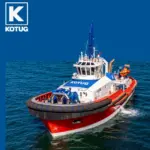
Claimed to be Europe’s first hybrid tug, the 32m RT Adriaan was recommissioned into shiphandling duties in Rotterdam during 2012 with a retrofitted XeroPoint Hybrid power and propulsion, giving improved fuel economy and a major reduction in pollutant emissions and noise radiation.
In each driveline, the diesel engine or electric motor can independently or simultaneously drive the propulsion shaft. During very low power operations, or when the tug is on standby, the battery pack system delivers the requisite power in zero emissions mode. With no rotating machinery running, operation is noise-free. The flexibility in propulsion and power options is especially well suited to the typical duty cycle of a shiphandling tug. Dutch owner KOTUG, known for its innovative traits and commitment to the concept of ‘sustainability’, professes to have been encouraged and inspired by the hybrid tugs introduced in southern California by Foss Maritime.
Damen Shipyards’ decision to build hybrid tugs for stock might be expected to have a fundamental influence on the adoption of diesel-electric/battery hybrid technology in the towage sector over the coming decades. Speculative construction in conjunction with a modular build system offers benefits to the customer in terms of prompt delivery as well as competitive first cost. In the past, many ‘green’ solutions proposed by designers and shipbuilders have simply been too expensive for tug owners. The first of the Damen hybrids has been purchased by Turkish operator Iskes Towage & Salvage.
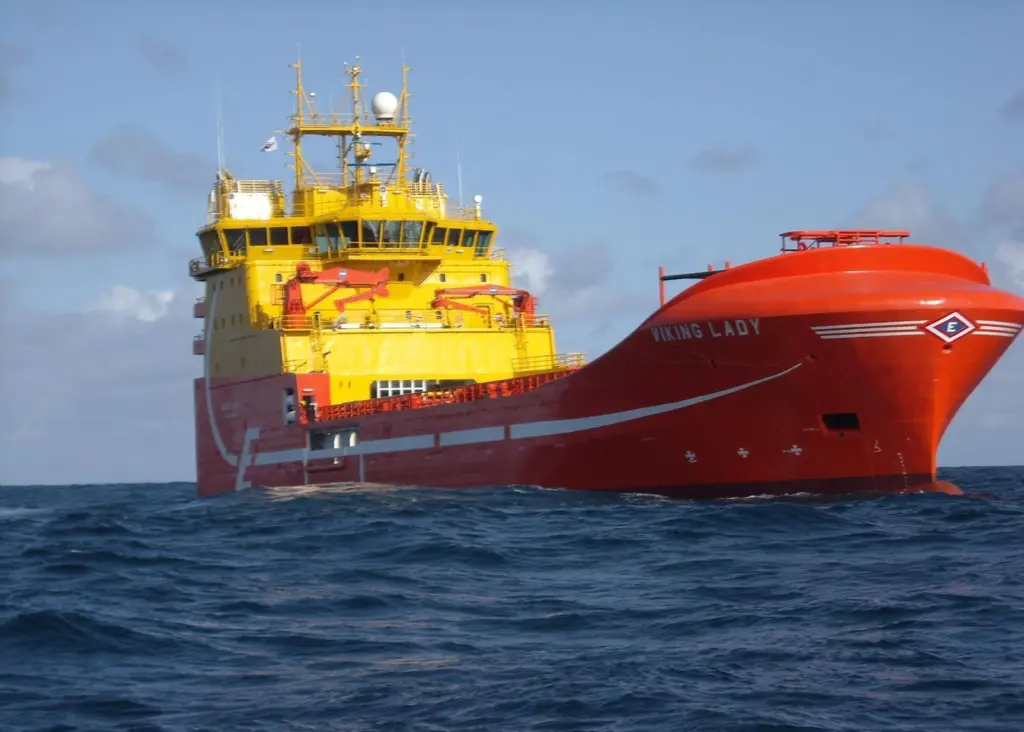
Following the installation and demonstration of the molten carbonate fuel cell(MCFC) power pack aboard the Norwegian offshore supply vessel Viking Lady under the FellowSHIP programme, the project is well into its third stage of research entailing the introduction of energy storage into the system. By adding and integrating battery power, the HybridSHIP research phase aims to achieve a truly hybrid system and savings in fuel consumption and carbon dioxide emissions of the order of 20% to 30%.
Norway set the pace in a switch to LNG by ferries, coasters and offshore support vessels, through a combination of NOx taxes, plentiful gas supplies, a willingness to build the requisite supply infrastructure, and investment in home-grown technology. Not only is this process gathering momentum in Norwegian waters, but the Norwegian experience is being taken on board in various other countries, within and outside of designated Emission Control Areas(ECAs), where LNG is seen as a viable marine bunker solution for local vessels on regulatory, logistic and fiscal grounds.
Norwegian towage contractor Bugser og Berging will put down a new marker for the industry with two gas engined tugs, scheduled to be delivered from a Turkish yard towards the end of 2013. Described as the world’s first all-LNG powered tugs, each of the 35m vessels has been specified with two Rolls-Royce Bergen C26:33 gas engines. In addition to the almost total nullification of noxious emissions, the powering solution is claimed to offer consumption and running cost benefits.
The recent specification of Wartsila dual-fuel propulsion machinery for two Chinese newbuilds looks set to be the first of many such installations in the years to come. LNG may well emerge as a fuel of choice for tugs, given environmental controls relating to operations in harbours and coastal areas, operating profiles characterised by long periods of idling and short bursts of power, and proximity to shoreside infrastructure.
Societal demands bearing on political interjections may be expected to extend the ECA regime or concept to all principal trading regions over the next 25 years. Allied with increasing gas availability, and assuming competitive pricing, this could yield the most fundamental change in marine powering in the same timeframe, whether realised through the adoption of gas reciprocating machinery or dual-fuel engines.
Nuclear power can run all ship systems, eliminates all emissions and requires only rare refuelling, and is well proven in naval and icebreaker applications and was also employed in several mercantile vessels several decades ago. Apart from the capital cost hurdle of nuclear plant in a shipbuilding context, the advocates of the technology for civil marine use, however, have a mountain to climb in overcoming public and political hostility to nuclear energy that is largely emotive and technically ill-informed.
By David Tinsley
Related Articles
 POWER & PROPULSION
 VESSELS
 POWER & PROPULSION