

Blyth brings economy dive boat to Seawork
The specialised needs of small groups of divers are being met by Blyth Workcats, which is presenting a low cost dive boat at Seawork 2013.
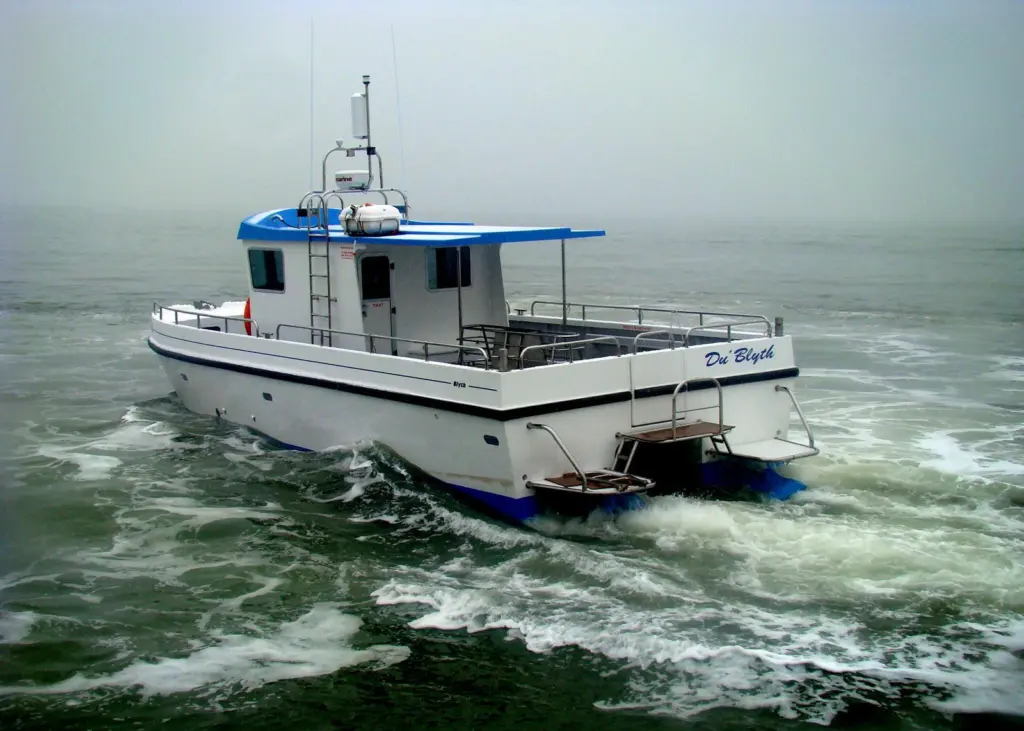
The 11.5m GRP craft combines practicality, performance and economy in a design that brings the tough reliability expected of this long established builder of workboats.
The new boat is powered by two Yanmar 440 engines driving high performance Hamilton water jets. The Dive Blyth Workcat design features a high performance air tunnel hull that enables it to transit to the dive site quickly and economically. By copying the hull design of racing powerboats, Blyth has created a boat that creates a cushion of air beneath it enabling it to reach a top speed of 32 knots or to maintain a brisk cruising speed of 25 knots. With the exceptional seakeeping characteristics for which Blyth Workcats are known, the owner of a Dive Blyth catamaran will be able to get to dive sites quickly and return with safety and confidence if sea conditions worsen.
The new boat has been designed for use in warm or tropical climates and offers comfortable seating for up to 12 people and their equipment. This makes it an ideal choice for individuals, clubs or small dive centres looking for an economical means of transport. Lockers in the forepeak offer capacious storage and the wide fore and after decks ensure that there is adequate space for bulky equipment. A toilet compartment also includes a shower that will be a welcome post-dive feature.
Diving from the new boat is also designed to be a better experience as it provides space and shade for the passengers during transit. It also features a transom gate leading to a divided bathing platform close to water’s surface. This creates the space needed for two divers to enter or leave the water together safely by keeping some distance between them.
Rob Hart, a highly experienced dive centre operator and creator of the Mini B scuba system and Microdive shallow water training programmes, commented favourably on the new boat, saying: “I am really impressed with this new Workcat and believe that it fills a gap by meeting the needs of organisations and individuals in warmer climates who want a dedicated dive boat but cannot run to a bigger, more heavily specified craft.
“I particularly like the use of water jets as these are much safer than propellers when you have people swimming near the boat. They also reduce the likelihood of damage to a reef if the boat moves into shallow water. This will also become increasingly important as shallow water ‘microdiving’ continues to grow in popularity.”