






Barge de Bréhat keeps island residents well connected
Off the coast of Paimpol, France, lies Bréhat, one of Brittany’s most charming islands. Every year, thousands of tourists come to explore this magical island of flowers and pink granite. But for residents, living on an island brings many challenges.
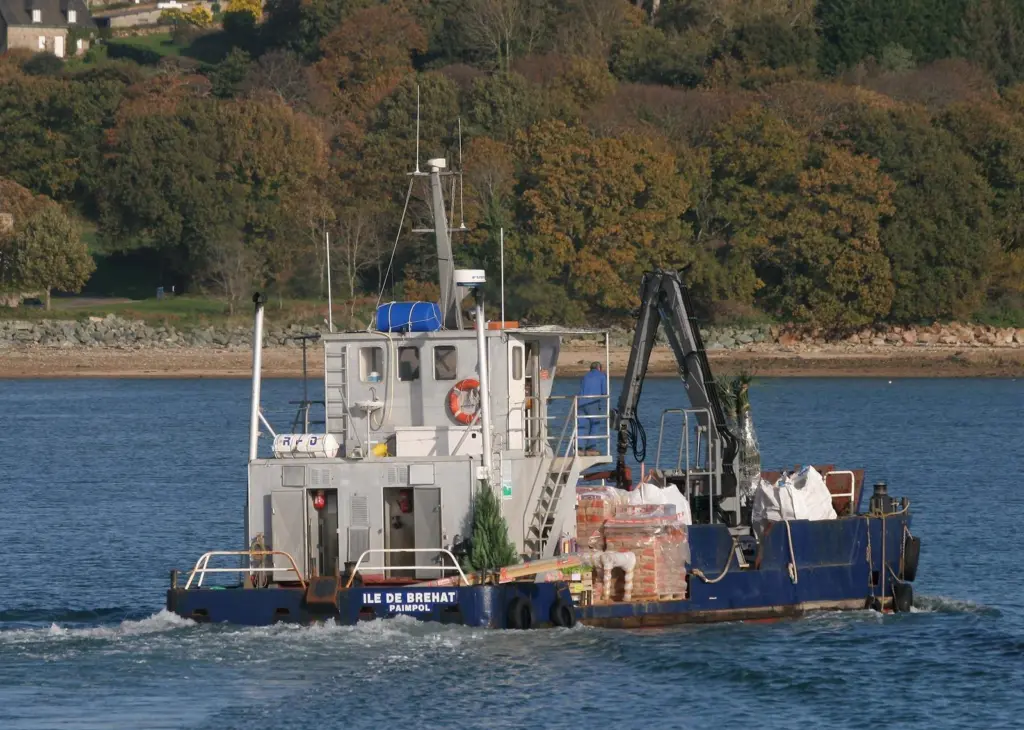
While only 5 kilometers (3.1 miles) from the mainland, the islanders depend completely on the Barge de Bréhat for food, provisions, and even live animals. That’s why the approach of the 16-meter (52.5-foot) barge, five days a week, is such a welcome sight at Bréhat’s Port Clos.
Once a year, this vessel, with a capacity of up to 35 metric tons (38 tons), undergoes routine maintenance. But this year, the operator (Chamber of Commerce & Industry) and owner, General Council of Côtes d’Armor, agreed it was due for a thorough overhaul. So late January, Barge de Bréhat went into dry dock for three weeks to receive new paintwork, a hull revision, and two new engines.
“The existing engines were over 20 years old. They began breaking down occasionally, making new engines an absolute priority,” said Laurent Kernivinen, technical manager of the barge. “During the overhaul, the boat’s crew assisted with the repairs and received fire safety training.”
New engines offer peace of mind. Local NPS Diesel dealer Atelier Mécanique Roudaut (AMR) in Saint-Brieuc had serviced the barge for several years. They recommended installing two 118-kW (158-hp) PowerTech 6.8L engines, which would provide sufficient power to steer even a fully loaded barge in the French waters. The engines drive a 4-blade propeller.
“AMR knows the barge, so I trusted their judgment,” comments Kernivinen. “The old engines with John Deere engine blocks ran well for almost two decades (at some 1,000 hours per year). This good experience, along with the five-year warranty for the new engines, gave us peace of mind. Since the installation, we have been pleased with the reduced noise and emissions. And our maintenance costs have dropped thanks to the greater accessibility of the engines for servicing. Fuel consumption is around 22 liters (5.8 gallons) per hour, a reduction of 10 percent.”
Yvon Royer, representative of the General Council, added: “We have invested around 100,000 euros ($138,280 U.S. dollars) in the improvements, which should extend the barge’s working life by 10 years.” It seems certain that Barge de Bréhat will remain the island’s pride and joy — and lifeline — for a long time to come.
By Jake Frith
Related Articles
 POWER & PROPULSION
 VESSELS
 POWER & PROPULSION