![MaritimeJournal[Seawork]](https://www.maritimejournal.com/wp-content/uploads/2026/09/MaritimeJournalSeawork.svg)



Focus on The Port of Cork
Cork Harbour, on the south coast of Ireland, reputed to be the second largest harbour in the world, sees a great variety of shipping, with some 4,500 vessel movements per annum. The Port of Cork is one of only two Irish ports that handle Lift-on Lift-off, Ro-Ro, Liquid Bulk, Dry Bulk, Break Bulk and Cruise vessels.
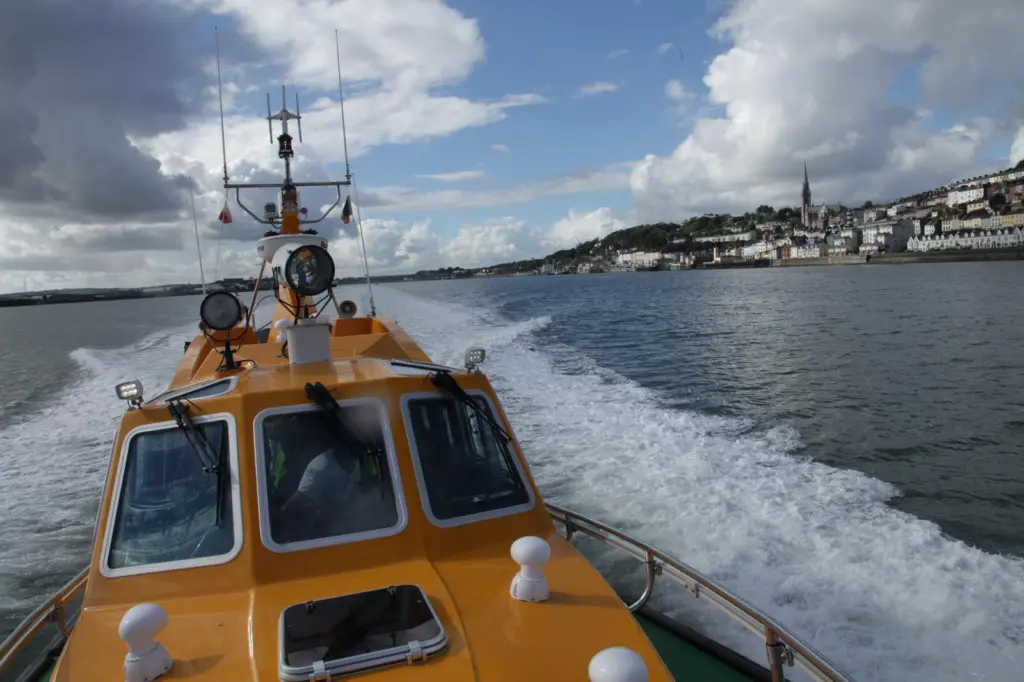
The biggest ships which use the port are the 330m cruise liners that berth on the waterfront at the picturesque old town of Cobh (Queenstown) in the Lower Harbour, and crude carriers at the refinery.
The Harbour Master, Captain Paul O’Regan, who took the job in December 2013, sees the cruise traffic as essential to the regional economy. As he explains, “Cork has the only cruise ship terminal in the country. The number of cruise ship visits in 2013 was 62. In 2015 there will be a total of 56, including nine calls for the Royal Princess. What is very significant is that we have seven vessels over 300m and the size of these ships is increasing year on year. We are the only port in Ireland capable of taking these ships and, although the number of vessels is down slightly this year, the number of passengers is rising.”
More than 120,000 passengers are expected to come ashore in 2015, along with some 30,000 crew visits to the local supermarkets. Cruise ships usually moor alongside the quay at Cobh, where a pontoon extension allows an additional 3m draft. These ships overshadow the town, reaching almost as high as the cathedral.
Other vessels using the port include Britanny Ferries’ weekly summer season service from Ringaskiddy to Roscoff, Grimaldi Lines’ calls on the Africa and South American loops, container ships from Central America and Northern European feeder routes, and general cargo vessels bringing grain, aggregates, and other dry bulks. Liquid bulks include crude and refined petroleum products to and from the Whitegate refinery, closer to the harbour mouth, where ULCCs with up to 12m draft can be accommodated. Chemicals and molasses can be discharged at Ringaskiddy and within the Upper harbour.
There are several private quays in the Passage West, linking the Lower and Upper Harbour, where the Tivoli terminal handles containers and general cargo, while small bulkers discharge grain in the city centre, close to the offices of the Port Commissioners.
In October several trawlers were berthed there which, as Capt O’Regan explains, is a temporary accommodation. “It was the start of the Celtic Sea herring season and although Cork is not a fisheries port, trawlers are allowed to land at the city quays and at Ringaskiddy during this short season which only lasts for six to eight weeks.”
At the same time, Van Oord’s TSHD Volvox Olympia was dredging the main channels from the city to the Lower harbour, assisted by the Odin and Jetsed. “The maintenance dredge is a bi-annual operation,” says Capt O’Regan “but we also carry out our own general port maintenance tasks including bed leveling with our Damen multicat the MV Denis Murphy.” This vessel is available for third party hire for ploughing/dredging, buoy servicing, core sampling and other general duties.
The harbour tugs Gerry O’Sullivan (45tbp) and Alex (49tbp, on charter from Ostensjo Rederi) are berthed at Cobh, while the 1969-built Breedbank (30tbp), is based just around the corner at Rushbrooke. Operated by Marine Transport Services Ltd of Cobh, the 2800bhp Breedbank was transferred some years ago by Smit International to Panama and was brought back to Ireland in 2003 aboard a heavy lift ship (see MJ June 2003).
The Port’s VTS station and pilot station are situated just along the Cobh waterfront on the site of an old fort that now includes a memorial garden to survivors of the Titanic, which boarded many of its passengers from Cobh on its final, fateful voyage. Two locally-built Safehaven pilot boats are berthed there in a small haven known as the Camber. There are 12 pilots employed by the Commisioners and a launch crew of 10.
The port limits range from the Eamonn De Valera and Michael Collins bridges in the city to an imaginary arc with a radius of 9.65 kilometres drawn seawards from Roches point. Vessels with an overall length of 130m must board a pilot at the outer pilot station, 2.5 nautical miles south of Roches point. Vessels less than 130 metres may board a pilot at Cobh in the vicinity of buoy No.20.
There is a drydock at Rushbrooke, where the Granuaile (2000/2,625gt), buoy tender for the Commsssioner of Irish Lights, was docked for its 15-year special survey in September, a contract won by Cork Dockyard against bids from several UK and European yards. The Granuaile was the first of a series of Damen designed vessels operated by Trinity House (Galatea), Northen Lighthouse Board (Pharos) and MENAS (Relume). The survey included hull and superstructure painting and repair, major tank surveys, Schottel thruster and bow thruster overhauls and hull thickness inspections.
The port of Cork is also the HQ of the Irish Naval Service, based on the gloriously named island of Haulbowline, directly opposite the Cobh waterfront. Their latest vessel is the LE Samuel Becket a 1,933tonne Offshore Patrol Vessel, built by Babcock at Appledore and commissioned in May 2014. For training purposes, the Navy is also in partnership with the nearby Maritime College.
Since 2000, the Port of Cork has invested more than €72m in improving port infrastructure and facilities and this programme is continuing with a recent planning application to further expand the terminal at Ringaskiddy, with a quay extension and onshore development. The result of the planners’ hearing was due to be published in early November, following consultation with residents, business groups, customers, local authorities and other statutory agencies.
By Graeme Ewens
Related Articles
 OTHER NEWS
 OTHER NEWS
 FEATURES & VIDEOS