![MaritimeJournal[Seawork]](https://www.maritimejournal.com/wp-content/uploads/2026/09/MaritimeJournalSeawork.svg)




Europe battens down the hatches ahead of storm season
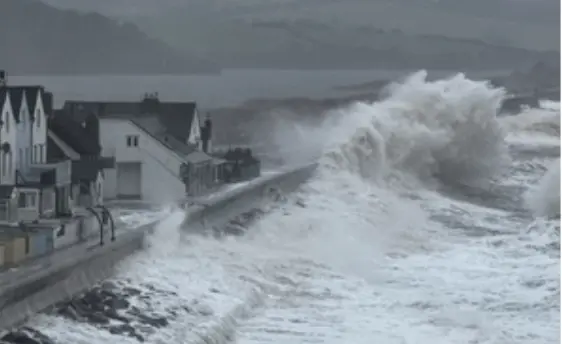
Construction is set to begin on a £19.8 million scheme to protect the UK’s Torcross in Devon after devastating storms in January and February stripped away protective shingle, flooded homes and damaged coastal infrastructure.
Almost 90,000 tonnes of rock armour will be placed along the shoreline to reduce wave energy, with just under 60,000 tonnes arriving by barge and a further 30,000 tonnes of smaller material transported by road. The Environment Agency scheme will also reinstate damaged car-park defences and extend the slipway.
The storms, including Goretti, Ingrid and Chandra, left the village more exposed to powerful waves. Windows and shutters were smashed, homes flooded and sections of the A379 coast road collapsed into the sea. Part of a car park was also lost.
The work is expected to continue into spring 2027, with the car park due to reopen in early summer.
Torcross is one example of the challenges facing coastal communities across Europe, where authorities are repairing damaged defences, strengthening sea barriers and exploring ways to limit erosion. With autumn and winter generally bringing the greatest risk of damaging storms to northern and western Europe, several countries are advancing projects designed to reduce the threat from the sea.
Germany: €30 million upgrade to a North Sea dyke
In northern Germany, authorities have completed a four-year reinforcement of the Eiderdamm Nord sea dyke near Tönning in Schleswig-Holstein.
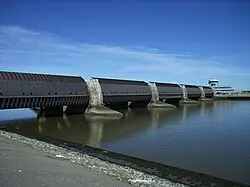
The €30 million project, officially opened on 23 September, will upgrade 4km of the defence to a consistent height of nine metres above the German national elevation datum. The reinforced structure is designed to protect around 5,000 hectares of land and assets valued at about €175 million.
The work was prompted partly by decades of exposure to wind and waves. The dyke, originally built 53 years ago, had developed cracks along its joints, allowing sand to escape and contributing to the structure settling over time.
The upgraded dike incorporates higher rock elements and wave deflectors along its crest, providing additional capacity for future reinforcement as sea levels rise.
“Climate change is real and its consequences are unmistakable,” said Tobias Goldschmidt, Schleswig-Holstein’s environment and coastal protection minister. “Sea levels have risen and storm surges are hitting us more frequently. We must adapt our coastal protection to these challenges.”
Italy repairs storm-damaged coastal defences
Along Italy’s Adriatic coast, more than €19 million of coastal protection works are under way or in development along the Ferrara coastline.
Repeated storms and high waves have intensified erosion in recent years, particularly around Lido di Volano, Lido di Pomposa and southern Lido di Spina, says the Emilia-Romagna authority. The damage has increased pressure on existing defences and raised concerns about seawater reaching communities and tourist facilities.
At Lido di Volano, €5.6 million is being spent restoring a 1.8-kilometre section of sea-facing embankment damaged by storms. Other measures include strengthening rock defences, rebuilding dunes and replenishing beaches with sand and other sediment.
Further projects are being designed to repair embankments and rock structures at Lido delle Nazioni and to strengthen a harbour boundary wall at Gorino to protect nearby homes from seawater flooding.
“Combating erosion along this stretch of coast is a priority in the land protection work we are carrying out,” said Manuela Rontini, the region’s civil protection undersecretary. “Defending the coast also means ensuring continuity of economic activities, supporting the competitiveness of the destination and preserving a fundamental identity element for Emilia-Romagna.”
They warned that beach businesses at Lido di Volano sit close to high-tide levels reached repeatedly in recent months, making winter embankments alone insufficient protection.
Denmark pledges billions for coastal protection
Denmark has announced a national investment plan worth 14.9 billion DKK (€1.9 billion) to strengthen protection against storm surges and flooding. With contributions from municipalities, the programme could cost up to 20 billion DKK by 2040.

The announcement set out plans for dykes, flood walls, sluices and other measures. The state intends to cover 85% of eligible build costs, with municipalities responsible for delivering individual projects.
The government has warned of the risks facing a country with a long coastline and large numbers of homes and businesses close to the sea. It warned that storm surges currently expected roughly once a century could be much more frequent by 2100.
“Denmark must be equipped for the new climate reality,” said Environment minister Magnus Heunicke. “We must get ahead of developments and protect Danish coastal towns against future, more severe storm surges.”
The investment plan is a long-term programme rather than a promise that all defences will be built before this winter. However, Denmark has also reopened a coastal protection grant scheme for 2026, offering state support for dykes and other measures to combat flooding and erosion.
Sweden tests natural barriers against erosion
On Sweden’s west coast, authorities are testing a different approach: using locally sourced materials to slow erosion and help damaged salt marshes recover.
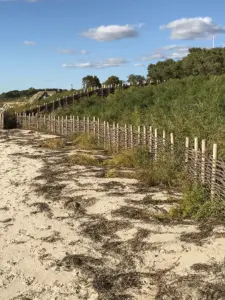
The Västra Götaland County Administrative Board, working with Sweden’s Geotechnical Institute, has been trialling nature-based protection at three coastal locations. Measures include fences made from wooden stakes and brushwood, stone and gravel barriers, and sand placed behind some structures to encourage the rebuilding of eroded land.
At Bärby, south of Stenungsund, the shoreline has retreated over several years. Around 300m2 of land is estimated to have eroded there over a decade, according to research commissioned by the Geotechnical Institute.
The structures are designed to reduce wave impacts and slow water movement, allowing sediment to collect behind them. The project also aims to preserve habitats supporting wildlife.
Anita Bergstedt, who works on the project for the county administrative board, said she had expected the barriers to suffer more damage from Storm Dave in spring 2026.
“Instead, the storm seems to have benefited us,” she said. “Here we can see that sediment has blown in and started building up on the inside of the brushwood fence.”
The early results are encouraging, although project staff caution that it could take around five years to establish whether the measures deliver lasting benefits.
Coastal protection certainly seems to be taking many forms, and these are just a sample. They are also at different stages, but with one common goal – to combat what many believe will be a future of stormy weather and rising sea levels.
With the main storm season approaching, the central challenge is not simply building higher defences, but ensuring that coastal communities have protection suited to the risks they face.