


Industry pledges to tackle ‘alarm fatigue’ in modern vessels
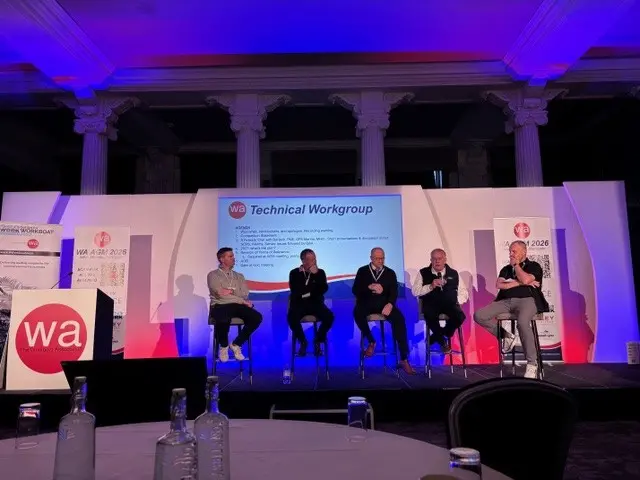
Workboat Association members will establish a baseline for prioritising safety-critical alarms to tackle ‘alarm fatigue’, as the growing number of warnings on increasingly complex vessels risks crews becoming desensitised to alerts, potentially compromising safety.
Panellists and audience members at a technical workgroup during the Workboat Association’s AGM in Harrogate this week came together to discuss the growing risk of not only ‘alarm fatigue’ but also electronic shut-downs: Chartwell Marine managing director Andy Page, co-chairing the session with MHO-Co’s founder Mik Henriksen, said one vessel he was aboard had completely shut down and crashed into a pier.
The lack of transparency and information on how to fix issues also needed to be addressed by designers and shipbuilders, and this is what a white paper to be delivered at next year’s AGM will seek to do.
As vessels become more sophisticated, crews are being presented with more sensors, more warnings and more alarms – to such an extent that skippers are muting them rather than investigating the cause, delegates were told.
Risking lives with emissions-friendly systems?
“There are lives at risk,” said Gary Spencer, technical superintendent director at GPS Marine. “We are compromising those for a little bit of carbon, a little bit of that, and I can’t justify it.”
“The complexity of the engines is starting to be an excuse for the crew not doing anything,” said Mik Henriksen, founder and owner-operator of MHO-Co. “Sometimes I think the engine manufacturers do it deliberately so the engines have to come back to be fixed.
“I don’t think engines have a smaller carbon footprint because of a little bit of AdBlue or wiring, but that’s the way it’s going.”
Indeed, MHO-Co has developed a ‘power of plenty’ system with Volvo Penta, which uses six to eight engines rather than four, alongside a battery pack. None of MHO-Co’s vessels is classified either, he said, and there were far fewer alarms on his vessels as a result.
However, Charlie Dickens, senior engineer at Bartech Marine Engineering, said electrification itself was not necessarily the problem.
“We’ve seen issues that only apply to marine engines, and sometimes only on CTVs,” he said. “And sometimes it’s because of how the engines are being operated. The fact that they are electric wasn’t the issue, it’s how it was being operated.”
He said electrical systems were necessary to meet emissions requirements and deliver the performance and economy expected from modern engines.
“Without the electrics it won’t give you the full economy, the speed you want, and manufacturers can’t sell them if they don’t meet the regulations,” he said. “With old engines, if you keep feeding it diesel it will run all day. They don’t need the electrics.”
Finding faults
Spencer agreed that the technology could create serious operational difficulties, particularly when diagnosing faults.
“You only need a small issue and you get a dead ship,” he said. “Everyone says we need it for the emissions etcetera, but you also need to worry about the crew on board.”
He said diagnosing faults on some of the newer systems could be almost impossible, and information needed to be more transparent and accessible.
Martin Jackson, sales manager at PME Power Systems, said his company was developing an engine portal to help identify faults more effectively. He said manufacturers were responding to the requirements imposed on them by the market and regulators.
“Manufacturers produce a product that meets the requirements of the market. It’s the IMO, MCA and so on that ask for various monitoring systems and performance criteria,” he said.
“Do those operators want what the market dictates they have to have? No. We can personalise it but it will cost.”
For Spencer, the speed at which technology was developing was itself part of the problem.
“The rate of development of new systems is so fast it’s hard to keep up,” he said. “Keeping up with the training is really hard. Engine makers really need to give us better information on the equipment they are supplying – we are in the dark.”
“There needs to be information and rationalisation of alarms,” said Page. “There’s so much going on in the vessel and we need to make it simpler,” he said. “Shipbuilders, electronics companies, the propulsion supply chain should get together and talk about what’s critical and what skippers really need to know.”
The panel agreed that the industry needed to establish a baseline involving shipbuilders, component manufacturers and operators of both fast and slow tonnage.
The proposed next step is a white paper setting out core operational needs wen it comes to alarms and electronic faults systems, the information that should be displayed to crews and what needs to be logged.
The aim will be to rationalise alarms, make critical warnings easier to identify and reduce the temptation for crews to silence alerts without investigating them.
Related Articles
 FEATURES & VIDEOS
 OTHER NEWS
 MARINE CONSTRUCTION