![MaritimeJournal[Seawork]](https://www.maritimejournal.com/wp-content/uploads/2026/09/MaritimeJournalSeawork.svg)


PODCAST: On board with MHO and Volvo Penta
”This is a new generation of CTVs,” says Jan-Willem Vissers, director Marine Commercial Global with Volvo Penta, as we pull away from the pontoons at Seawork, which celebrated its 25th silver edition this year.
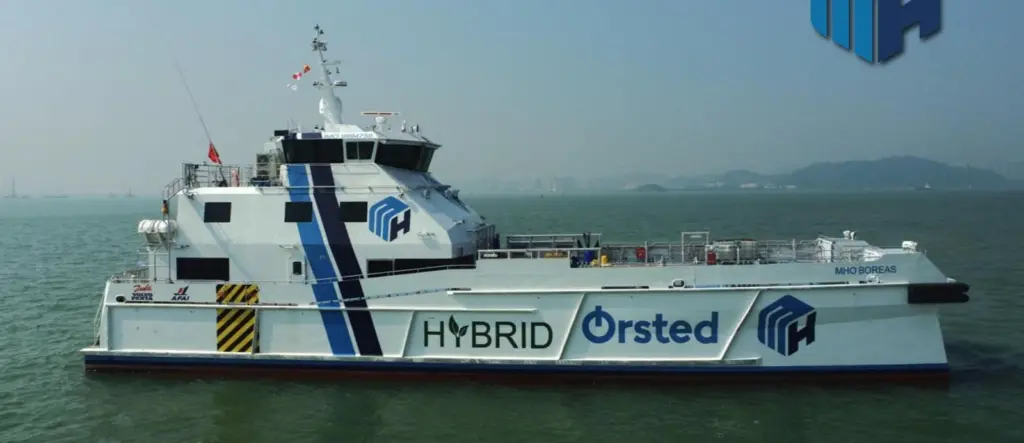
On the pontoons this year was a very special crew transfer vessel – or so its owner and propulsion designers believe.
MHO Boreas, owned by Mik Henriksen, is a 36m vessel with capacity for up to 50 technicians, and when not at Seawork she is working at the Gode offshore wind farm, owned by Ørsted and Nuveen, in the German North Sea.
What’s special about the vessel, said Volvo Penta’s Jan-Willem Vissers, director Commercial Marine Global, who was on board with Maritime Journal, is how Volvo Penta and Danfoss have worked together to develop a completely integrated driveline solution, which the captain has only to check on using one screen.
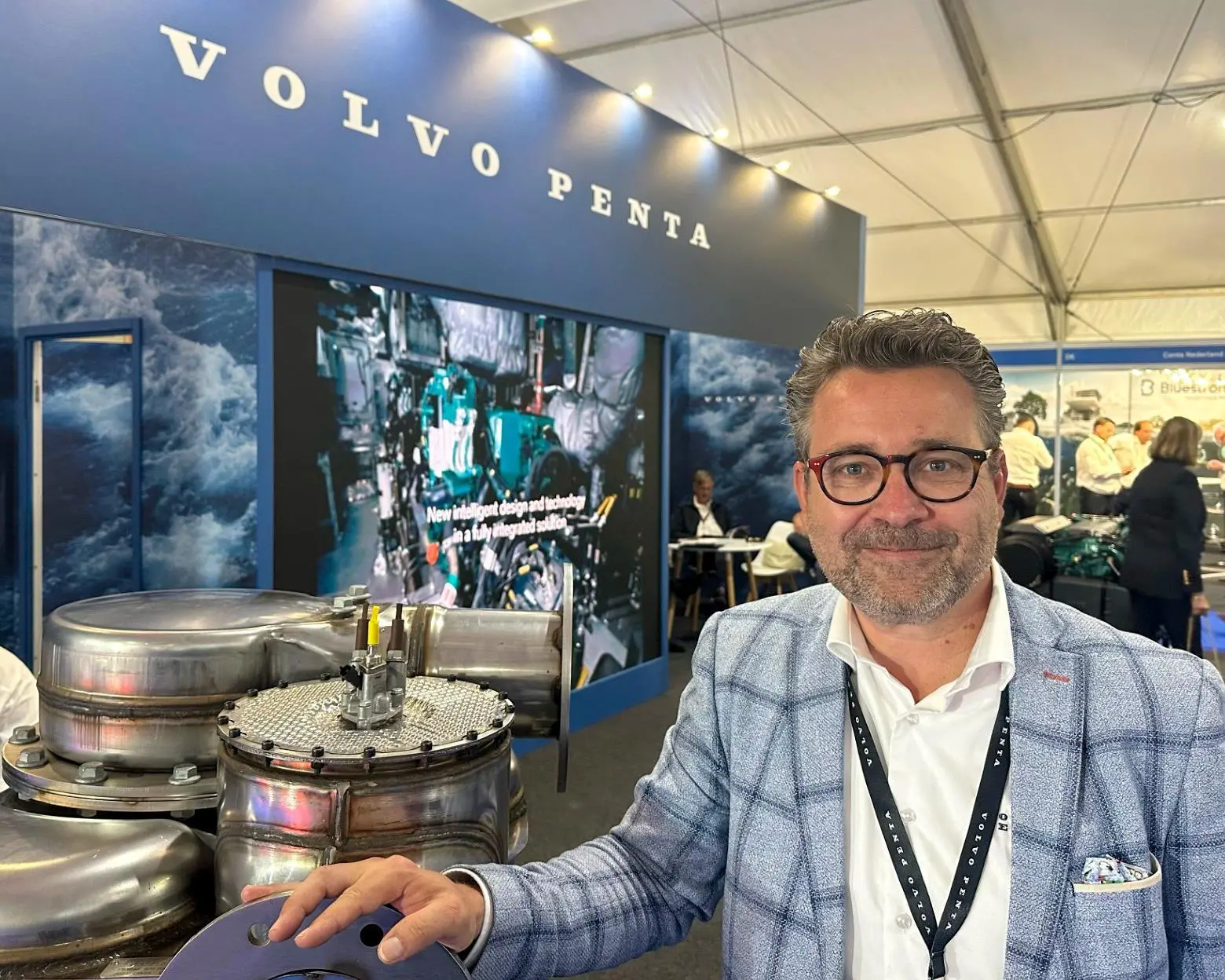
“With its full electric driveline, you are independent of the power source – the driveline remains the same, and in this case we have eight gensets on board to provide the power in the battery pack, but the intention in the future is to swap the gensets for a fuel cell, or a methanol genset, or to adapt to alternative fuels or to at last go to true zero-emissions, although at the moment that’s not economically viable,” he said.
“This is also a new way to go to market for Volvo. Normally we go to market when we are completely finished, but now we are jointly developing it with our clients – to speed up the process and learn more from the live process. You can do a lot of things in a test cell, in a lab, but in real life it might act completely different.”
“Technically, everything is possible, but whether it is economically viable is still the question,” he says.
A question on everyone’s lips these days, including Mik Henriksen’s.
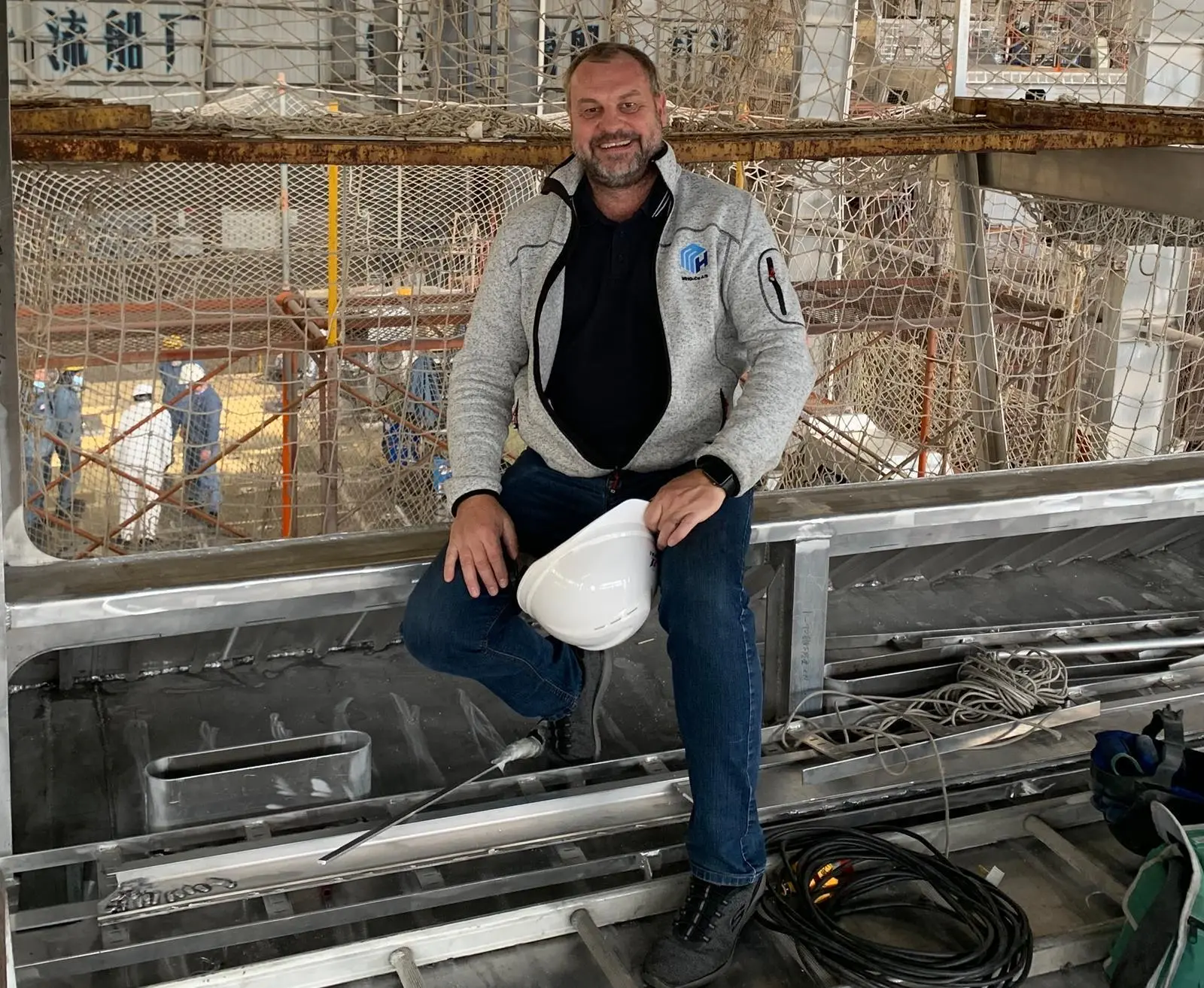
“The whole world is now looking at becoming sustainable, and we think the way ships and boats in the world can transition to the new fuels, whatever they could be – hydrogen, methanol – whatever’s going to come out,” he said.
“I think one of the reasons we’ve gone with electric is we don’t know. I think methanol looks as if it’s a little bit easier to manage, maybe not for ships, but for boats at least. So CTVs, boats of that size, smaller ferries, I think could use methanol.
“Offshore charging is definitely going to be a game changer. That’s why electric propulsion is a little bit more safe and secure in the future because we can put in more batteries or we can put in dual fuel gensets or we can put in methanol or we can put in hydrogen fuel cells.
“Whatever comes out we can add it to this power of plenty.”
To hear the entire conversation on wind farm construction and servicing, the future of automation, the issues surrounding future fuels, such as weight, space, equipment and energy density, and also a nuclear possibility – listen to our podcast.
Related Articles
 OTHER NEWS
 FEATURES & VIDEOS
 MARINE CIVILS