




Offshore infrastructure decommissioning: An environmental balance
By Dr Victoria Todd, managing director, Ocean Science Consulting
Over the coming decades, substantial amounts of offshore infrastructure will reach the end of its operational life.
In the North Sea, this includes ageing oil and gas installations, while the first generations of large offshore wind farms will face decisions about life extension, repowering or decommissioning.
Decommissioning is usually seen as an engineering challenge: how do we safely cut, lift, tow, dismantle, recycle or dispose of structures designed to remain at sea for decades?
But there is another question: after 20, 30 or 40 years in the marine environment, what exactly are we removing?
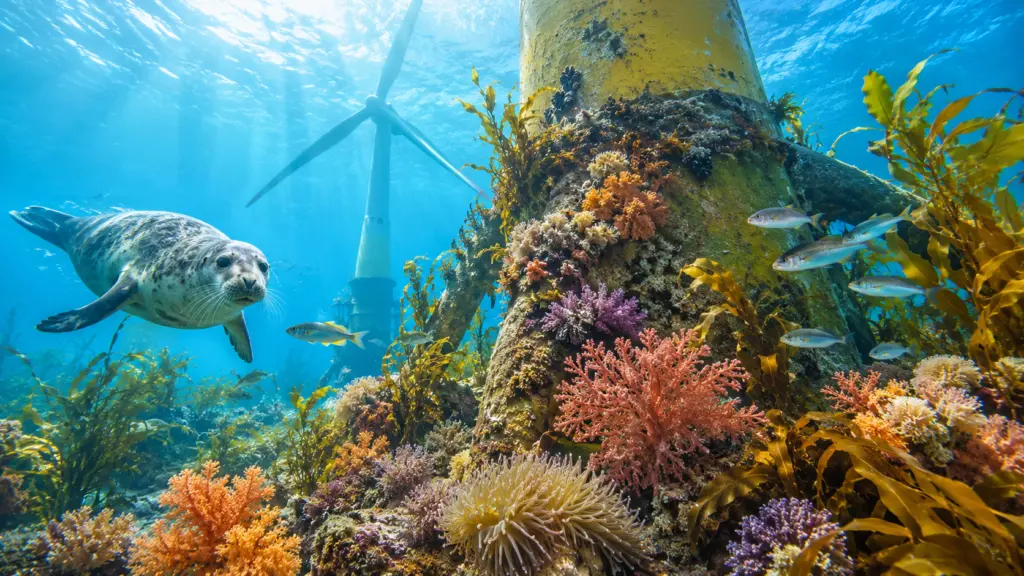
What went into the sea is not what comes out. Steel, concrete, cables and rock protection may have been artificial structures when installed, but over time they become colonised by marine life. They can develop into complex habitats, providing shelter and feeding opportunities for invertebrates, fish, seabirds and marine mammals.
Removing an offshore structure may therefore mean removing an ecosystem that has developed around it.
Removal has its own environmental cost
Decommissioning can involve remotely operated vehicles (ROVs), divers, cutting equipment, cranes, heavy-lift vessels, excavation, dredging and extensive vessel activity. These operations can generate underwater noise, disturb seabed sediments, create emissions and physically remove established biological communities.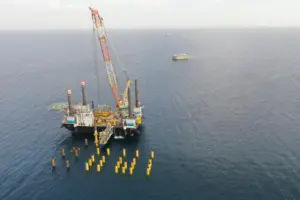
It is therefore wrong to assume that complete removal must always be the environmentally preferable option.
This is not an argument for simply abandoning redundant structures. Contamination, navigation, fisheries, structural deterioration, entanglement hazards, invasive species and long-term liability may all make removal necessary. But the environmental case should be demonstrated, not presumed.
The issue is particularly relevant to offshore wind. A turbine foundation installed on relatively homogeneous seabed may, after 20 years or more, have developed ecological functions through its foundation, scour protection and surrounding habitat.
Removing the entire structure could mean destroying habitat that did not exist before installation. Are we necessarily restoring the environment, or creating another significant ecological disturbance in pursuit of an historical baseline that no longer exists?
The answer depends on the ecological value that has developed, the impacts of removal and the alternatives available. These need to be assessed before decisions are made.
The cost to taxpayers
There is also a substantial public financial interest in getting these decisions right. Although offshore decommissioning is undertaken by industry, tax relief means taxpayers ultimately share some of the cost.
The North Sea Transition Authority estimates the remaining UK Continental Shelf decommissioning programme at approximately £43.4 billion (€51 billion). The projected cost to the Exchequer of decommissioning tax relief is about £11.7 billion (€13.98 billion), through tax repayments and reduced future offshore tax receipts.
With billions of public money involved, taxpayers have every reason to expect that infrastructure is not removed simply because complete removal has historically been the default.
We should be asking whether removal is necessary, whether partial removal could deliver a better environmental outcome, and whether the benefits justify the public and private expenditure. Removal should not automatically be equated with restoration.
Science and engineering must work together.

At Ocean Science Consulting, our work in offshore environmental monitoring, marine mammals, underwater noise and ROV research has reinforced one important point: ecological assessment must happen while genuine decommissioning choices are still available. Too often, surveys begin only after a strategy has effectively been selected, leaving science to document a decision rather than inform it.
Engineers and scientists need to assess the options together, balancing ecological value against structural integrity, safety, contamination, removal impacts and long-term liability. Neither discipline should determine the outcome in isolation.
Related Articles
 DESIGN
 ELECTRICAL SYSTEMS
 SPECIAL REPORTS