![MaritimeJournal[Seawork]](https://www.maritimejournal.com/wp-content/uploads/2026/09/MaritimeJournalSeawork.svg)



Londonderry pilots in landmark challenge
Pilots at the Port of Londonderry have begun a landmark legal battle to challenge the port’s new pilotage training scheme, which they say compromises safety standards.
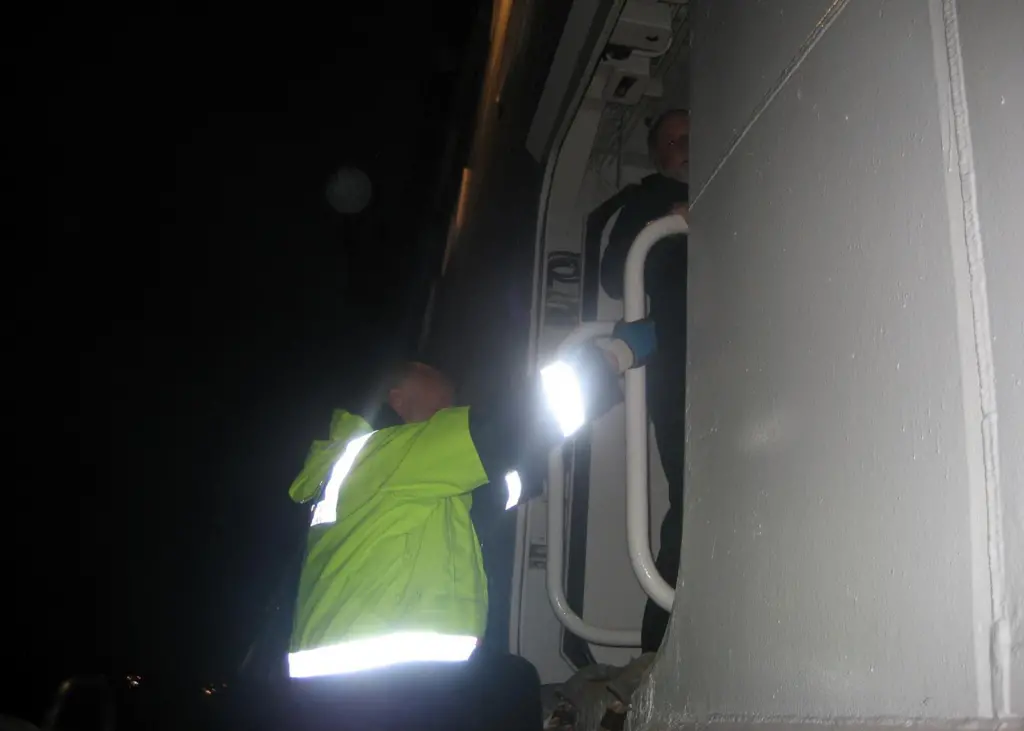
The claim is being taken seriously enough for the High Court to allow the self employed group to seek judicial review which, because of a lack of direct regulation, is the only course of action that will enable them to contest the Londonderry Port and Harbour Commission’s proposals.
The outcome is doubly important, says Don Cockrill of the UK Maritime Pilots Association, “because if the review finds in favour of the pilots, then it goes some way to establishing the standards that needs to be maintained for all pilots in the UK”. However, if it finds in favour of the Londonderry Port and Harbour Commission “it effectively opens the door for other port authorities who, in times of economic hardship, may be tempted to abandon good, professional standards”.
The men who constitute the Foyle Pilots’ Cooperative were given notice by the Londonderry authority early this year as the port seems to believe it can improve its bottom line by bringing the service in-house. This need to make cost savings has come into sharp focus since another court ruling, this time related to the national pilots pension scheme, left it with a £2m hole in its balance sheet. Following the decision the existing pilot team declined the offer of alternative employment within the port.
However, the cooperative apparently later became concerned when it learned that the new training regime to be implemented for the incoming pilots at Lough Foyle falls far short of the current system and appears not to comply with the recommendations contained within IMO resolution A960 which is directly concerned with standards of pilot training and operations.
Captain Cockrill explains that the long established present programme, like many in the UK, is very thorough with a six-month initial qualification followed by a two year period during which the pilots gradually progress up through the various sizes of vessels toward handling the largest ships entering the port, in the case of Lough Foyle this means vessels of 200m.
The replacement format takes the form of a three month scheme including simulation time with some bathymetry familiarisation via a dredger, but Capt Cockrill says “most significantly it leaves no provision for oversight from a senior Londonderry pilot”.
By Stevie Knight
Related Articles
 OTHER NEWS
 ACCESSORIES & EQUIPMENT
 ACCESSORIES & EQUIPMENT