![MaritimeJournal[Seawork]](https://www.maritimejournal.com/wp-content/uploads/2026/09/MaritimeJournalSeawork.svg)




Change is in the air for SAR choppers
Starting in April 2015, the familiar yellow Search and Rescue (SAR) Sea King helicopters operated around the UK coast by the RAF and Royal Navy will be phased out and replaced by a fleet of privately-operated aircraft controlled by the MCA. These choppers will be branded in the internationally recognised coastguard colour scheme of white and red.
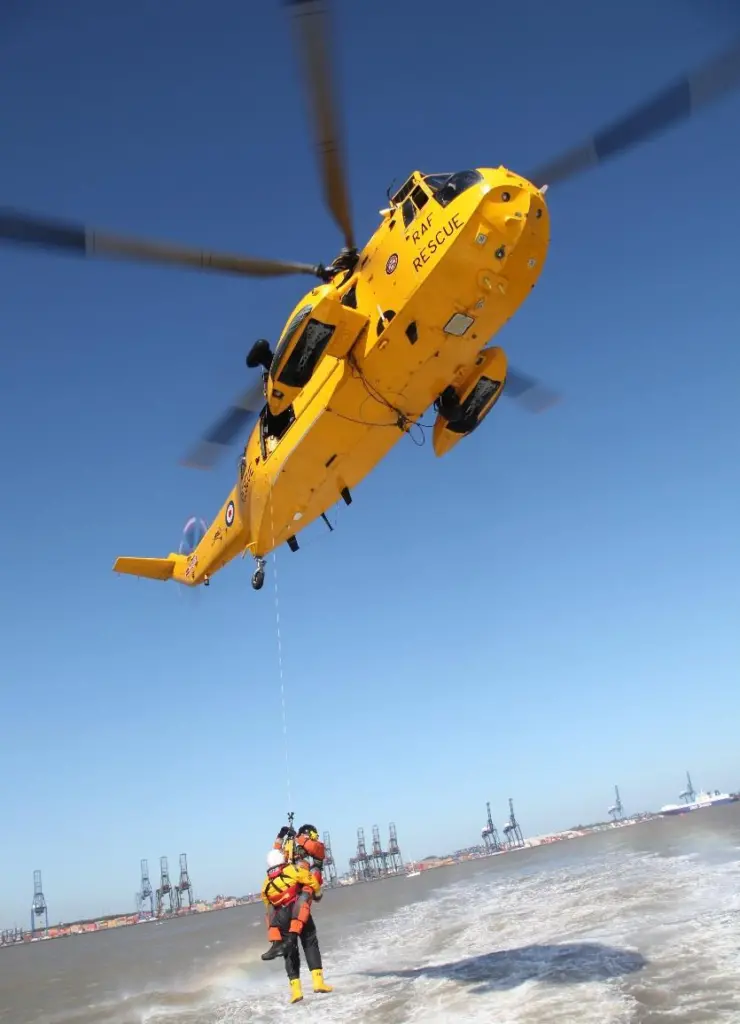
Under a 13-year, £1.6 billion contract with the Department for Transport signed in 2013, Bristow Helicopters will provide 22 aircraft operating from 10 bases. The aircraft will be Sikorsky S92s and Agusta Westland AW189s. Not only are the helicopters changing but most of the bases will also be moved to different locations to reflect the longer operating range of the new machines. Each station will operate two aircraft.
Bristow began SAR operations in 2013 from the Stornoway and Sumburgh bases, but the first stations on the mainland to start deploying the new aircraft are Humberside and Inverness, which replace Leconfield and Lossiemouth respectively. The first will deploy a pair of S92s from a new-built facility, while the second will be using AW189 aircraft, also from a new operations building.
Subsequent changeovers will be as follows: In July, Valley will be closed and S92s will operate from Caernarfon, and Wattisham will hand over to a new Kent-based facility (yet to be confirmed) using AW189s. In October Chivenor station will be replaced by Cardiff, also using the Agusta Westland aircraft.
At the start of 2016, a new facility will be opened at Prestwick as a base for AW189s and Newquay will take over from Culdrose, operating S92s. In 2017, existing stations at Lee on Solent, Sumburgh and Stornoway will come onstream (although these stations already deploy MCA operated helicopters.)
Of the two aircraft types, the Sikorsky S92 has a radius of action of 250 nautical miles and a cruising speed of 145 knots. It has the capacity to seat 11 plus two stretchers. The Agusta Westland AW189 has a radius of action of 190 nm and a cruising speed of 145 knots. The cabin contains eight seats and space for two stretchers. Both types of aircraft are fitted with the latest avionics, navigation and satcomms systems.
All bases will be operational 24 hours a day. The MCA explains these base locations are strategically placed near areas with high SAR incident rates and will help ensure maximum operational coverage across the UK while reducing transit times to incidents.
Bristow Helicopters Ltd and the MOD have agreed to a ‘managed transition’ to enable Service Personnel to continue to work in SAR if they wish, without risking the current military service provision. This process is voluntary and civilian personnel currently working for UK SAR will also have the opportunity to work with Bristow Helicopters Ltd under the rules of Transfer of Undertakings (Protection of Employment).
There will be a new arrangement for exercising with RNLI lifeboats and ground-based HM Coastguard units, although the current provision of demonstration flights at Lifeboat days and other events is under review.
By Graeme Ewens
Related Articles
 OTHER NEWS
 ACCESSORIES & EQUIPMENT
 ACCESSORIES & EQUIPMENT