
LNG ferry Helgoland in service at last
What is billed as Europe’s first ferry with LNG propulsion capability has started service in Germany after delays which officials acknowledged were expected and the result of a pioneering LNG technology mix.
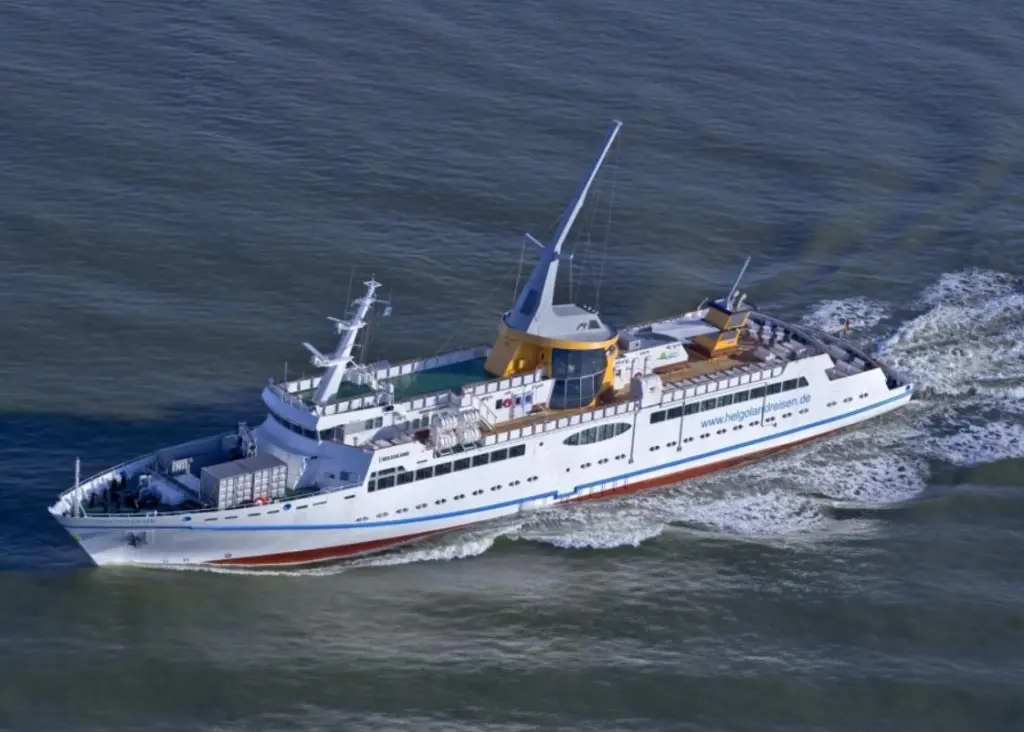
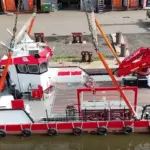
The €31.5 million Helgoland sailed from Cuxhaven in December in Force 9 winds and 4m waves on its maiden voyage to Helgoland in the German Bight. Designed for all-year-round service, it reportedly completed the trip “with flying colours”.
Built by Fassmer Werft for Reederei Cassen Eils, part of the AG Ems Group, the ship was originally due into service last May. That was postponed until July and then again until December.
Yard Managing Director Harald Fassmer explained: “We had a few challenges to master before we could realise (this project), because multiple prototypes are being deployed all at the same time on this new ship”. His yard also said “many things cropped up in the early days of planning, because the new LNG technology is based on gas cooled to -162ºC and that opened up possibilities for quite a few unique technical solutions”.
Fassmer and Cassen Eils have previously mentioned “different reasons” for operational delays connected with the ship’s innovative and complex technology. Engine builder Wärtsilä stressed however that there have been no problems with its two nine-cylinder 20DF medium-speed engines of 5000 kw providing 20 knots, or with the gas storage and supply tanks it has also supplied.
Yard and operators noted earlier that no industry standards existed for LNG technology. Technical questions had repeatedly cropped up at all stages of planning, building and start-up, they said, and these had to be clarified with specialists and class.
Cassen Eils MD Bernhard Brons noted the ship’s LNG-driven generators were among prototypes being used on board for the first time and required time-consuming official approval. “We are all very aware that we are dealing here with a pilot project”, he said.
To guarantee the highest possible safety for passengers and crew, automatic safety systems also had to be built into the ship to meet every eventuality linked to new LNG technology.
Harald Fassmer also noted that the ship as now delivered was different from that commissioned in 2013. At 83m it was 4m longer and 20cms wider at 12.6m and draught had also increased to 3.6m, he said.
The impressive eco qualities of Helgoland have already prompted an application for Germany’s coveted Blue Angel environment-friendly certification, said Cassen Eils project head Michael Baumfalk.
He said the newbuild consumed up to a million litres of fuel a year less than a conventional ferry – meaning a saving of about 570 tons of CO2 emissions, 15 tons of SOx and about 32 tons of NOx as well as no fine particle emissions.
By Tom Todd