![MaritimeJournal[Seawork]](https://www.maritimejournal.com/wp-content/uploads/2026/09/MaritimeJournalSeawork.svg)


UK training for tug deck hands
Lymington UK based King Marine Ltd has now run its second training course specifically intended for tug deckhands in a project attracting the attention of some major names in the towage industry.
For the major tug owning companies, both at officer and ratings level formal training and career progression processes will be part of their overall behind the scenes operation. It may not however be so feasible for smaller tug operators and port authorities to develop training programmes above what the statutory requirements demand.
The role, and the risks and dangers inherent therein, of the deckhand has changed little over the generations, their job being recognised as one demanding basic seamanship and boathandling skills of the highest order, often in the most trying of circumstances and conditions. Traditionally training has been largely hands-on with the irreplaceable practical knowledge of experienced crews being handed down to the next generation.
Times are changing though with tug crew number dropping and many barges now operated without separate crews. Tug skippers also now have increasing demands on their time squeezing the opportunities for training their deck crews and it is here that King Marine has come in with their course run specifically for tug deckhands in the UK, endorsed by the National Workboat Association.
Three significant towage companies: Williams Shipping Marine Services, Solent Towage Ltd (part of Østensjø Rederi) and Holyhead Towing Company Ltd have made long-term commitments by building the course into their ongoing training programmes for all new recruits. Many smaller operators and port authorities are hoping to send their newer employees as well.
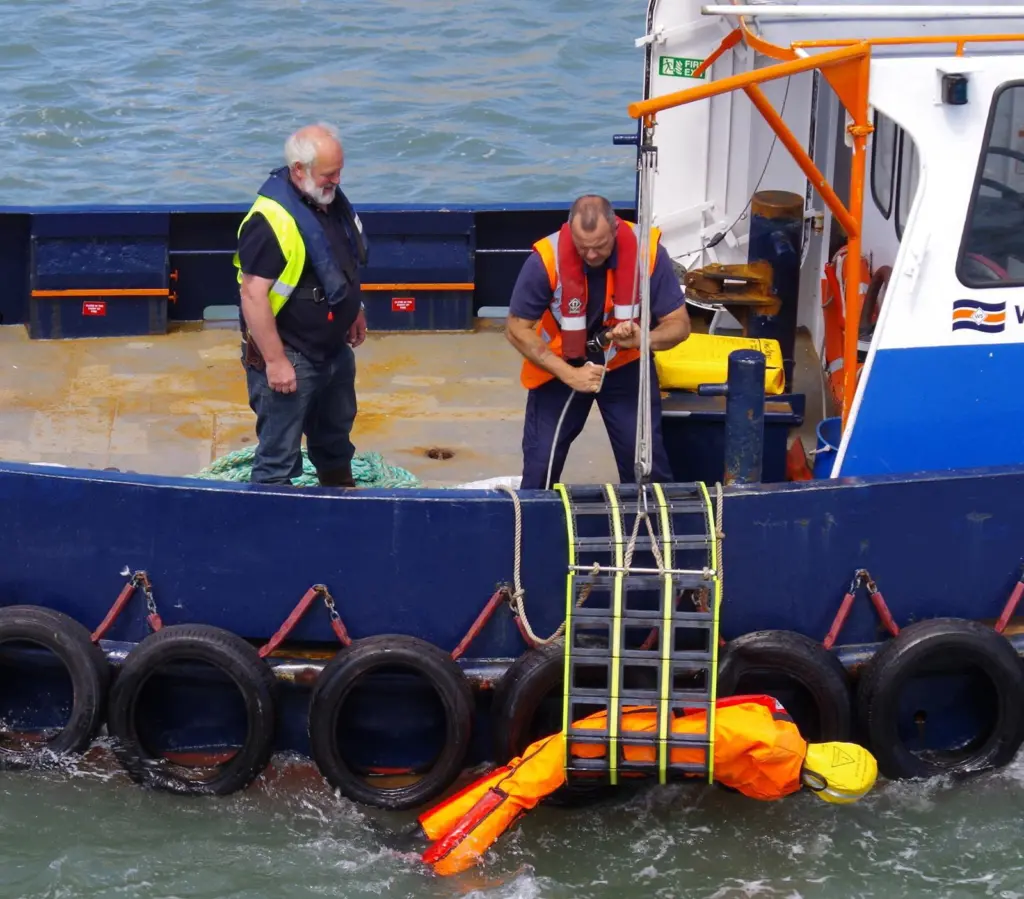
The course is predominantly practical and limited to four at a time allowing the maximum opportunity for sufficient practice time and the opportunity to experiment and builkd confidence. After intensive classroom sessions held in the mornings trainees prepare and handle a barge hipped up alongside, prepare, deploy and recover towing gear without the aid of a winch, manoeuvre to recover a man overboard and experiment with Jason’s Cradles and slings.
A single-screw workboat with pontoon on the hip demonstrates the skills required for securing the tug at an appropriate angle for equal directional control to both starboard and port. The all-important role of the gog-rope is demonstrated along with the sobering effects of watching wire and synthetic rope whiplash cutting through various materials.
Training provider Chris King has extensive experience starting from skippering fishing boats in the early 1970s before joining tugs at the start of the North Sea oil and gas industry revolution including working with oil rig construction projects and designing and executing methods for beaching rock barges for discharge. His experience also includes teaching towing methods for 38,000t drinking water balloons, skippering tugs and multi-cats on marine construction and dredging projects in three developing nations and within Western Europe.
By Peter Barker
Related Articles
 SPECIAL REPORTS
 TUGS & SALVAGE
 EQUIPMENT