![MaritimeJournal[Seawork]](https://www.maritimejournal.com/wp-content/uploads/2026/09/MaritimeJournalSeawork.svg)



Fourth Russian rescuer delivered
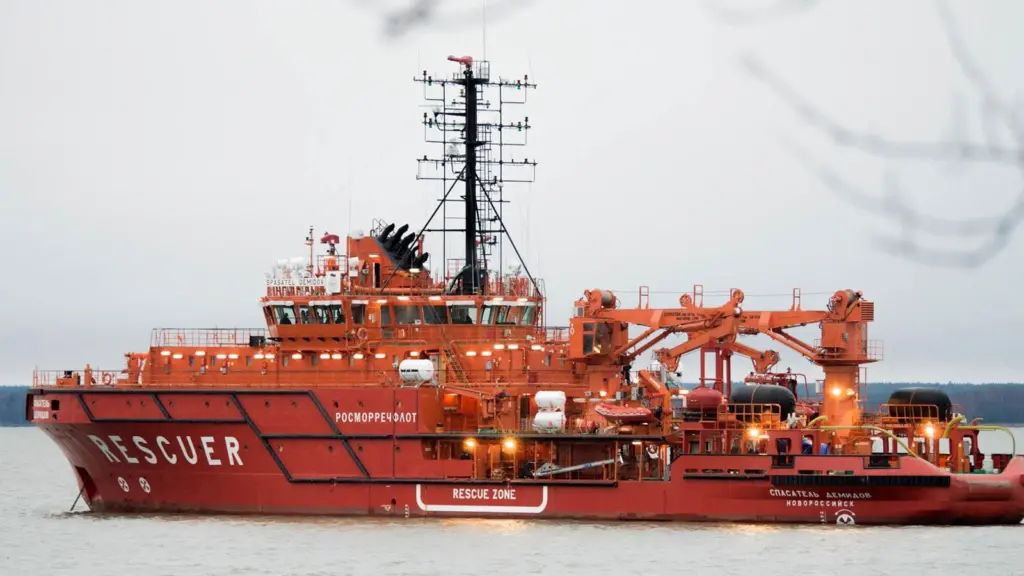
Russia’s Nevsky Shipyard has delivered ‘Spasatel Demidov’, the fourth and final example in a series of multipurpose salvage vessels for the Ministry of Transport of the Russian Federation.
The last few years have seen significant expansion of the Russian government’s salvage, towage and rescue capabilities. MJ has previously reported deliveries in this series from Nevsky Shipyard along with two similar vessels from Nordic Yards Wismar. The latter two Beringov Proliv and Murman have been reported on as being delivered to the Russian Ministry of Transport within a week of each other in December 2015.
Back to Nevsky Shipyard’s series, the project is designated MPSV07, developed by Marine Engineering Bureau-Design SPb JSC and the Spasatel Demidov follows the first three in the series Spasatel Karev, Spasatel Kavdejkin and Spasatel Zaborshchikov.
The series are described as the biggest and most significant vessels to be built by Russian shipyards and in line with the Federal Target Programme ‘Russian Transport System Development (2010-2015)’. Basic specifications include: length overall of around 73m, breadth 15.5m, maximum draught 5.1m and deadweight at maximum draught around 1,171t. Propulsion data indicates a maximum output of 4,000kw and top speed of 15 knots. They are built to Russian Maritime Registry of Shipping rules.
The builder’s description of being ‘unique thanks to her equipment and technical capabilities’ is explained when considering the vessels’ roles. They are intended for rescue and salvage operations, providing technical support and assistance to vessels in distress and towing ships and offshore structures in ice and open water. Technical requirements specify the refloating of vessels aground or if reef damaged, pumping water from flooded compartments, towing of vessels to a place of refuge, carrying out search and rescue operations and the capability for evacuation and accommodation of survivors.
The salvage capability is further demonstrated by the specification which includes supporting underwater diving operations to a depth of up to 300m and surveying the seabed and damaged objects at depths of up to 1,000m. Spasatel Demidov has capacity to extinguish burning fuel on water, extinguish fires on floating and coastal objects and clear oil spills including those with a flashpoint below 60’C.
Gradual changes in global climate patterns have drawn attention to potentially greater use of the Northern Sea Route linking Europe with Asia along with the potential for development of offshore energy resources. One area of concern is the lack of rescue and salvage capacity in this hostile and previously little used region. This succession of vessels is therefore perhaps aimed towards this area with their capability of unlimited navigation in areas including seaways of the Northern Sea Route. Rules of the Russian Maritime Registry of Shipping along with international conventions were taken into account with the Northern Sea Route region in mind.
By Peter Barker

Related Articles
 SPECIAL REPORTS
 TUGS & SALVAGE
 EQUIPMENT