

Larger aluminium panels
Norway-headquartered aluminium specialist Sapa announced at SMM 2016 its launch of super-large and light friction stir welded panels extruded with marine-dedicated 5083 aluminium alloy.
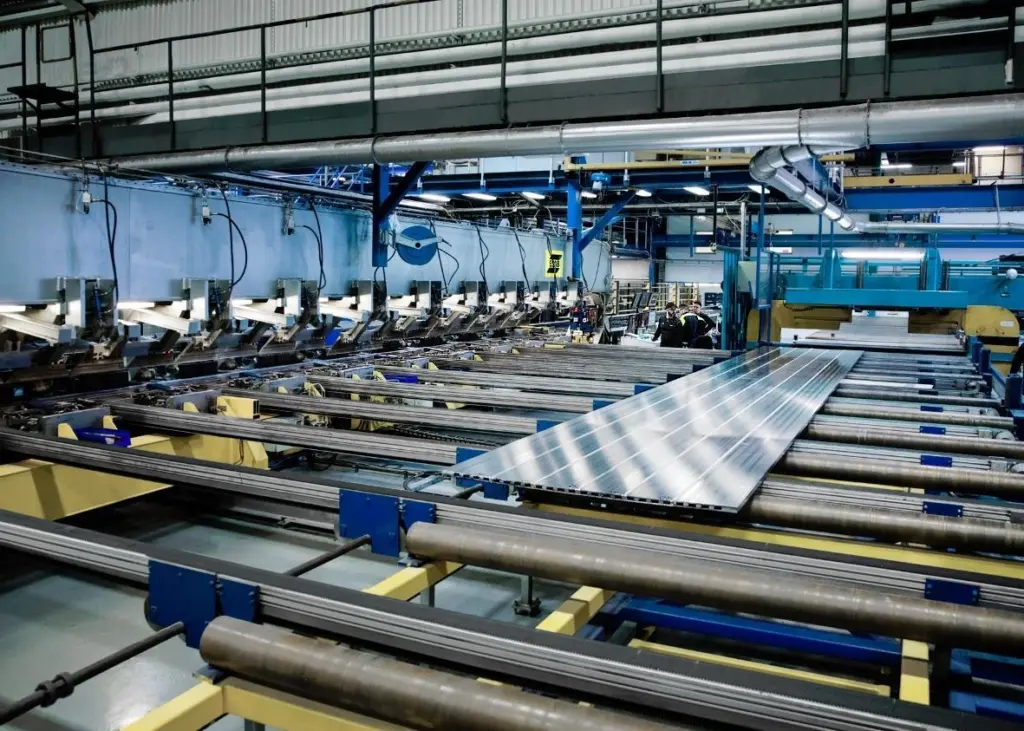
The company claims that this new combination will enable shipbuilders to manufacture stronger hull structures while saving costs. Sapa says that 5083 alloy has not been joined before in this way into panels as large as 18 metres in length and 3.5 metres wide: “Using our extrusion technology for 5083 marine-grade profiles, alongside our friction stir welding techniques, we help shipbuilders improve the quality and construction efficiency of their vessels. Our ability to join thin-walled lightweight designs into large panels will make a big difference in the marine industry, where such sizes are best suited, and where cost and lead time savings are key,” said John Thuestad, executive vice president responsible for Sapa’s extrusion organization in Europe.
Sapa has also announced that it had installed a new large-scale friction stir welding (FSW) machine in Sweden offering single-sided and double-sided welding of aluminium profiles with material thicknesses up to 16 mm, produced as 18 by 3.5-metre panels. The panels can be produced curved as well as flat, increasing panel length by nearly 30 percent, as well as adding another half-metre in width. This, the company says, reduces assembly time and cost spent in other areas, such as quality certification. The machine is the largest in Europe and one of the largest in the world. It will become fully operational in October. FSW joins flush metal surfaces through the effects of a rotary tool, pressure and heat. No filling is needed, and FSW provides better properties and less heat deformation than other forms of welding. Double-sided welding is faster and generally produces higher quality results than single-sided welding.
FSW generates less heat and therefore less distortion than traditional welding. Unlike MIG-welded parts, extruded sections maintain their straightness and flatness throughout the FSW process. As a result, the weld zone maintains a higher proportion of the original mechanical properties. Sapa first introduced friction stir welding in 1996.
For hulls, decks and superstructures Sapa can develop and deliver machined, pre-assembled and finished components using its extrusion technology and friction stir welding techniques.
5083 alloy meets stringent technical requirements and is the material of choice for marine hull structure applications. Sapa says that compared to 6xxx-series alloys, it has a better base material to post-weld strength ratio, which makes it easier to weld, since it needs less heat input, and more predictable in terms of post-weld strength. The 5083 marine extrusions excel in corrosion resistance in a salt-water environment and therefore are particularly suited for applications in the waterline area.
By Jake Frith