![MaritimeJournal[Seawork]](https://www.maritimejournal.com/wp-content/uploads/2026/09/MaritimeJournalSeawork.svg)


Reflecting on 30 years of the salvage industry
Thirty years is but a blip in the history of marine salvage but an industry worth reflecting on as ‘MJ’ celebrates its 30th anniversary.
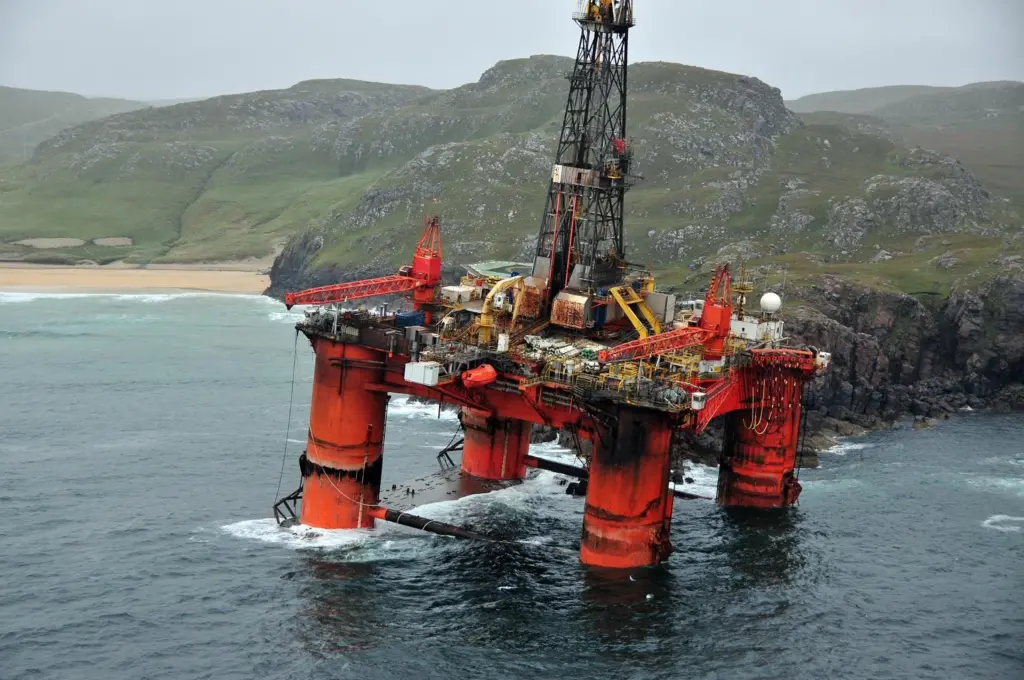
To gain an insight into the past thirty years of the salvage industry along with prospects for the future, your correspondent turned to the International Salvage Union (ISU) for its view as it addresses the challenges in this small window of time in the industry’s long history.
ISU represents the interests of around 60 marine salvage companies but is more than just a trade organisation. As well as a good track-record of successful operations, members have to conduct their activities ethically and in accordance with the ISU Code of Conduct. In return, they enjoy representation at the highest levels internationally including emphasising the industry’s contribution to environmental protection as well as the obvious benefits of reducing financial losses. They are therefore well positioned to provide an insight into the industry.
LAST 30 YEARS
Mark Hoddinott is ISU’s general manager: a master mariner with considerable experience of the industry as a salvage master and later in senior management with various global towage and salvage companies.
Asked about the salvage scene 30 years ago Mr Hoddinott said: ‘Thirty years ago the salvage sector was dominated by a small number of traditional firms. They would typically be family or part family owned and own and operate their own salvage-specific assets including deep sea salvage tugs. Use of the Lloyd’s Open Form was common – it would not be unusual for over 200 LOFs to be signed each year.’
The disposition and make-up of salvage tugs and salvage companies has also changed as Mr Hoddinott explained: ‘Tugs on station waiting to deal with incidents as and when they occurred was the norm rather than the exception. Today we see more salvage contractors operating as units of larger industrial groups which are often in public ownership. Investment and analysis models are less tolerant of the variability of the income from salvage and more diversified income streams are generally required to support core salvage activity.’
Mr Hoddinott discusses the subject of LOF contracts: ‘Use of LOF has reduced significantly and contractors are more prepared to work on commercial terms – sometimes because there is an oversupply of would-be contractors chasing less work as well as due to pressure from the insurers to reduce costs.’
Global communications in today’s world has led to the process of appointing salvors and negotiating contracts being taken away from ship’s master and determined by stakeholders higher up the ladder located around the world.
A challenge for the industry is the increasing size and complexity of ships, Mr Hoddinott stating: ‘Technically, the key change has been the size and complexity of casualty vessels and the increase in the carriage of hazardous goods. Thirty years ago, the containerization revolution was only just getting underway and vessels in all classes – except VLCCs – were generally smaller and simpler.’
‘The attitude of the coastal states was probably more tolerant and, prior to the introduction of the 1989 Salvage Convention, saving property took precedence over protecting the environment. Responders were often expected to try to keep the pollutants in the ship whereas today it is often a requirement to remove potential pollutants.’
Addressing the questions of levels of expertise and equipment and of ‘yellow pages’ salvors Mr Hoddinott sates: ‘There is still a full salvage response capability available globally. Indeed, as noted above, in some locations there is an over-supply leading to commercial pressure on ISU members. The larger ISU members maintain substantial inventories of their own salvage equipment – often in more than one location … The industry still has many expert salvage masters employed by ISU members but there has been a drift away from the core industry in response to declining work levels. Ensuring there is a “talent pipeline” of younger men and women able to be the salvage masters of the future is a challenge.’
‘ISU promotes the value of well capitalized contractors with their own equipment and staff – such as ISU members typically have – over the idea of the so-called “yellow pages” salvor. A key point is that the well-capitalised salvor can often take on the financial risk of the job in a way that a consultant cannot. The “no-cure, no pay” model is of great benefit to the shipowner and their insurers.’
THE FUTURE
Expecting the industry to look broadly similar in the next few decades and discussing the subject of larger vessels Mr Hoddinott states: ‘The very largest vessels are already a challenge. It will be interesting to see when – or if – the limits of the increase in size of boxships is reached. Only a few years ago 16,000 teu was considered extreme and now we are comfortably past the 20,000 teu mark. Combined values of hull and cargo will be huge. Experience and confidence in handling LNG – both as a fuel and as a cargo – is increasing with large scale ship-to-ship transfers of LNG already being undertaken. Handling up to 6,000 passengers and 2,000 crew from a massive cruise ship casualty would be extremely challenging.’
Cyber security and autonomous ships are very relevant for the future: ‘Cyber security is a key issue across shipping and impacts on salvors both as ship owners and operators in their own right and as responders. Autonomous ships and Artificial Intelligence projects perhaps increase the risk of casualty caused by cyber attacks. Notwithstanding, there will still be an industry of salvors ready to save life, protect the environment and save property because – even with remote operation – the human element which is at the heart of most incidents can never be fully removed and so the possibility of marine casualties cannot be completely eliminated.’
By Peter Barker
Related Articles
 SPECIAL REPORTS
 TUGS & SALVAGE
 EQUIPMENT