![MaritimeJournal[Seawork]](https://www.maritimejournal.com/wp-content/uploads/2026/09/MaritimeJournalSeawork.svg)


Englishman, a name with history
Earlier this year SMS Towage took delivery of the 2014-built ‘Ulupinar’ class tug ‘Englishman’. The Hull-based company has now provided interesting background to the history of this particular vessel name.
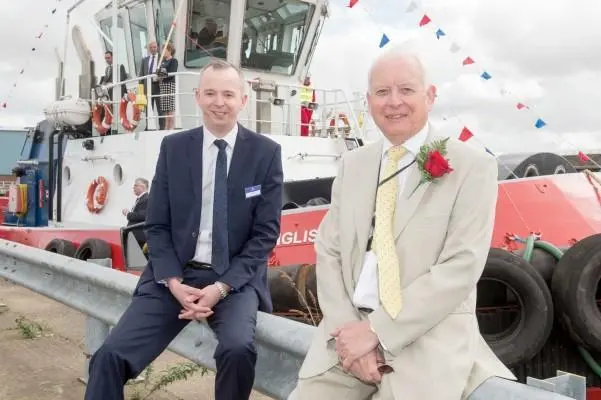
SMS Towage is an example of tug owners who recycle vessel names keeping history alive and the name Englishman is one with a long history spanning 127 years, the latest being the tenth to carry the famous name during periods of war and peace.
The first Englishman dates to the late 1880s but earned a black mark when just five years after delivery it collided with a British steamship. It made its way back to harbour before sinking and was later raised and returned to service. After passing into French then Swedish ownership and while in service in China it was seized by the Imperial Japanese Navy and is thought to have been broken up in the 1930s.
Two comparisons with the latest Englishman are that while 10m longer, vessel number one generated 580bhp from steam-powered machinery compared to 3,500bhp of the latest diesel-powered version. Secondly is where the Swedish owners paid £4,500 for the tug compared to the £3.5m of the latest Englishman.
Following its establishment in 1992 and a spell moving oil and gas rigs, SMS Towage commenced harbour towing services on the River Humber and Englishman number nine’s first assignment was to tow two other tugs (which were to be part of the SMS fleet) from Java to Hull, the company’s longest tow to date. The sale of vessel number nine helped fund the tenth and current Englishman.
As to those in between, number two (built in 1904) was deleted from the register after its sale to Greek owners. Englishman number three survived a North Sea submarine attack in 1918 but sadly vessel number four sank with the loss of all 18 crewmembers following a German air attack off the Northern Irish coast in 1941.
After 15 years on the Humber vessel number five was sold on to Portugal then Greece and number six (as HMS Reward) sank after colliding with a container ship in the Firth of Forth. The seventh Englishman was to be the UK’s most powerful ocean tug with an interesting career including a spell requisitioned to protect UK trawlers during the Cod Wars before (as the Towing Witch) it succumbed to an engine room fire during a trans-Atlantic tow.
Englishman number eight was built in Germany in 1975 as the Schepleturm and had a varied career including a charter to the MCA as an ETV in the Shetlands. This completes the varied story of the successive tugs to be named Englishman and SMS statse that vessel number 10 is unlikely to be the end of the line.
By Peter Barker
Related Articles
 SPECIAL REPORTS
 TUGS & SALVAGE
 EQUIPMENT