![MaritimeJournal[Seawork]](https://www.maritimejournal.com/wp-content/uploads/2026/09/MaritimeJournalSeawork.svg)





First major restoration in 80 years for historic tug
Foss Shipyard in Seattle has completed a ten-day drydocking assessment of the condition of what is believed to be the world’s oldest wooden tug in preparation for a major restoration project.
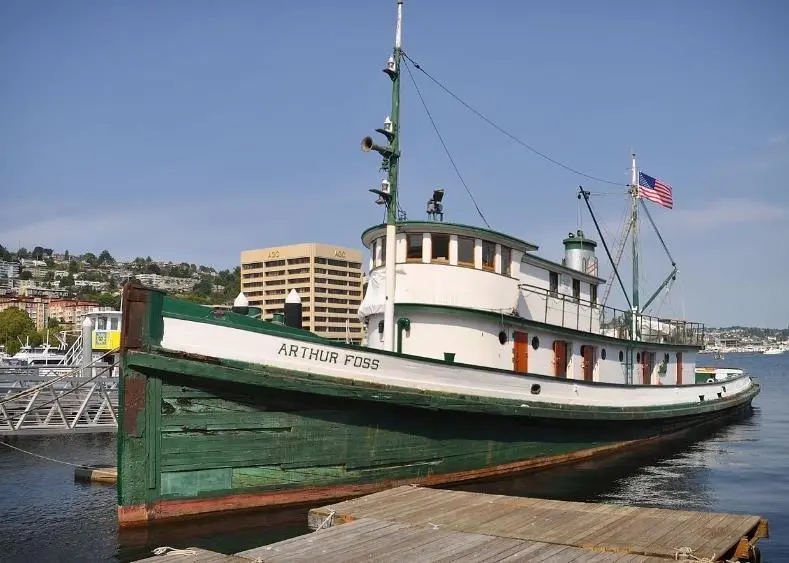
The Foss family purchased the 1889-built tug then named Wallowa in 1929, renaming it Arthur Foss in honour of the company president in 1934. In that year it received a complete rebuild including new 700hp Washington diesel engine, new deckhouse, pilot house and modernised galley. Designated the most powerful tug on the US west coast it was kept busy with routine tows between Puget Sound and California along with occasional tows to Alaska.
Following government service during world war two and a ten-month refit it was assigned to the Foss Port Angeles division for the next 20 years and retired from the Foss fleet in 1968. Two years later it was donated to a maritime historical organisation now called Northwest Seaport and has remained moored on Seattle’s Lake Union ever since.
Before carrying out the restoration, surveyors had to complete a close inspection of the vessel to determine what work would be required to preserve Arthur Foss for future generations. There were no known construction drawings for the tug and naval architects used laser scanning technology to create a three-dimensional model of the hull.
Northwest Seaport executive director Nathaniel Howe reported the portion of the hull below the waterline was mostly in good condition with many of its planks dating back to original construction. Most of the hull is between two and two and a half feet thick, Mr Howe stating: “It is built like a fortress”. It was noted however that fifteen to twenty percent of the planks above the waterline had “gone soft and would will probably need to be replaced.”
By Peter Barker

Related Articles
 SPECIAL REPORTS
 TUGS & SALVAGE
 EQUIPMENT