


Batteries, boats and the power problem
How do we electrify shipping if the ports and harbours that support it cannot provide the electricity that vessels need?
And how can shipowners be expected to invest in battery-powered vessels when the upfront cost is a third as high as a conventional vessel, and the cost of charging them makes the economics difficult to justify?
Maritime electrification has generated plenty of enthusiasm. Advances in battery technology, growing pressure to reduce emissions and punishing environmental targets have all helped put electric propulsion firmly on the agenda. But widespread adoption is proving much more complicated.
Battery-powered workboats, ferries and passenger vessels are already showing how the technology can work, but the much-anticipated transition is not happening at the pace many expected. Even the tug sector, which has been at the forefront of the conversation about battery-electric propulsion, is seeing a relatively slow uptake of fully electric vessels despite considerable fanfare and a growing number of high-profile projects.
So what is holding things back? Is it the cost of batteries, uncertainty over their operational performance, or simply the difficulty of accessing affordable electricity where vessels actually need it?
The infrastructure challenge is becoming increasingly apparent. Ports are investing in shore power, charging facilities and renewable energy, but connecting vessels to the grid is rarely as straightforward as installing a charging point. Available capacity, grid constraints, connection costs and competing demands for electricity can all stand in the way. Smaller ports, in particular, may lack both the financial resources and the physical infrastructure to support widespread electrification.
And even where the infrastructure exists, does the cost of shore-side electricity make commercial sense? For some operators, charging from the grid can be considerably more expensive than generating electricity onboard using conventional fuels.
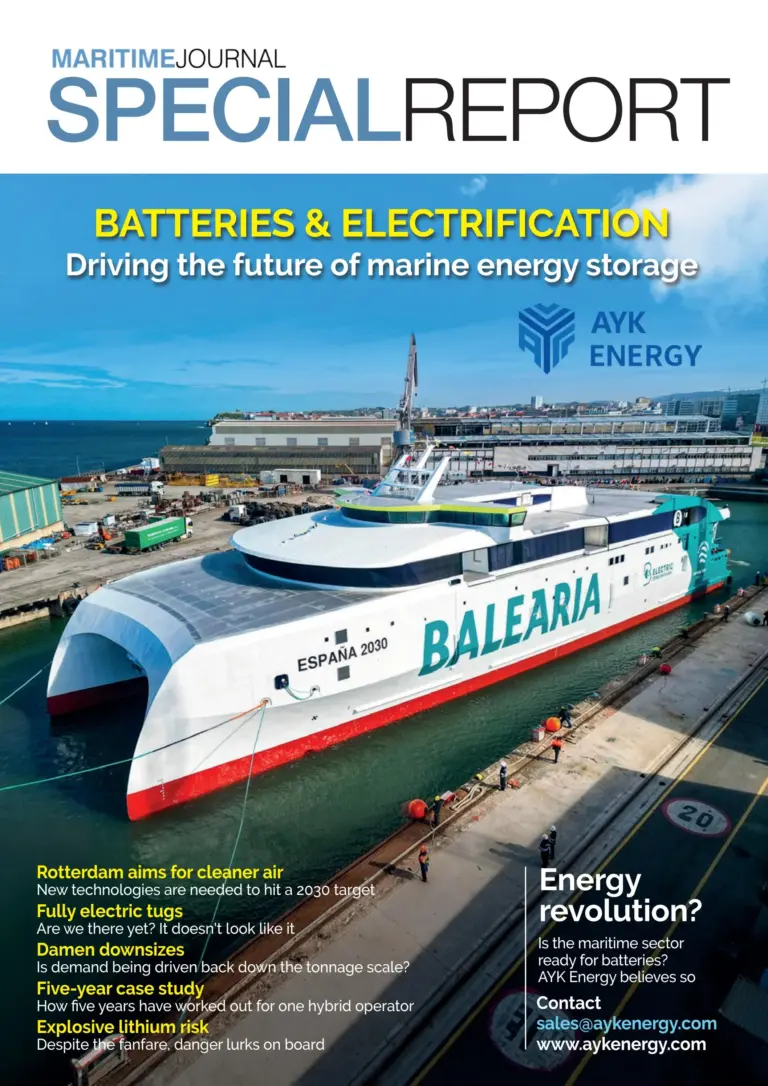
This report examines the progress being made, the obstacles that remain and the practical realities of moving towards a more electrified maritime industry. From Rotterdam’s ambitious shore-power programme and the challenges facing smaller ports, to battery technology, hybrid vessel operations and electric safety equipment, our contributors explore what is working, what is not, and what needs to change.
Because if maritime electrification is to move beyond isolated success stories and become an everyday reality, the industry must answer a fundamental question: where is all the power going to come from – and who is going to pay for it?
Debbie Mason
Head of Content
Maritime Journal and Seawork