



An alternative route to greener shipping
Current estimates indicate that shipping’s share of global CO2 emissions could increase to between 20% and 30% by 2050. With 90% of global trade carried by sea, this is an issue that cannot be sidestepped. However, commercial realities must be recognised and ‘green’ solutions with tangible commercial benefits may provide significantly more leverage to establish the win/win situation that will reduce costs and limit damage to the environment.
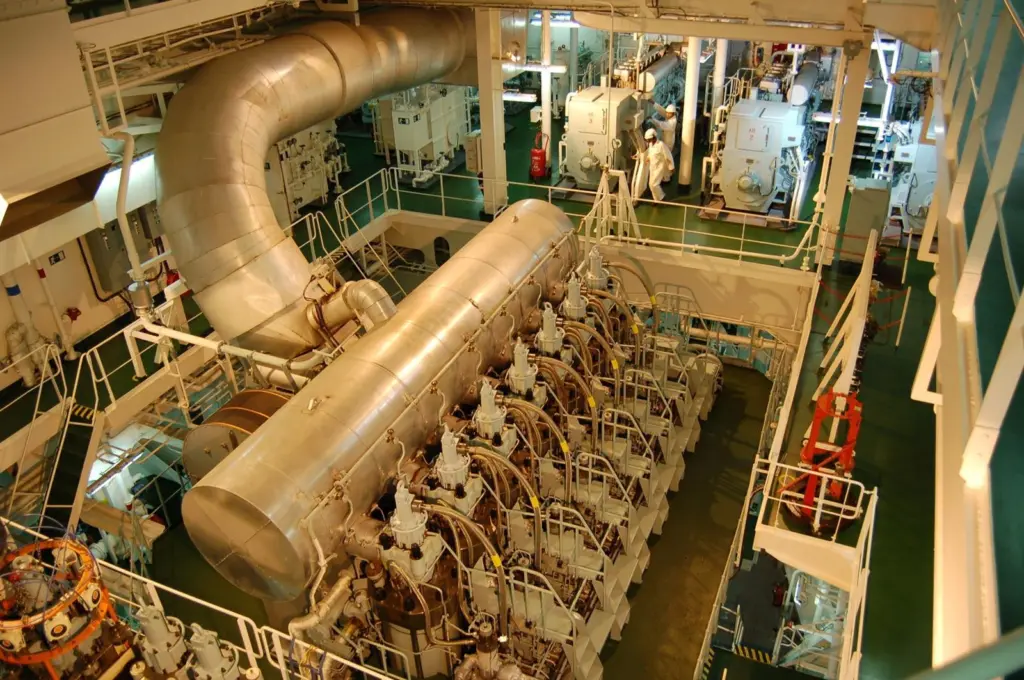
Simon Burnay, Director for the Shipping and Ports Division of BMT ARGOSS Ltd, a subsidiary of the BMT Group, reflects on how the appropriate deployment of a comprehensive Energy Management Strategy for shipping can lead to significantly reduced fuel consumption and the associated environmental benefits.
Suitable solutions are available. New technology can be harnessed to reduce fuel consumption through improvements in engine efficiency and reduced hull drag. Changes in operational procedures can also deliver environmental and commercially beneficial improvements in voyage planning and speed optimisation (or ‘slow steaming’). There is, however, a potential downside to these changes.: Will we need extra ships to cater for trade growth? Should new ships be designed with slow steaming in mind in order to optimise their efficiency? These are complex questions that must be addressed.
The International Maritime Organization (IMO) has already identified the importance of shipboard energy efficiency and has established the Shipboard Energy Efficiency Management Plan (SEEMP). This document seeks to improve a ship’s energy efficiency through four steps: planning, implementation, monitoring, and self-evaluation and improvement. In order for the SEEMP to be effective, it is essential to have a performance baseline in place. Solutions such as BMT’s SMARTPOWER record and collate real-time performance data, providing considerable improvements over the standard manual ‘noon’ reporting process.
By analysing good quality data it is possible to break down the overall performance into individual components (engine, propeller, hull performance), identify where efficiency losses are being introduced into the system and react accordingly. Maintenance can be optimised by moving away from fixed schedules to ‘condition based’ approaches. One of the first ships that deployed SMARTPOWER technology had a hull clean ahead of schedule based on data indicating a worsening in hull performance. This resulted in a direct saving of approximately seven tons of fuel per day and associated reduced emissions. The system had only been on board for two months so immediately ticked the ‘win/win’ boxes in delivering environmental and commercial benefit.
Success also depends on the buy-in of the crews using the new technology or deploying new working practices. When there are examples of two very similar ships running two very similar routes with very different performance the only real variable is the crew. It is hardly surprising that operators are beginning to give their crews bonuses based on improvements in fuel consumption and related environmental aspects.
The final element of deploying a comprehensive energy management strategy is having an understanding of how the carbon markets work. The shipping industry is going to be charged for its carbon emissions. Whether it is a bunker fuel levy tied to shipping fuel efficiency measures such as that proposed by the World Shipping Council (WSC), regional emissions trading or another of the many proposed schemes, having an appreciation of the carbon market will prove invaluable to any organisation in the shipping industry. BMT Group’s experience in working on sustainability projects with cruise lines and other major shipping organisations has highlighted the impact internalising carbon costs may have, and how poorly understood this is by the industry at large. Here, there is a thirst for knowledge that BMT Group is working to satisfy.
There are certainly major environmental and commercial benefits in achieving greater energy efficiency and making shipping ‘greener’. Shipping lines and major shipping organisations are beginning to recognise this but we are still in the early stages of the process. How the key stakeholders react to legislative and commercial drivers over the next five years will give a far clearer indication of the shipping industry’s timeline to being truly energy efficient.
Related Articles
 ACCESSORIES & EQUIPMENT
 ENVIRONMENT
 MARINE CONSTRUCTION