![MaritimeJournal[Seawork]](https://www.maritimejournal.com/wp-content/uploads/2026/09/MaritimeJournalSeawork.svg)





Big buoys mark the way at Dighi Port
Australia based navaid manufacturers Sealite Pty Ltd recently supplied 28 of its ‘big buoys’ fitted with GPS lanterns to mark the channel entrance to the brand new Dighi Port in Maharashtra, Dighi, India.
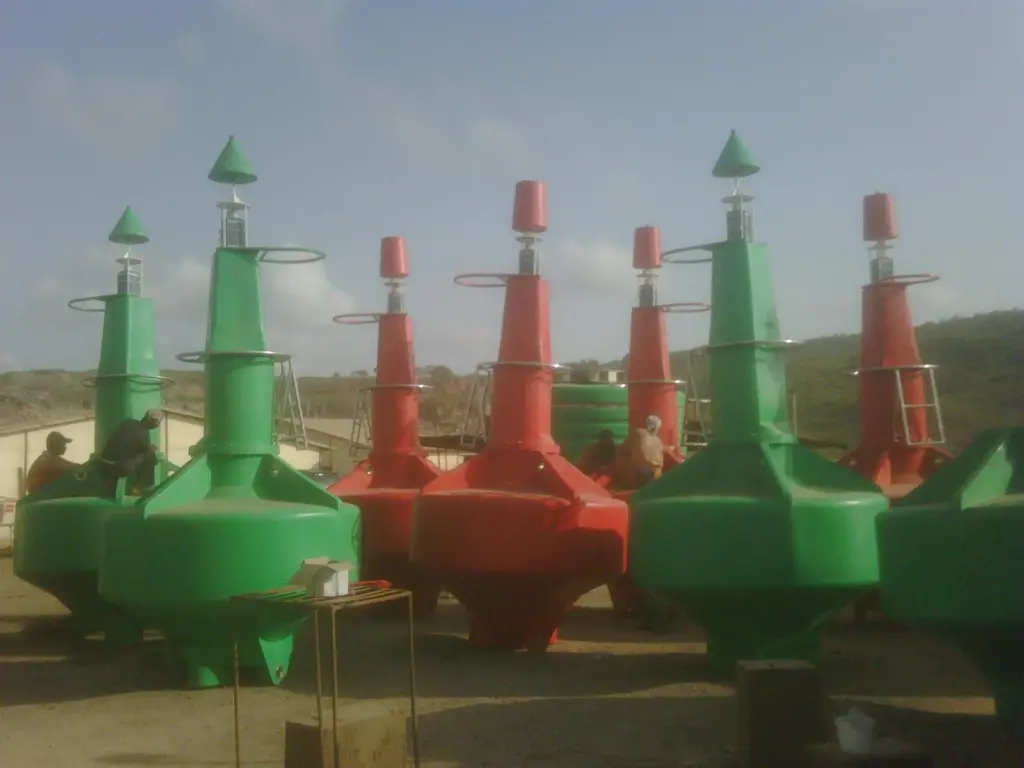
The complete buoy order of 13 Trident-3000, 10 Nautilus-2200 and five SLB1250 buoys fitted with GPS lanterns was executed in 75 days from the time of order, including manufacturing at Sealite , shipment, erection and commissioning in India. Authorised Sealite distributor, Aeromarine Equipments Supply, was commissioned by Dighi Ports Ltd to supply, erect and lay the buoys in the channel.
The project was put on paper in 2002 and it took some time to convince Dighi Ports to change from using metal buoys to polyethylene. Persistence and the relentless effort of Aeromarine’s marketing department, who left no stone unturned in landing this job, paid off in the long run.
To further assist in the smooth execution of this project Sealite sent their production manager, Peter Bird, to India to give instruction and help with the preassembly of the Trident buoys. ‘Our Trident-3000 Ocean Buoys are built from four roto-moulded quadrants which fasten together to form an incredibly robust 3m wide float section standing 1.8m tall. With convenient forklift access points, the buoy assembly can be safely manoeuvred making it easy to deploy, a key factor in the success of the Dighi Port installation’ said Mr Bird.
‘When the containers came into port and we were offloading them, the port workers had no clue as to how we would construct a buoy out of the pieces, but as the days went by the port guys were amazed to see the Tridents rigged up and could not believe their eyes’, said Aliasgar E Patrawala of Aeromarine Equipments Supply.
Along with the ocean buoys, the GPS synchronised technology fitted to the SLB1250 navigation buoys enhances the channel’s visibility to pilots entering the brand new port. ‘What was a 2 ½ hour drive from Mumbai to Dighi Port is now a speedy 40 minutes by sea, opening up access to this area, reducing costs, increasing safety and setting the new benchmark for other ports in the region’, concluded Mr Bird.
Related Articles
 VESSELS
 MARINE CONSTRUCTION
 VESSELS