



Canadian loggers stick to well tried principles
From time to time it is interesting to take a look at the tugs and workboats operating in other parts of the world and compare the technologies in use. One location that is thick with small tugs is British Columbia, the home of at least a couple of well known Vancouver based design houses.
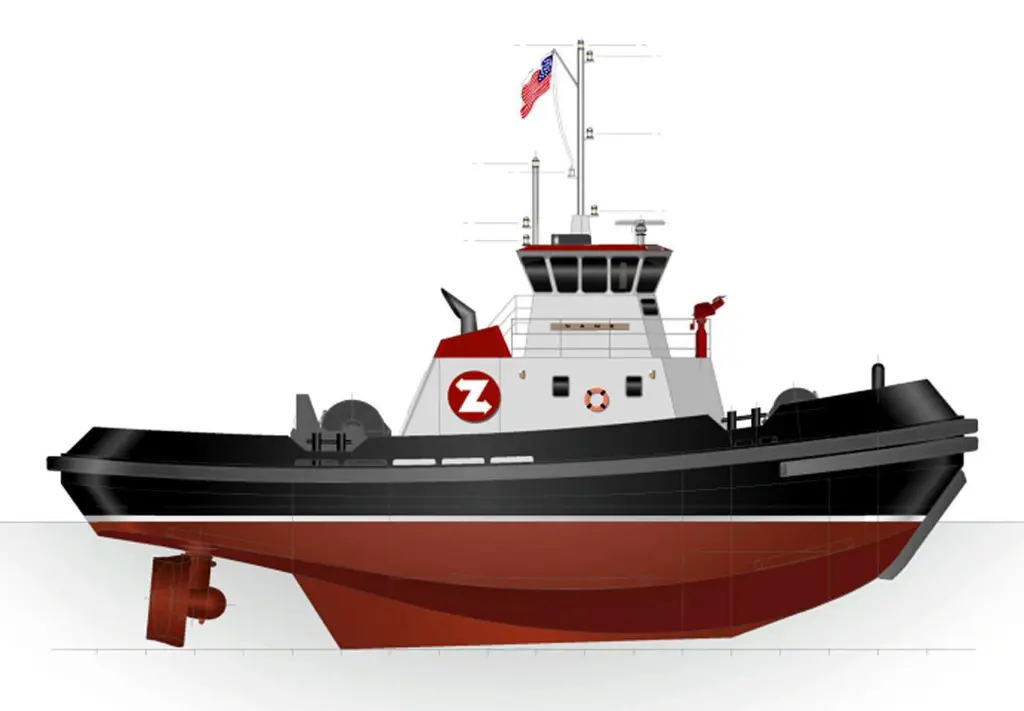
The area around Vancouver and the Fraser River is also the centre of the logging industry and its many supporting services. Fleets of small, powerful, tugs are engaged in towing log booms (rafts), wood chip barges and other floating plant locally and over long distances on the rivers and around the coast. The majority are small, extremely rugged and designed specifically for use by a crew of two on inland waters and with accommodation for more when going to sea.
Typically the tugs have a long life span, and will be refitted and re-engined several times, so new tonnage appears very infrequently. The few new vessels that are ordered for this industry are invariably built to established designs developed initially for that specific use, updated to fulfil the demands of the client in a more efficient and economic manner.
Earlier this year Catherwood Towing, based at Mission BC a town with strong links to the timber trade, took delivery of the new 1000bhp twin-screw tug Sea Imp IX. This new addition was built by the Sylte Shipyard on the Fraser River to a design by Vancouver based A. G. MiIlwain.
A rugged vessel of 16.17m (53.6ft) in length overall with a beam of 6.71m (22ft) and draft of 2.97m (9.75ft), the design was described as a redrawn version of an earlier 15.24m (50ft) vessel. The larger size and volume gives a greater fuel capacity of 45,000 litres and enables large nozzles to be fitted. As with all tugs working around floating timber, the new tug has an extensive array of steel rubbing strakes on the hull, in addition to heavy rubber fendering for protection against damage from heavy logs and barges.
A pair of Cummins KTA 19M3, Tier 1 main engines each generate 500bhp at 1,800 rpm MCR. Power is transmitted to twin four blade propellers of 1,700mm diameter via Twin Disc MG 5222 (6.96:1) electronically controlled gearboxes. The propellers rotate within Rice fixed nozzles of the Kort 19A type. Four rudders are installed, controlled by a hand hydraulic steering system. Engine and steering controls are duplicated in the wheelhouse, on the flying bridge and on the after deck adjacent to the winch.
In common with most tugs of its type, built for work on rivers and the coast, Sea Imp IX is fitted with a powerful two speed Harrison & Robbins single drum towing winch carrying 732m (2,400ft) of 32mm (1.25”) diameter steel wire towline.
The extensive electronics suite matches that the other vessels in the Catherwood fleet and includes depth sounders for working the river and autopilots capable of providing fuel efficient steering with the heavy log booms. A more recent addition is a ‘Tough Book’ laptop computer that includes electronic charts and also allows the transmission of location and other data such as speed and direction from the vessel. Along with input from 14 other boats in the fleet, data from Sea Imp IX appears on a huge flat screen display in the company’s dispatch office. Catherwood intends to expand this proprietary system to include transponders that can be placed on log booms or barges to allow owners to track vessel locations and content in real time.
Proprietor Ernie Catherwood has already re-engined two other tugs in his fleet with Cummins KTA19 diesels during refits, replacing old 400 horsepower engines. He recalled that ‘We used the same Twin Disc gears but added pitch to the 54 inch nozzled-wheels on the Sea Imp VIII and gained 1.5 to 2 knots in speed as well as increased towing power. That equals eight hours saved on a run from Prince Rupert to Vancouver. For British Columbia operators, getting a tug to the right place to do a job and take advantage of a fair tide is all important both on the coast and in the Fraser River.’
By Jack Gaston
Related Articles
 TUGS & SALVAGE
 EQUIPMENT
 MARINE CONSTRUCTION