

CEDA conference showcases solutions
At the end of October the Central Dredging Association (CEDA) co-hosted a conference, with the Portuguese Engineers Association (OE) in Lisbon.
The CEDA Iberian Conference: Dredging for sustainable port development, had over 120 participants, and addressed key topics relevant to the success of port dredging and sediment management projects, with a focus on the Iberian Peninsula.
“Portuguese and Spanish professionals in the field of dredging and port construction initiated this event, inspired by increasing environmental and societal demands on the preparation and implementation of marine infrastructure projects. CEDA was delighted to accept the invitation to organise this unique gathering,” said CEDA President Polite Laboyrie.
The conference started with a short introduction by conference chair, Stefan Aarninkhof, Professor of Coastal Engineering at Delft University of Technology, the Netherlands. The well-curated sessions featured 15 technical presentations by high-profile speakers from eight different countries. Conference participants were treated to a comprehensive programme which covered concept and strategies for sustainability; developments of ports and coasts; sediment management; and environmental management and monitoring.
In addition, there was a special Young CEDA Pitch Talk session of three fast-paced and sharp presentations. Young professionals, representing Dravosa, HAL Maritime and Boskalis, had the opportunity to expose their ideas to an expert audience and get immediate feedback and encouragement.
Reflecting on the presentations Professor Aarninkhof highlighted the balanced nature of the contributions. He said: “It was very pleasing that many of the talks presented highly innovative approaches, solutions and technologies including the application of the ecosystems services framework in practice; LNG fuelled hoppers; the airless overflow; operational environmental monitoring including modelling and the use of drones; and sustainable maintenance strategies for beaches and estuaries.”
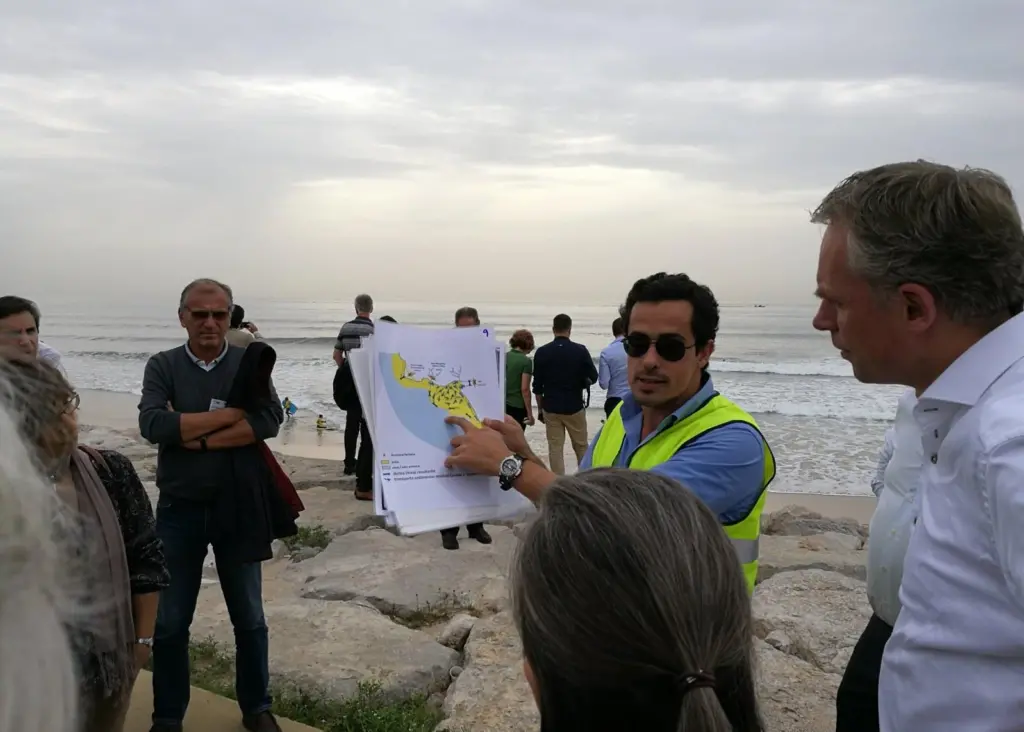
The programme included a technical visit to Caparica beach hosted by the Portuguese Environment Agency. The Agency worked closely with the Port of Lisbon Authority to devise a dredging plan, using dredged sediments from maintenance dredging to successfully mitigate erosion problems on the beaches.
Participants were invited to capture in photos the concepts, ideas and approaches presented during the conference and the best pictures were entered into a photo competition organised by Young CEDA. In addition to adding an interactive element, the photo competition also sought to stimulate further thinking and discussion. Creators of the ten shortlisted photos had the opportunity to pitch their work in one minute each. After that the audience voted.
In his closing statement, Professor Aarninkhof said: “The presentations, the lively discussions as well as the technical visit and the photo contest, clearly demonstrated that going beyond the scope of the traditional dredging project is becoming a growing movement. Project stakeholders, including promoters and executers, and also manufacturers, consultants and environmental NGOs, are increasingly seeking and achieving innovative partnerships. In particular the achievements in beneficially re-using sediments arising from dredging projects for creating and/or enhancing wetlands, valuable habitats for many birds and with high recreational value are truly remarkable.”
CEDA thanked the organisations which supported the event. Principal sponsors included Boskalis, Damen, Dravosa, Dredging International, Etermar, HMT Hahlbrock, Royal IHC, and Seth while tandard sponsors included Porto de Aveiro, Porto de Lisboa, WW Consultores de Hidráulica e Obras Marítimas, SA and technical visit host, the Portuguese Environment Agency.
The continuing support of industry sponsors shows the value that the dredging community places on these events. Conference presentations are available to CEDA members on the CEDA website, www.dredging.org (Resources>Presentations>Conferences, seminars).
By Larz Bourne