



Challenges of scale greet UK Round 3 wind
It will soon be two years since the announcement of the successful bidders for the UK’s Round 3 offshore wind farm zones.
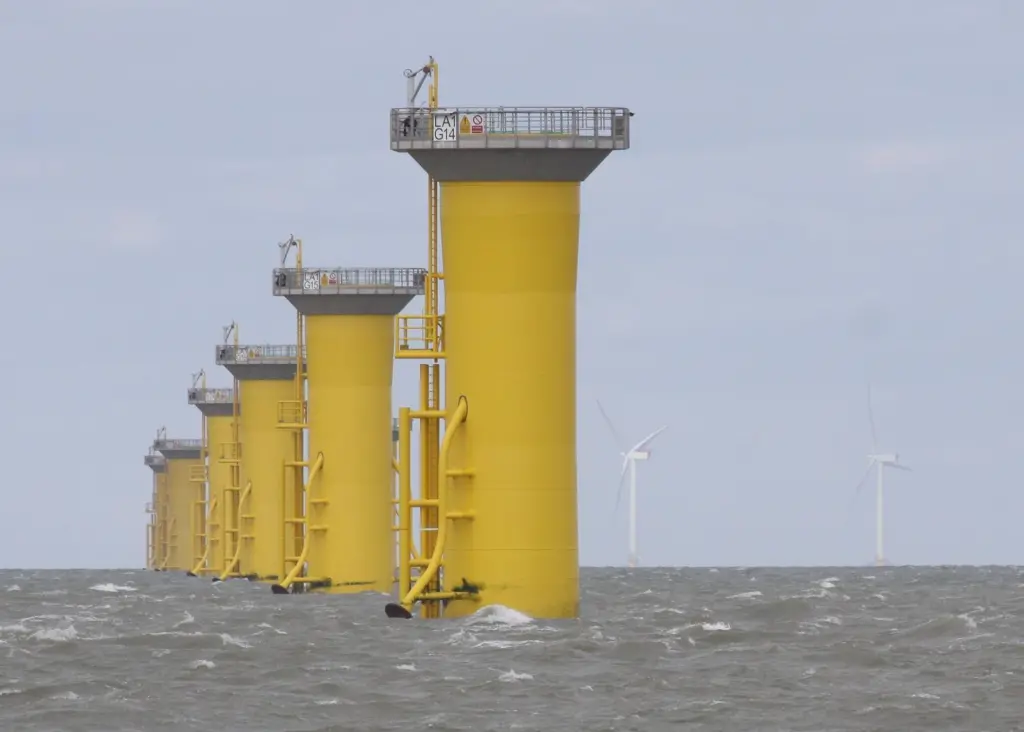
While firmly committed to previous rounds, the industry is looking to the UK government for positive signals of their commitment to renewables, in particular fiscal and practical support for offshore wind. However, progress so far with Round 3 schemes indicates a ‘rolling start’ is now well underway, with the point of no return approaching, if not already having arrived.
Speaking recently at the RenewableUK annual conference, UK Energy Secretary Chris Huhne’s message (speaking about all renewables) could not have been more clear. He said, “We are not going to save our economy by turning our backs on renewable energy, so I can today assure you that this government has resolved that we will be the largest market in Europe for offshore wind.”
In words aimed at critics of renewables, he stated his intention to “take aim at the faultfinders and curmudgeons who hold forth on the impossibility of renewable, the unholy alliance of climate sceptics and armchair engineers who are selling Britain’s ingenuity short”.
Stirring stuff, but will this translate into action for an industry, particularly those in the supply chain, already clearly adopting a positive ‘bring it on’ approach to offshore wind?
Some background. In 2001, licences were awarded for seventeen Round 1 ‘demonstration’ sites totalling 1.5GW. In 2003, three areas: the Greater Wash, the Thames Estuary and the northwest (Liverpool Bay) were identified, leading to 15 Round 2 projects, totalling 7.2GW. In 2007, nine zones with the potential of an additional 33GW were identified for Round 3.
An indication of scale can be gained by comparing areas of seabed the three rounds cover. The combined area of Round 1 is 114km², with Round 2 covering 956km². Information from the nine developers indicates the total area of Round 3 zones is around 21,000km².
Subsidies & Support
Acknowledging that renewables are grabbing a growing share of new energy investment, Mr Huhne responded to critics of government subsidies stating, “Yes, some of that investment is attracted by public subsidy. But globally, subsidies for fossil fuel outstrip subsidies for renewables by a factor of five.”
Government incentives currently take the form of Renewable Obligation Certificates (ROCs), where licenced electricity suppliers are obliged to source a percentage of their energy from renewables. Last month, a Department of Energy and Climate Change (DECC) review of ROC banding levels (for all renewables), proposed retaining the current level of 2 ROCs/MWh for offshore wind for an additional year into 2015, reducing to 1.9 in 2015/2016 and 1.8 in 2016/17. Although a small reduction, it is in effect an increase, as existing policy would have seen ROCs reduce to 1.5 from 2014/15 onwards.
Initial reaction was mixed. Industry body RenewableUK states it is cautious over the government’s “mixed funding signals”, (it represents onshore as well as offshore wind, and other forms of marine renewable energy) suggesting the 0.2 ROC reduction for offshore wind in 2016 “would make more projects in the ambitious Round 3 marginal”.
Meanwhile, Dave Rogers, UK regional director for Renewables at E.ON stated, “We welcome the start of the consultation process which outlines proposed levels of support for renewable technologies. Our initial view is that the proposals for offshore wind and marine in particular will help give confidence to these sectors.”
The DECC bases the slight subsidy reduction on market costs either reducing or expected to reduce. Reducing the cost of offshore wind is a topic keenly debated within the industry and will clearly be a priority for future developments.
For offshore wind, development times between early planning and the initial return on investment are lengthy and in the longer term, investors will be looking beyond the current ROC banding levels as attention turns to the UK Electricity Market Reform, due to come into force by 2017, where the ROC regime will be replaced by a ‘Contract for Difference’ arrangement, a variation of feed-in tariff schemes.
The Infrastructure Planning Commission (IPC) was established in 2009 to speed up decisions on nationally significant infrastructure projects such as offshore wind. The industry is now awaiting details of the coalition government’s plans to replace the IPC with a planning inspectorate, part of the proposed Localism Bill.
Assistance is also provided at regional level, and there was some relief when the coalition government confirmed it was retaining the £60m, earmarked in 2010 by the previous government, for redeveloping UK ports to attract offshore wind turbine manufacturers. Recent reports highlight the importance of producing turbines in the UK, both from a manufacturing industries standpoint, and resultant cost savings from basing production and load out facilities at one location. A number of manufacturers have now either firmly committed to, or stated their intention, to invest in both turbine manufacturing and research and development facilities. Top of the list are Vestas and Siemens with plans for manufacturing facilities at Sheerness and Hull respectively. At the time of its announcement however, Vestas stated its plans are dependent on clear signs of government support for offshore wind, as well as gaining sufficient orders for their next generation 7MW turbine, to be manufactured at Sheerness. The recent agreement between Vestas and DONG Energy to test the new turbine at the latter’s demonstration site in Denmark could be interpreted as a positive signal for potential orders from DONG. At Hull, Siemens’ MOU with Associated British Ports expired in July and, despite reassuring messages from Siemens, local businesses will really only be opening the champagne when the deal is finalised.
Securing finance for such large scale projects presents its own challenges, particularly with the current Eurozone crisis. There are, however, signs of increasing investor confidence, with a gradual increase in the number of banks willing to take on offshore wind farm risks as the industry matures and starts delivering returns.
Construction & Maintenance
Reaching the position where developers finally commit is, of course, just the beginning. Challenges of scale go beyond figures such as output and seabed acreage. Increased distances offshore in deeper, more hostile waters, has prompted a radical rethink of many aspects, including the hardware itself as well as installation and maintenance procedures. It is not simply a case of scaling everything up from previous rounds. Innovation and standardisation will now be key to meeting the challenges, including achieving the holy grail of reducing costs.
While traditional monopile foundations will no doubt feature at some locations, developers will draw on experience gained so far with alternatives, including free-floating and jacket foundations. Turbines are gradually increasing in size, with developers and manufacturers expected to take advantage of the increased wind speed and availability from sites further offshore. Vestas’ 7MW turbine will be the first designed specifically for offshore use, with Round 3 and the potential for global sales in mind.
There have been concerns that there will be insufficient installation vessel capacity to cope with Round 3 and other European projects, not to mention global ambitions for offshore wind. There are currently around 25 mainly jack-up type installation vessels either recently delivered, under construction, or with order options held at shipyards. Designers, owners and operators, some active in the offshore oil and gas sector, are coming forward with innovative designs based on free-floating DP vessels, capable of installing components from foundations to complete turbine assemblies in deep water. Some are designed with employment outside the wind industry in mind, but the signs are that installation vessel operators are working on the assumption of the inevitability of offshore wind developments on a major scale.
Fundamental changes in existing practices will be required meeting the challenges of maintaining Round 3 wind farms over their lifespan. The current typical arrangement of 12 maintenance workers at a time ‘commuting’ from nearby ports on a day work basis will be unsustainable with Round 3 windfarms, some of which will be over 100km offshore and employing hundreds of turbines. There are signs of innovation again, with proposals based around the established offshore accommodation model. Some proposals feature vessels with semi-enclosed docking facilities, with smaller craft ferrying maintenance crews to the turbines.
Challenges for the subsea cable industry arise, not only from the amount of cabling required for complex inter-array and export cable networks, but also from the expected use of High Voltage Direct Current (HVDC) technology for the bulk transmission of electrical power over current AC transmission systems used for nearshore wind farms. HVDC shore convertor stations are significantly larger than AC substations and their siting will demand a sympathetic approach towards local communities.
While outside the scope of this article, a potential elephant in the room is the question of upgrading the UK’s electricity grid system, which has its roots in the supply and demand requirements of previous decades. The whole question of grid capability is linked to the proposed EU Supergrid, using offshore wind and marine renewables as nodes, and foundations for cross-border electricity networks, rather than the current radial system where each windfarm is connected independently to the shore. Among the features of such a Supergrid would be better utilisation of the offshore transmission assets, which currently operate below capacity when turbines are not producing energy.
By Peter Barker
Related Articles
 MARINE CIVILS NEWS
 OTHER NEWS
 MARINE CONSTRUCTION