
Dedicated underwater robotic vehicle
An electric underwater robotic vehicle is to help support a network of oceanographic and atmospheric sensors that are part of the Ocean Observatories Initiative (OOI) transforming ocean research.
Funded by the US-based National Science Foundation, the overall OOI program is managed by Massachusetts-based Woods Hole Oceanographic Institution. The mainstay of the programme is a range of moored, mobile autonomous, and cabled sensors providing real-time data access to address critical issues such as climate change, ecosystem variability, ocean acidification, and carbon cycling.
After deploying a third party ROV for several years it was concluded that a dedicated underwater robotic vehicle could be a significant addition to the suite of tools available to the program and provide operational flexibility, as well as scheduling and budget optimisation.
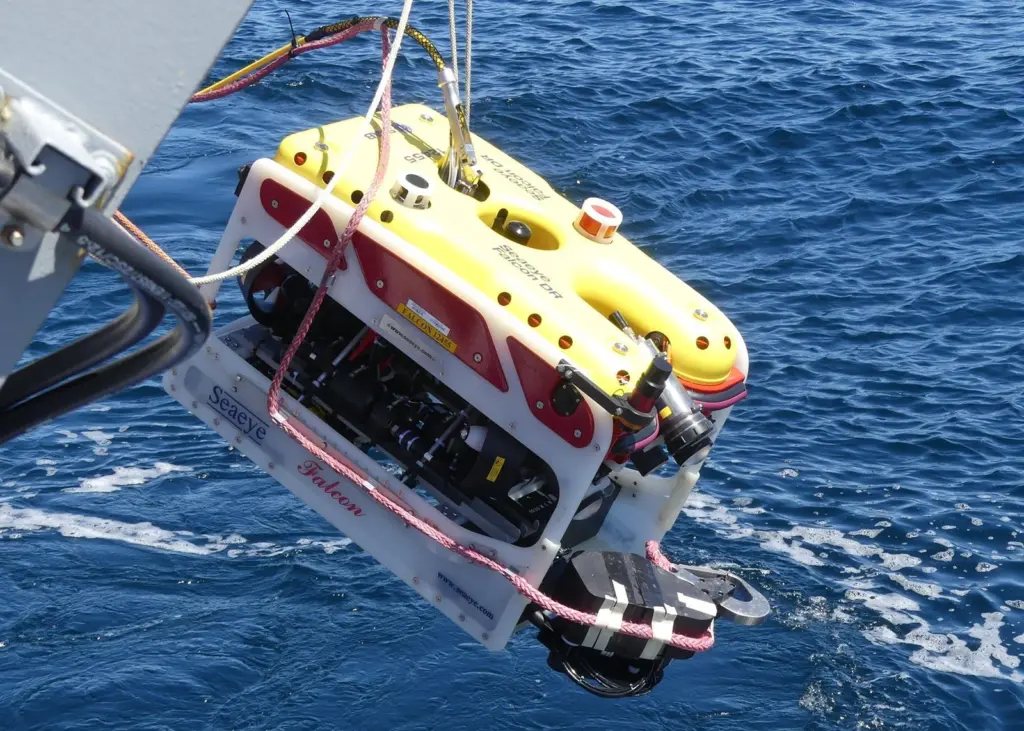
The UK-built Saab Seaeye Falcon, already claimed to be the most successful vehicle of its class in the world, won a competitive contract against multiple vendors.
It met the general requirements for a vehicle that can operate in 450m of water, with a 1000m option, has a multi-function manipulator arm and navigation system, and can work from either a dynamic positioning, or non-dynamic positioning vessel.
A 1100m umbilical cable run will not only allow the Falcon to operate from a non-dynamic positioning vessel, but allows multiple re-termination before needing replacement.
The Falcon will conduct operations in support of mooring deployments and recoveries. This would include inspections of instruments and mooring systems, as well as attaching rigging or unfouling instruments to allow recovery of assets.
Derek Buffitt, the Coastal & Global Scale Node (CGSN) program manager, says the Saab Seaeye Falcon was selected because it provided the best overall capabilities, has a significant tooling and spares package and comes with training and support for new OOI operators. It also met the strict budget and delivery schedule required by the OOI and the National Science Foundation.
At-sea training was completed in March 2019, along with verification of mobilisation and de-mobilisation requirements, integration of navigational systems, and included operating the vehicle in currents and performing test recoveries of CGSN anchor types.
First project deployment of the Falcon was in April onboard the RV Neil Armstrong. During the multi-leg 21 day cruise, the CGSN team successfully performed mooring inspections and anchor recoveries. Future operations could take place in water depths of up to 450m and will include surveying mooring locations, locating existing anchors, and engaging hooks and lines for recovery of anchors.
By Jake Frith