



Diversity drives Italdraghe’s record year
Italy-based dredger and dredging equipment manufacturer Italdraghe has reported a busy and successful 2015, with activity reaching record setting dimensions.
Since starting off the year with a full order book, the company has gone from strength to strength over the last twelve months.
The beginning of 2015 saw the delivery in Italy of the first of its new range of Octopus dredgers, multifunctional vessels with numerous innovative features that allow them to operate in extremely varied working conditions.
As the year progressed, Italdraghe was awarded new contracts to build two Marina Master 8000 dredgers for two different UK marinas. The first is destined for Brighton where it will be handed over to Premier Marinas, while the second is for a sister dredger to the Marina Master that Yacht Havens have been operating in Fambridge and Neyland for the past few years.
Italdraghe has just recently shipped the first of the three dredgers that it is to supply to the Ministry of Water Resources of Iraq. Awarded under International tender, the other two submergible pump dredgers will follow at the start of 2016.
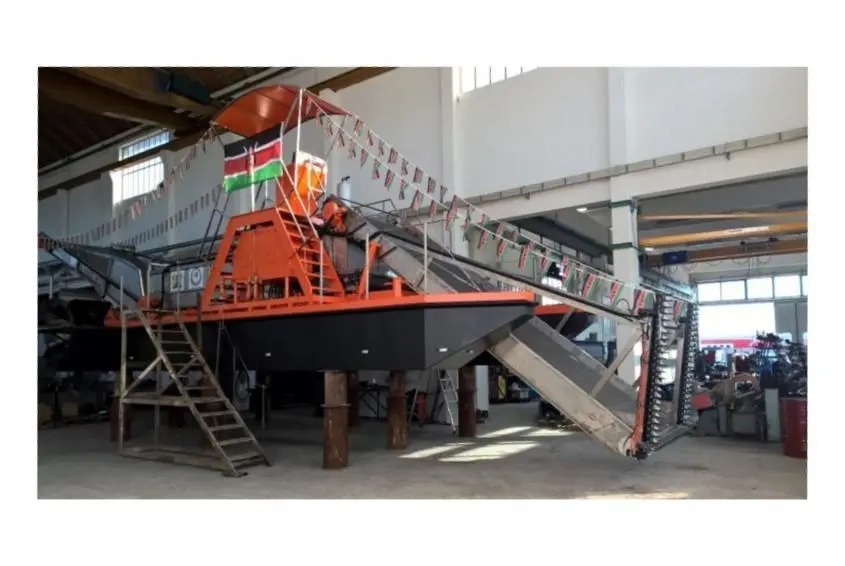
In addition to building cutter suction dredgers, Italdraghe has a long history of designing customised weed harvesters and this autumn the latest harvester, specifically constructed to handle the water hyacinth and hippo grass in Lake Victoria, was shipped to the Kenyan government.
The gold and diamond mining sectors are continuing to keep the Italdraghe production and assembly teams busy, as the overseas demand for dredge pumps for inland and coastal mining operations shows no let up.
The Italdraghe dredging head for excavators remains ever popular due to its robustness and versatility, being suitable for dredging, mining and also beach replenishment projects, of which it is completing many around the Italian coast right now.
There are also new collaborations with overseas shipyards for local dredger builds, recently expanded office space for technical and sales teams, as well as the addition of extra staff to cope with the increased workload.
By Larz Bourne