![MaritimeJournal[Seawork]](https://www.maritimejournal.com/wp-content/uploads/2026/09/MaritimeJournalSeawork.svg)






Eating your boat from under your feet
Unfortunately, bilge waters are an ideal broth for growing micro-organsims and, while tug boat operators have put some measures in place, other workboats can still find dramatic, microbially influenced corrosion underfoot.
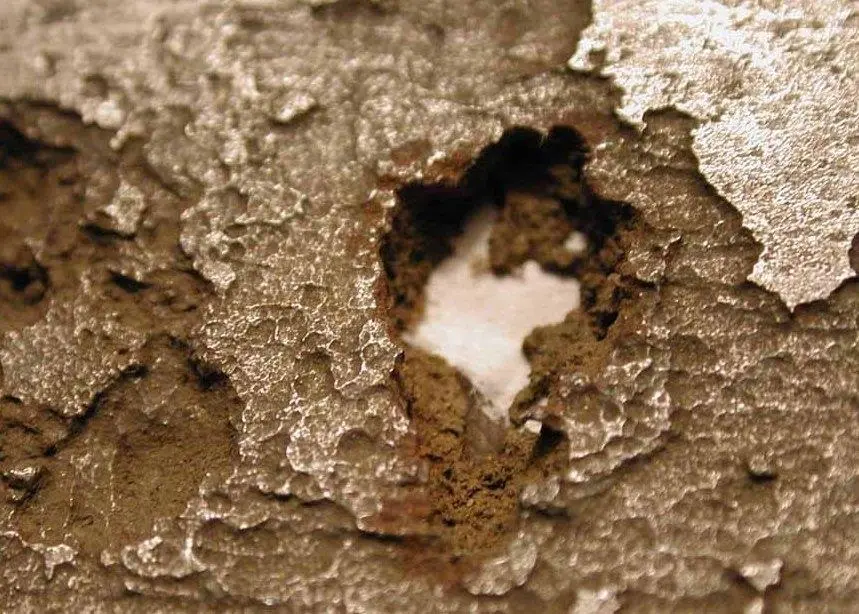
Graham Hill of Cardiff UK based microbiological problem solvers ECHA explained, “In the good old days the chief engineer pumped his bilges, kept them dry and clean. Then came the MARPOL changes, which meant discharging to a shore waste contractor. So, rather than accumulate expense, you accumulate the stuff in the bilges, and you’d allow for a few feet of smelly oily water.”
This led to a number of vessels falling foul, literally, of what is called Sulphate Reducing Bacteria (SRB), which causes a very dramatic, accelerated corrosion.
A few years ago, this kind of accelerated corrosion was found to be the underlying problem in a number of tug boat incidents and at its height cost the sector in excess of £12m per annum.
Modern tug boats tend to be fitted with a waste tank for bilge water, but it’s still an issue for older tugs as well as other typres of harbour located workboats. For example, Mr Hill told MJ that there are incidences of SRB found in dredgers’ bilges and, unless it’s checked, it can be a big problem. Mr Hill said, “We have actually seen an 11mm hull plate eaten through inside one year.”
Most microbes produce acids which can be directly corrosive. Weak organic acids are produced by most microbes but a few species can oxidise sulphides and sulphur to sulphuric acid. Sulphate Reducing Bacteria (SRB) produce hydrogen sulphide and ions such as HS-, S2-, which are highly aggressive to steel (and yellow metals), forming characteristic craters.
Mr Hill added that when ferrous sulphide forms it is itself cathodic and continues to drive electron flow and anodic pitting, even after the SRB has been killed or has become less active. SRB attack is also believed to accelerate stress corrosion.
It is not something that is going away. “Experience suggests that such incidents are becoming commonplace, particularly on inshore vessels, said Mr Hill, “partly because of the changes in pump out patterns, driven by the legislation changes.”
But fitting a holding tank, even if you have the space for it, is not the end of the issue, as you still need a remediation and monitoring strategy. The cocktail of bacteria that grows in any briny, stagnant water can simply eat its way through the holding tank too.
“We regularly test a number of tug boat and dredger operators’ bilges for them, just to make sure. And yes, occasionally it will come with a positive return for SRB”, concluded Mr Hill.
Related Articles
 ACCESSORIES & EQUIPMENT
 ENVIRONMENT
 MARINE CONSTRUCTION