

Ørsted CEO calls on Europe to install 10GW/year offshore wind
Ørsted’s new CEO has called on Europe to install 10GW of offshore wind each year – but panellists at the WindEurope event in Copenhagen voiced concerns over a range of things that will not make this an easy feat.
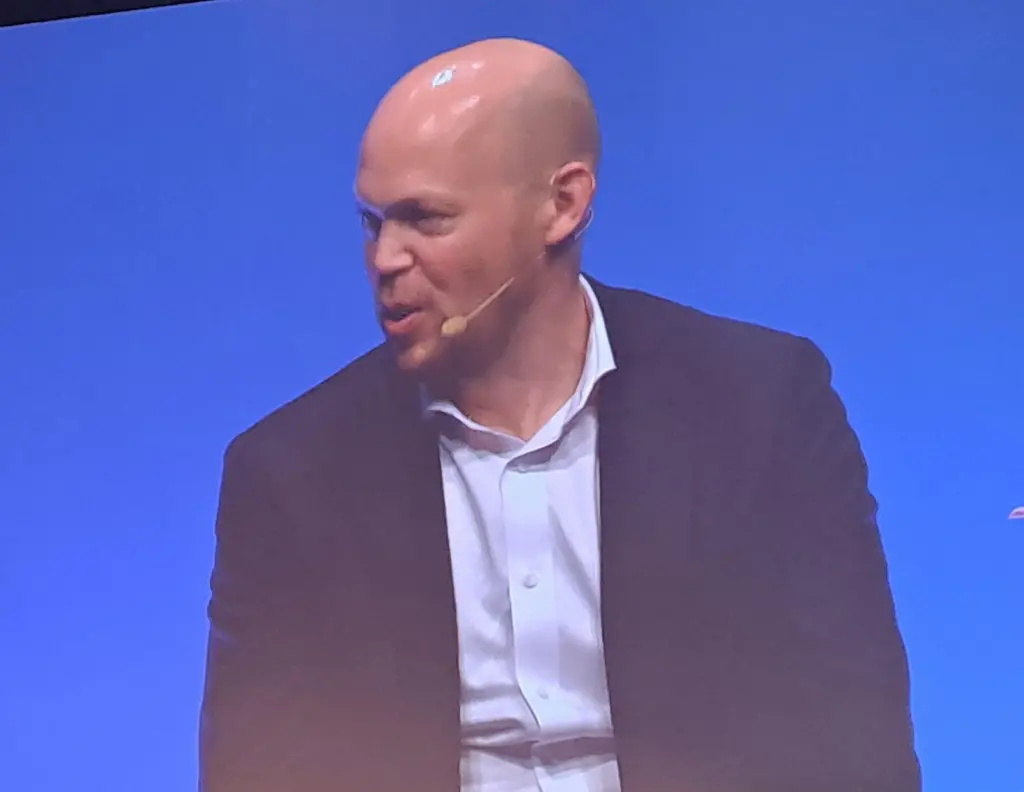
Rasmus Errboe also said it would not be achieved without predictability and stability – two words that were used often in front of a packed audience listening to the first session on what WindEurope CEO Giles Dickson called the day dedicated to offshore wind.
At the same time saying a ’new Offshore Wind Deal for Europe’ had been launched, various panellists across the three-day event – which focused on offshore wind today – called for the pace of development to speed up, but more predictability and stability to be implemented at the same time.
“The world is completely changing and predictability is not a small ask,” said Errboe, who replaced former Ørsted CEO Mads Nipper just over two months ago.
He said the European offshore wind industry had to pull together ‘with one voice’, and that to hit his proposed target of 10GW a year, industry had to continue with the same Contracts for Difference model, and ‘keep calm’.
“There’s a massive opportunity but only if we cooperate in a different way across regions,” he said. “We need a new offshore wind declaration for Europe.”
Speaking on a later panel, Vestas Chief Technical Officer Anders Nielsen agreed that predictability was key.
“Targets are not projects,” he said. “It starts with the politicians, then the developers, then the OEMs. If we don’t have predictability, building the factories doesn’t happen. Vision doesn’t build a wind farm. We need a plan for how to do that.”
Nielsen raised concerns about Errboe’s 10GW per year target.
“That’s roughly 10 projects,” he said. “If one project slips, 10 per cent of the market slips, 10 per cent of the factories. We have to have a plan where things don’t slip and there is collaboration between everyone.
“So far it’s been more visions than concrete plans.”
Costs and supply chains
Scaling up offshore wind has not so far proven cheap for taxpayers, and it is not likely to prove so in the foreseeable future.
“We have to convince the people that are voting that they are willing to pay for it,” said Lars Aagaard, Minister for Climate, Energy and Utilities for the Danish government.
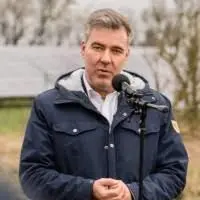
Energy costs are much higher in Europe than the US and China, and no industry has ever thrived on high energy costs. Fears were raised about a lack of incentives reducing demand from industry, and governments – in other words, taxpayers – were called on to step up.
“There is a shift in the balance,” said Aagaard. “If the political side does not take on any of the risks we will not move forward. We need to secure the supply chain and generate energy in Europe. Over the next decade, we need a strong European energy industry, and strategic independence
There was also the grid bottleneck issue, which for example had affected the German Borkum Riffgrund 3 wind farm, which has been delayed on its grid connection and is likely to stand idle in the North Sea for another year.
“Covid caused delays and staff were stuck in Singapore, which shows we need to scale up the supply chain in Europe,” said Manon van Beek, CEO of TenneT, the electricity transmission system operator. “We need to have industry, whether it’s vessels, cables, turbines, here.”
Several panellists suggested a regional approach, and certainly growing a supply chain closer to home and working together.
“We need predictability,” said Aagaard. “There are lots of plans for 2030 but for 2035 – nothing. New projects need to be brought to the market. We can’t achieve what we want for Europe and our people without working more closely together.
“I am willing to do that.”
Related Articles
 ELECTRICAL SYSTEMS
 ENVIRONMENT
 ENVIRONMENT