![MaritimeJournal[Seawork]](https://www.maritimejournal.com/wp-content/uploads/2026/09/MaritimeJournalSeawork.svg)




California approves huge offshore wind plan
California has set a target of 25 gigawatts of floating wind by 2045 – a goal that will cost billions, says Offshore Wind California, a trade group of offshore wind developers and technology companies.
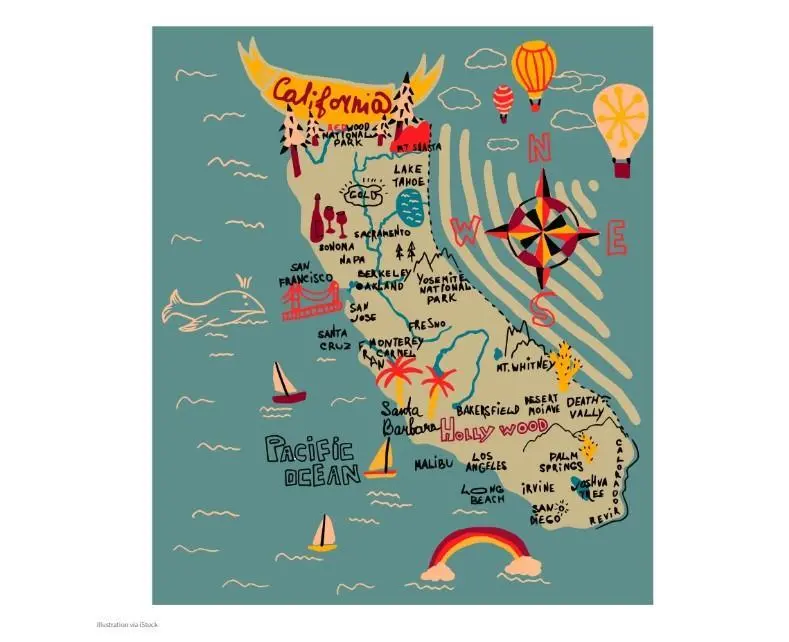
The Final Assembly Bill (AB) 525 Strategic Plan to Advance California Offshore Wind, approved by the California Energy Commission (CEC), outlines the next steps to bring California offshore wind online, including investments in a multi-port strategy and new electric transmission, a better permitting process and supply chain, and workforce training. It also requires suitable sea space to be identified.
CalMatters, is a nonpartisan and nonprofit news organization in California, says the first-of-its-kind undertaking ’will require billions in public and private investments and could transform parts of the coast’.
“The offshore wind industry must be created almost from scratch: a new manufacturing base for the still-evolving technology; a robust and reliable supply chain; transportation networks on land and sea; specially configured ports to make, assemble and maintain the gargantuan seagoing platforms; finding and training a highly specialized workforce; building a large transmission network where none exists and beefing up those that operate now,” it says.
“We recognise that this strategic plan is probably the most comprehensive floating offshore wind plan in the world. Its final approval marks a watershed moment in California’s course and commitment to go big on offshore wind, and achieve its nation-leading goal to deploy 25 gigawatts by 2045,” says Offshore Wind California, a trade group of offshore wind developers and technology companies.
“The thoroughness with which the Commission has approached this two and a half-year effort has been well worth the wait.”
“This will require a significant increase in new clean energy development in California, with solar, battery storage, and other clean resources making up the majority of future resource additions,” the CEC says.
“Offshore wind can play an important role in diversifying the state’s electricity system as it is projected to produce large amounts of generation overall and be available at times when the electricity system most needs resources, such as summer evenings when solar generation declines and air conditioning demand remains high.
“In addition, offshore wind can improve reliability and resilience of the electricity system while reducing environmental impacts from reliance on fossil fuels.”
Five leases have been granted to develop areas totalling $757 million, from RWE, California North Floating, Equinor, Golden State Wind, and Invenergy California Offshore.
The Department of Interior’s Bureau of Ocean Energy Management (BOEM), which conducted the auction, has jurisdiction over the five leases.
Individual states in America have set their own goals to collectively procure 39GW by 2040, so adding that to California’s 2045 goal brings the total to 64GW by 2045.
With this trajectory, the United States is on a path to deploy 110 GW by 2050, says the CEC.
Related Articles
 FEATURES & VIDEOS
 ENVIRONMENT
 OTHER NEWS