![MaritimeJournal[Seawork]](https://www.maritimejournal.com/wp-content/uploads/2026/09/MaritimeJournalSeawork.svg)






Dutch wind farms shelved as government rethinks subsidies
Tenders for two Dutch offshore wind farms have been postponed and criteria adjusted for a third to ‘improve the business case for offshore wind’, according to a notice by the government.

It also suggests that subsidies, ie taxpayer money, which were not available for these projects, could be given at a later date.
The Ministry for Climate and Green Growth has postponed the IJmuiden Ver Gamma-A and Gamma-B offshore wind farms that were planned to be installed between 50 and 60 kilometres from the west coast, in the North Sea.
“Due to deteriorating market conditions for offshore wind energy projects, partly due to lack of large-scale demand for electricity, IJV Gamma-A and -B will be tendered later,” the ministry’s notice says.
“The deteriorating market conditions require a Government that helps the market through this phase,” it continues. “The Government is therefore working on an action plan for offshore wind energy that can improve the investment climate for offshore wind and at the same time the investment climate for electrification by its customers. For the period from 2027 onwards, financial support instruments will also be considered, such as a minimum and maximum price guarantee (Contract for Difference).”
Wind and gas combined
The Nederwiek Wind Farm Site I-A ‘will now be put out to tender on its own, but required generation capacity has been halved from 2GW to 1GW to reduce investment required and financial risks for developers, the government says.
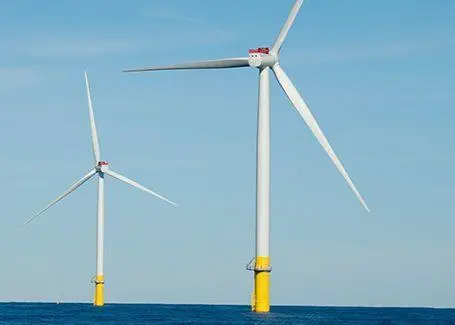
Procedures have also been put in place to combine the wind farm with a gas platform to tap into new gas reserves as well as generate wind power.
”This is a first milestone in customised offshore solutions for combining wind farms and gas extraction, both priorities for the Government,” the notice says.
The Dutch government is trying to sweeten prospects for developers, recognising that financial risks are a problem and allowing developers to have permits revoked within two years ‘if market conditions are too bad to continue with the development of the wind farm’.
“In addition, the Government has simplified the ranking criteria used to assess the wind farm developer’s bid,” it says. “These criteria encourage parties to innovate in areas such as ecology or circularity. By simplifying, costs to wind farm developers for applying these innovations can be reduced. Moreover, the voluntary financial offer now only has to be paid from operation of the wind farm, instead of from when the permit is granted.
“Offshore wind energy is indispensable in our current and future energy system. It is a relatively affordable and highly scalable source of clean energy.”
Related Articles
 FEATURES & VIDEOS
 ENVIRONMENT
 OTHER NEWS