![MaritimeJournal[Seawork]](https://www.maritimejournal.com/wp-content/uploads/2026/09/MaritimeJournalSeawork.svg)



In pictures: massive monopiles for world’s largest wind farm
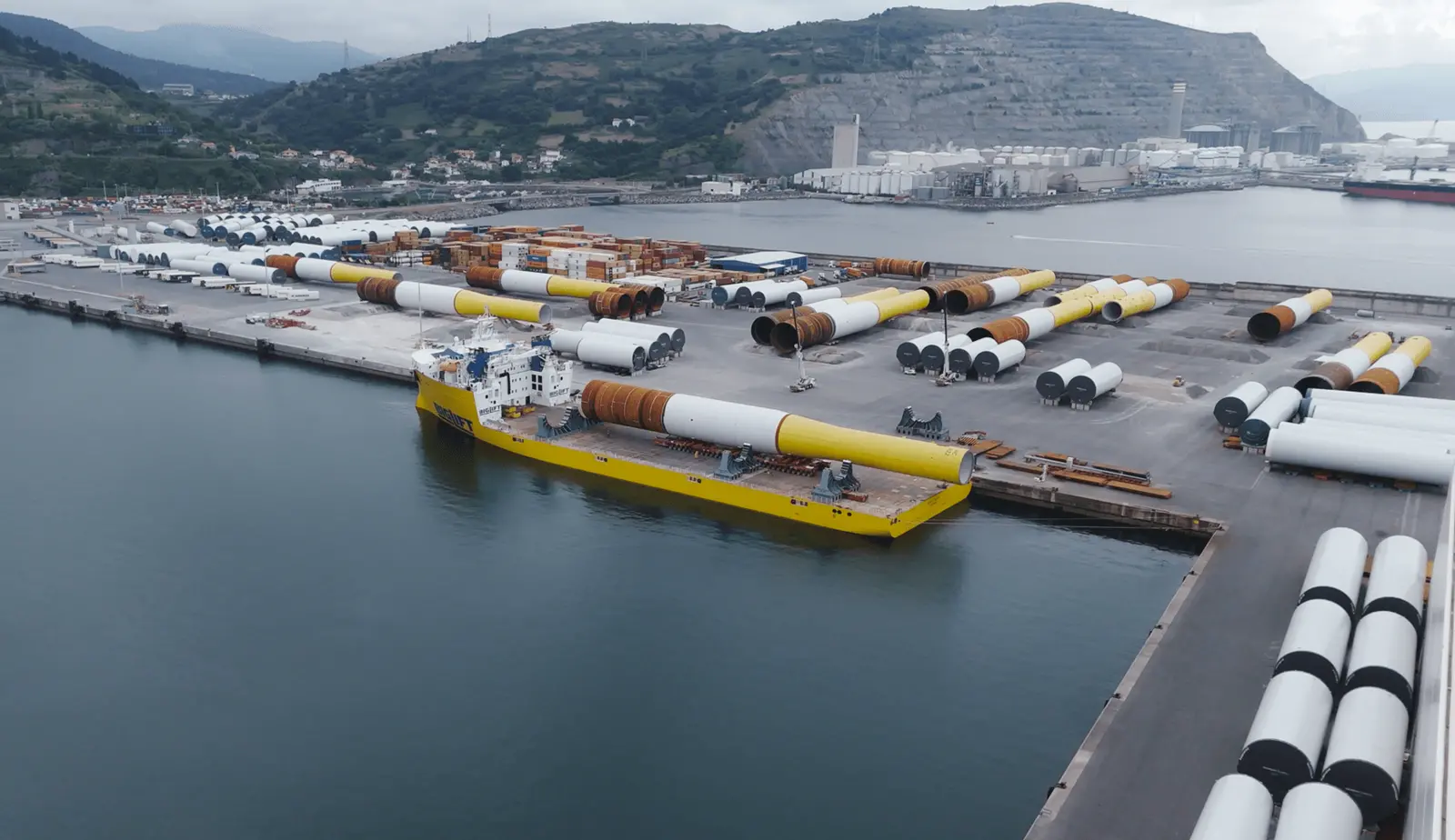
The biggest turbine monopiles in Southern Europe have been delivered to Ørsted destined for Hornsea 3, the world’s largest offshore wind farm when installed off the UK eastern coast.
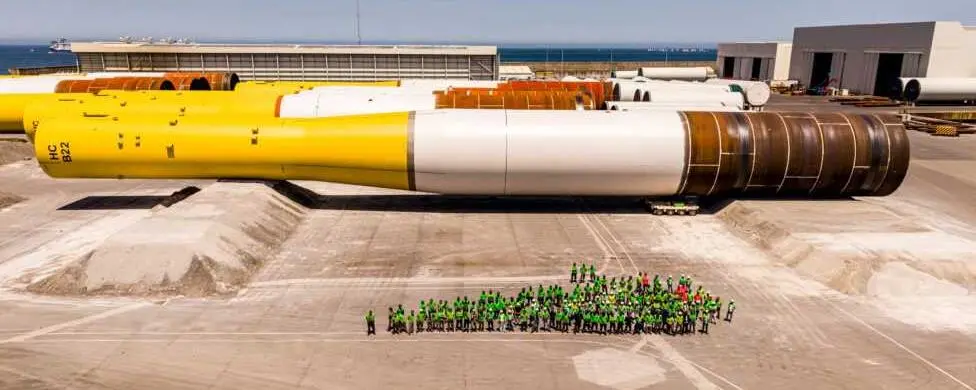
The monopiles have a diameter of 11 metres, a length exceeding 105 metres, and weigh approximately 2,300 tonnes. They are the largest structures ever manufactured on the Iberian Peninsula, and they rank among the largest monopiles ever produced in Europe.
Their manufacturer, Haizea Wind Group, is the only Spanish manufacturer capable of producing structures of this scale, or larger.
Preparing and loading the monopiles for transport was a complex logistical operation. Haizea’s logistics partner, Grúas Aguado, handled transport within the Port of Bilbao, while Cadeler managed load-out and load-in operations and Mammoet moved the monopiles using Self-Propelled Modular Transporters.
Hornsea 3, roughly 120 kilometres off the UK eastern coast, will have a capacity of 2.9GW once complete, enough to supply energy to more than 3.3 million UK homes.
Haizea’s facility at the Port of Bilbao spans more than 200,000 square metres, comprising six production halls and a storage area for towers and monopiles, and employs more than 900 people.
Following expansion of the site, the Group has established itself as the global leader in manufacturing monopiles for wind turbines exceeding 15MW, and Europe’s leading producer of large offshore wind towers, with projects including East Anglia One, Dogger Bank, Borssele 1 & 2, Hollandse Kust Zuid, Hornsea Two, Seamade, Saint-Nazaire, Saint-Brieuc and Hywind Tampen to its name.
Founded in 2017 from Grupo WEC and Tecnoaranda, Haizea Wind Group now operates across three business units – wind towers, offshore foundations and large castings – and employs more than 1,500 people.
The scale race in China
China’s offshore wind sector is pursuing monopiles and turbines on an even larger scale.
In April, CNOOC Wenchong Heavy Industries announced a final investment decision on a new ‘XXXL’ monopile facility at Qinzhou Port, Guangxi, which will produce monopiles up to 15 metres in diameter and 4,500 tonnes in weight. It is designed to have an annual capacity of 144 units across eight production lines, housed in what is described as the largest steel structure workshop in China, 370 metres long, 54 metres high and 39 metres wide.
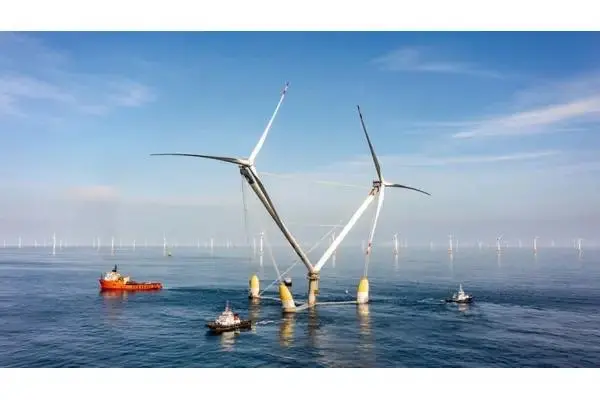
On the turbine side, China has also been setting records. In July, China deployed what it described as the largest tension-leg floating offshore wind platform ever built, standing more than 307 metres tall and weighing nearly 8,000 tonnes. It has been designed to support a 16MW turbine, installed in the South China Sea near the Lufeng oilfield cluster off Guangdong.
Two months earlier, China had installed the “Three Gorges Pilot,” a 16MW floating turbine off Yangjiang, Guangdong, with a rotor diameter of 252 metres mounted on a semi-submersible platform displacing around 24,100 tonnes.
China’s offshore wind capacity has reached 47GW, accounting for 78% of newly added offshore wind generation capacity worldwide, giving it more than half of the global offshore wind market. It plans to add up to 63GW of further capacity.
Related Articles
 ENVIRONMENT
 DREDGING & FLOOD DEFENCE
 ENVIRONMENT