


Offshore wind faces a pivotal year: Report
Offshore wind is set to double in 2026 and will remain stable this year, a new report by business analysts Wood Mackenzie predicts.
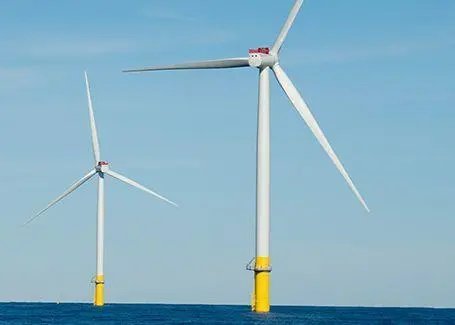
The year 2025 could be pivotal – but there will still be supply chain challenges, tender uncertainties and the sheer growth in size of turbines led by China, the report Offshore wind: what to look for in 2025 says.
“For companies looking to enter the offshore wind sector and for companies looking to expand their portfolio with more offshore wind assets, 2025 will be unparalleled,” the report says.
Despite risks, new markets and increased M&A activity will shape the sector’s future trajectory.
A surge in the deployment of new equipment, turbines, components, factories and the expansion of existing assets was the story of 2024 in offshore wind outside China, the report says, and nine jack-up vessels are scheduled for delivery this year.
There will be competition for them, as there will for the few ports that can accommodate them, but the year will see the supply chain globalise as new entrants to the market force components to travel further.
“In 2024, new initiatives were launched to support the European supply chain,” said Finlay Clark, principal research analyst, global offshore wind for Wood Mackenzie. “We expect this to remain on the table for 2025. However, an increase in demand is also needed to maximise the impact of these policies.”
East-West arms race

Wood Mackenzie paints the global scenario as an arms race between East and West, with China seemingly determined to manufacture bigger and bigger turbines – which will in turn require bigger and bigger installation vessels and equipment to install them.
China is already testing 26MW turbines and the first 18MW turbines are commercially deployed, but the question, says Wood Mackenzie, is whether the West will follow suit or take a different path: instead there could be a clash between the proponents of ‘bigger is better’ and those who oppose the surge in size because of the blade failures of next-generation turbines.
“It is in the interface between the West and the East that the arms race finds the most fuel. The larger turbines from Chinese OEMs will also play a role outside China,” the report says.
“The question is what role(s). Will more offshore wind projects be awarded to Chinese OEMs? Will Western OEMs increase their interest in floating projects and fight off Chinese OEMs or will they prioritise large-scale projects which are more tangible? How will policy makers respond to Chinese OEMs bidding in tenders? How will Western developers and investors rate Chinese turbines?”
The report says the quest for mammoth turbines has resulted in smaller ones being abandoned, which means there is most likely going to be an uptick in 20+MW turbines this year.
“While the cost-out potential of larger turbines in the balance of plant segments has long been identified, the additional costs and risks from such larger turbines as well as the gains and losses in factory output are harder to nail down,” says the report.
“We do see the industry gaining a better understanding of both elements in 2025, when we also expect the commercial discussions of larger will be interesting too. The core question being, should it be the developer or the supply chain benefiting from the larger turbines? In the past it was the developer, but with the increased bargaining power of the supply chain this is changing.”
2025 connections to double in 2026
Actual connections will remain at the same level as last year outside China, some 6GW, the report says – until 2026, when it is expected to double.
“Despite low volumes connected in 2025 for markets outside China, execution will be key,” says the report. “In 2024, there was a surge in the deployment of new equipment, turbines, component dimensions, factories, or ramp-ups of existing factories and even vessels. This was most pronounced for factories producing +10m monopiles. Seventy-one per cent of these factories were either producing their first monopiles or significantly ramping up in 2024. This was a key contributor to the execution challenges and delays we saw in 2024.
“In 2025, GE Vernova will continue the installation campaigns of their Haliade-X platform, while Vestas and Siemens Gamesa will install their first next-generation 236 platforms offshore.”
Related Articles
 ELECTRICAL SYSTEMS
 ENVIRONMENT
 ENVIRONMENT